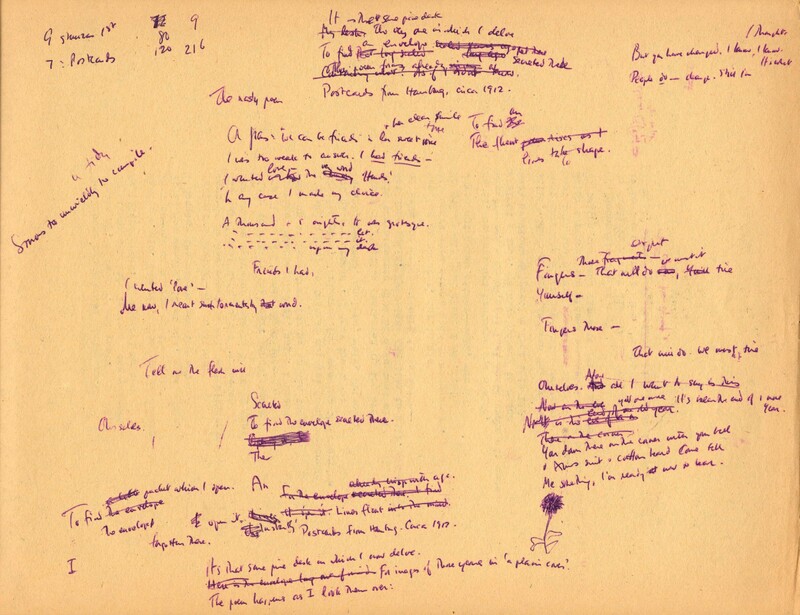
"Postcards from Hamburg, Circa 1912"
Night 73
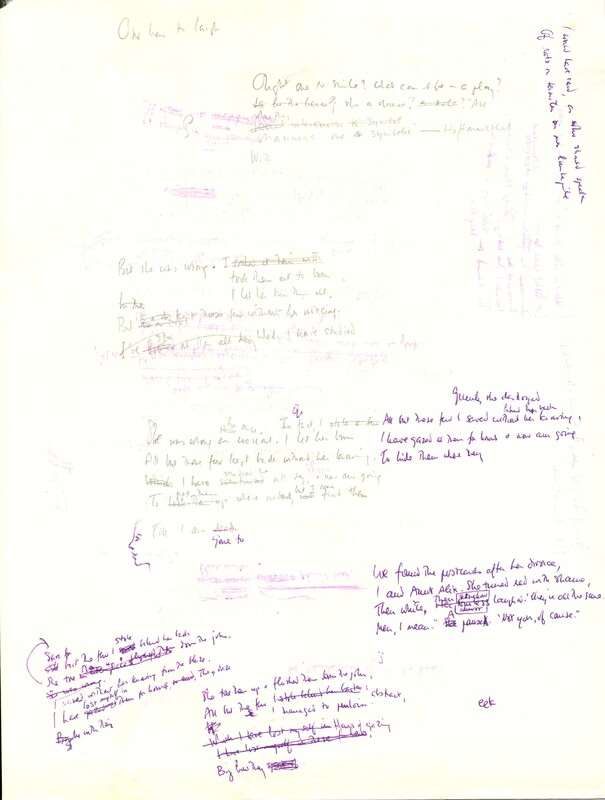
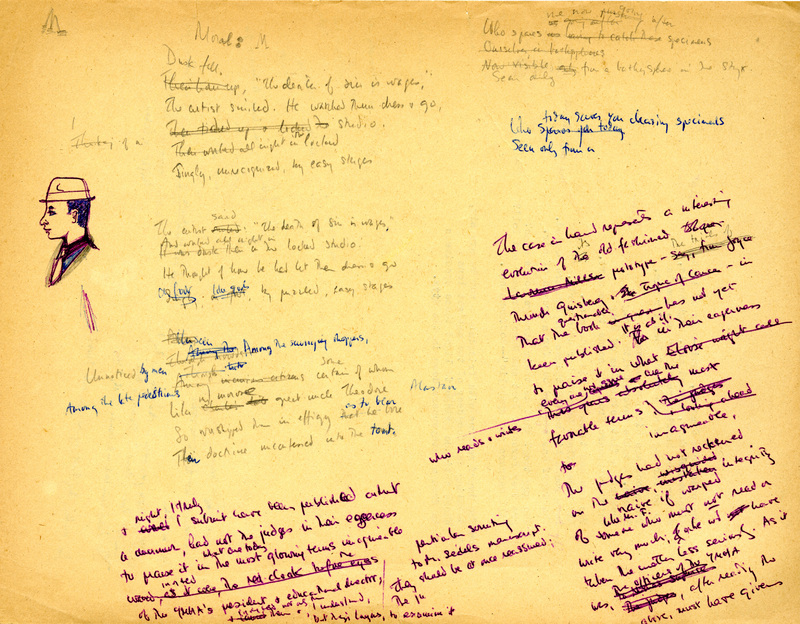
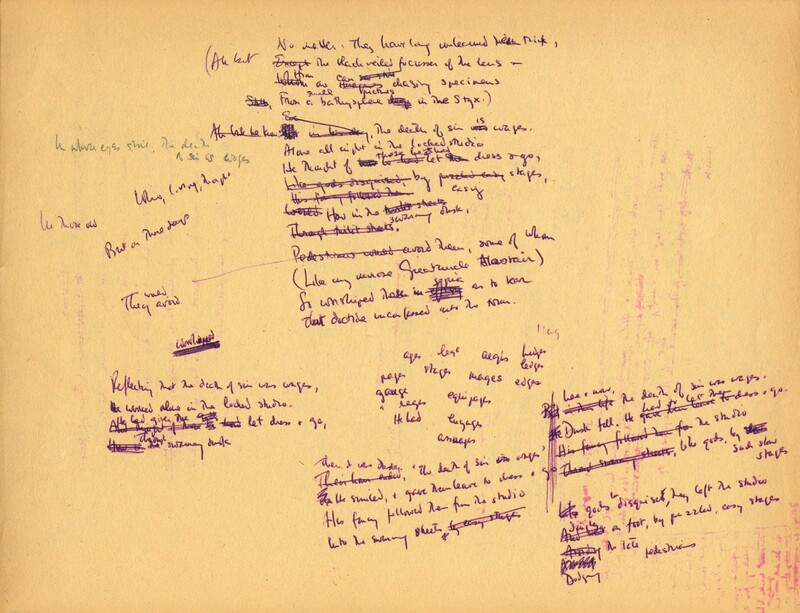
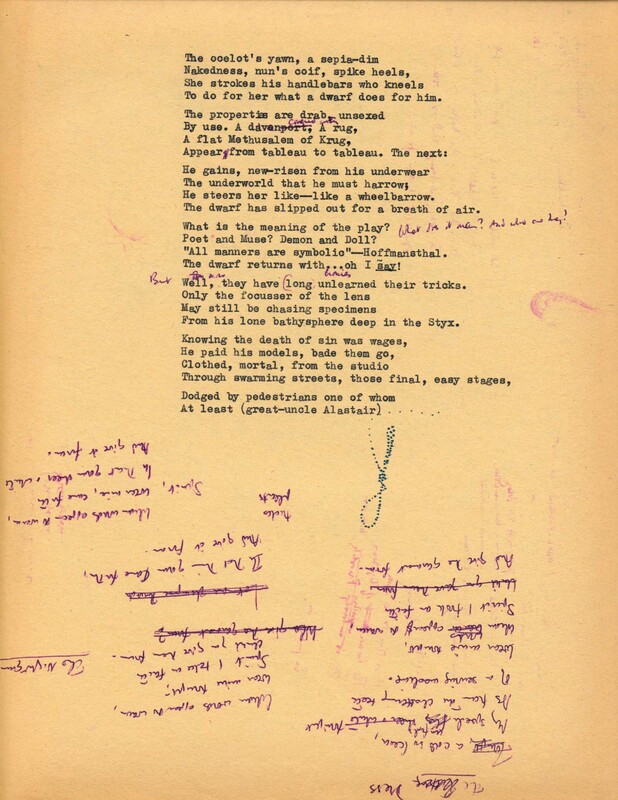
6) "The ocelot's yawn, a sepia-dim." Ink, draft paper. Handwritten in ink (upside down), an early draft of "Nightgown," the first poem in Nights and Days. Ink, draft paper.
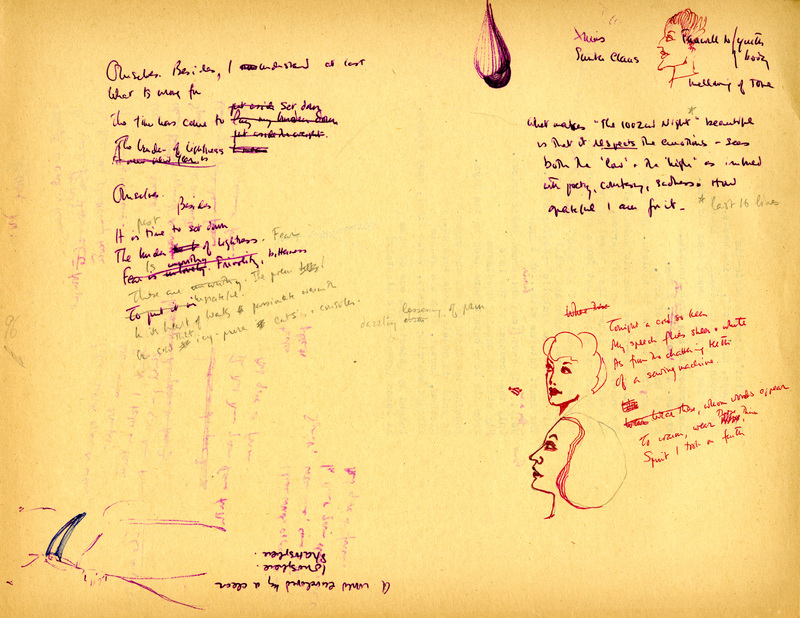
Night 73A
7) "Ourselves. Besides, I can understand." Ink, pencil, draft paper. Three sketches. Verso of 6. Merrill's note: "What makes 'The 1002nd Night' beautiful is that it respects the emotions . . . ."
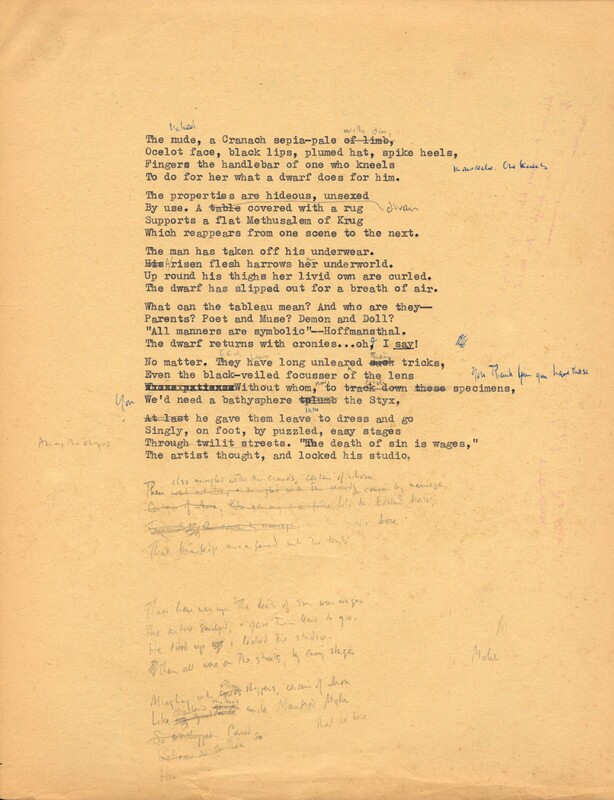
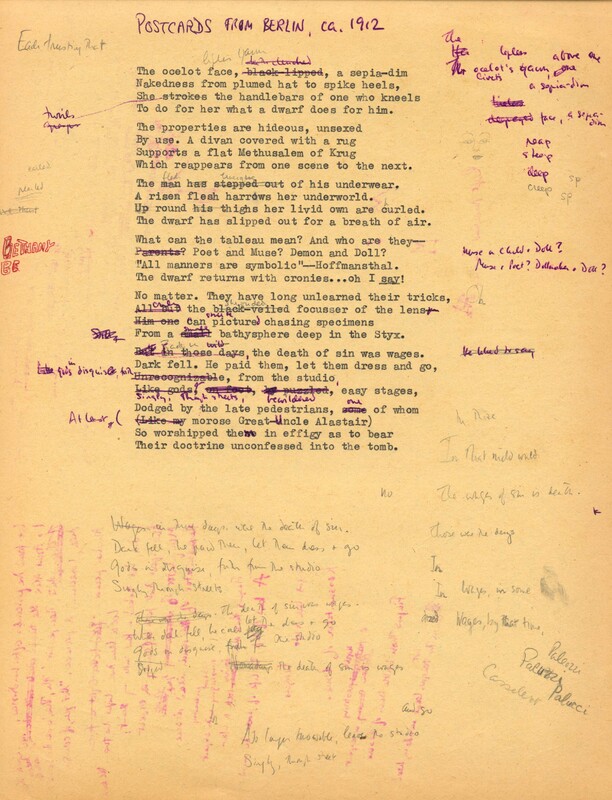
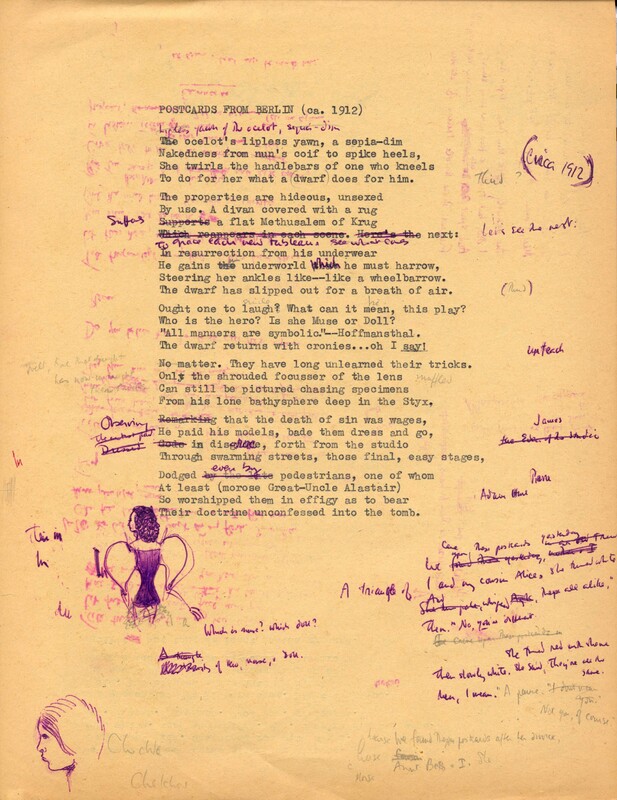
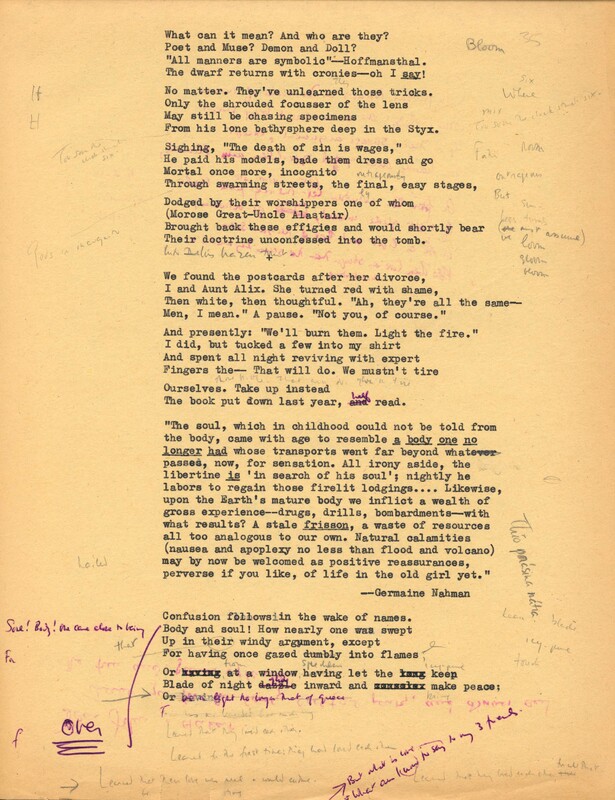
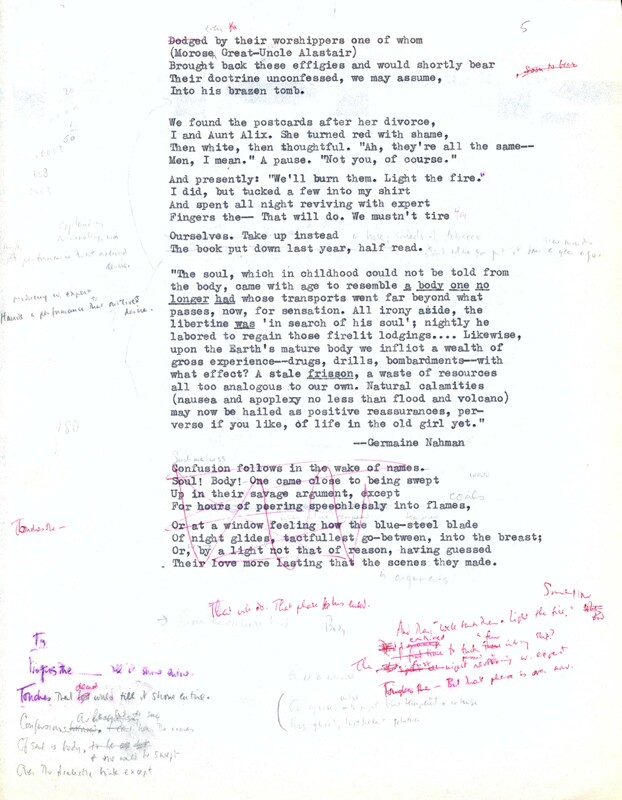
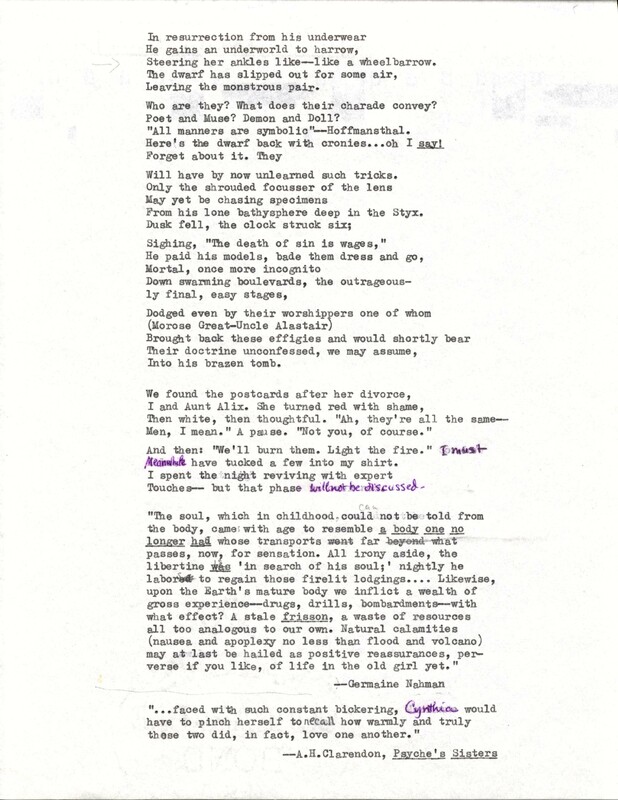
"The story of the cards came from Irma Brandeis, to whom the poem is dedicated: she’d told Merrill about finding a cache of them, which she destroyed" (Hammer, p. 325). Hammer explains in a footnote that there were 300 postcards.
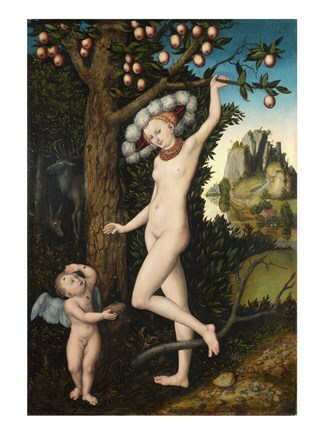
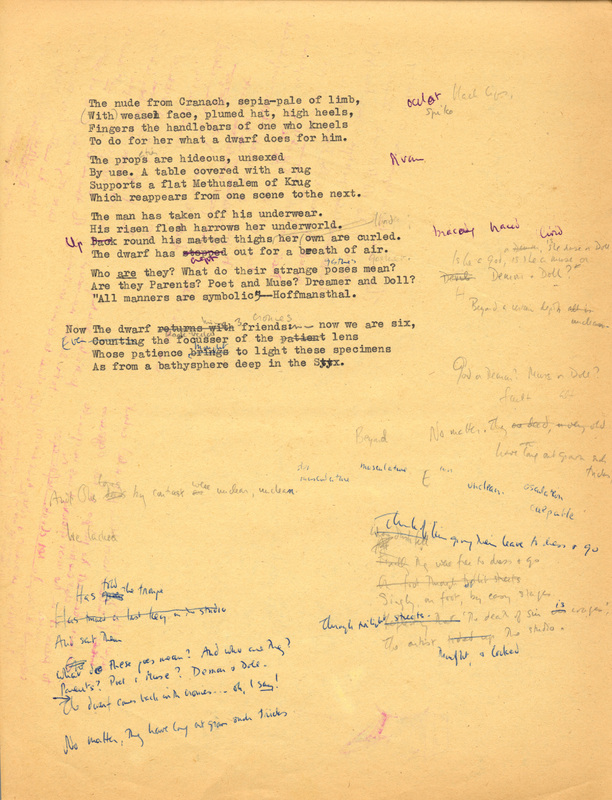
In manuscript 2, Merrill alludes to a painting by Lucas Cranach the Elder (1472–1553), "Cupid Complaining to Venus," which Merrill describes in Scripts for the Pageant: "Now think of that anemic / High-rise Cranach Venus . . . With Cupid at her heel— . . . . Goings-on kept under / Her nodding ostrich hat." (The Changing Light at Sandover, NY: Knopf, 2006: 434.)
Merrill noted on Manuscript 7 of "Postcards from Hamburg": "What makes 'The 1002nd Night'* beautiful is that it respects the emotions - respects both the 'low' and the 'high' as imbued with poetry, courtesy, sadness. How grateful I am for it. *last 16 lines." Manuscript 7 in "Carnivals" also contains a draft of the final poem about Scherherazade and the Sultan.