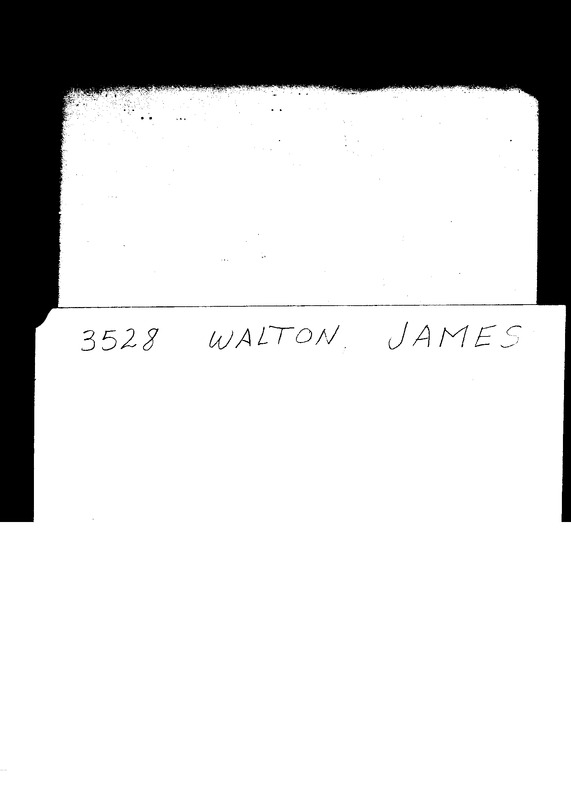
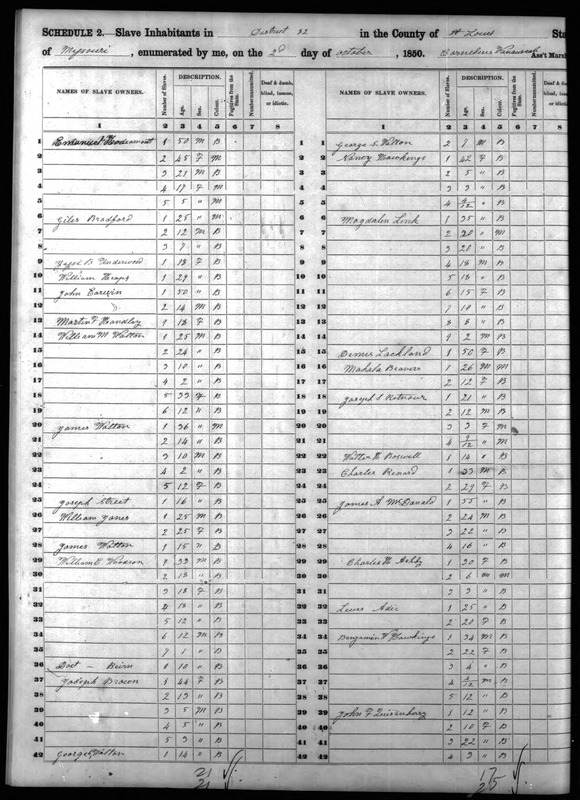
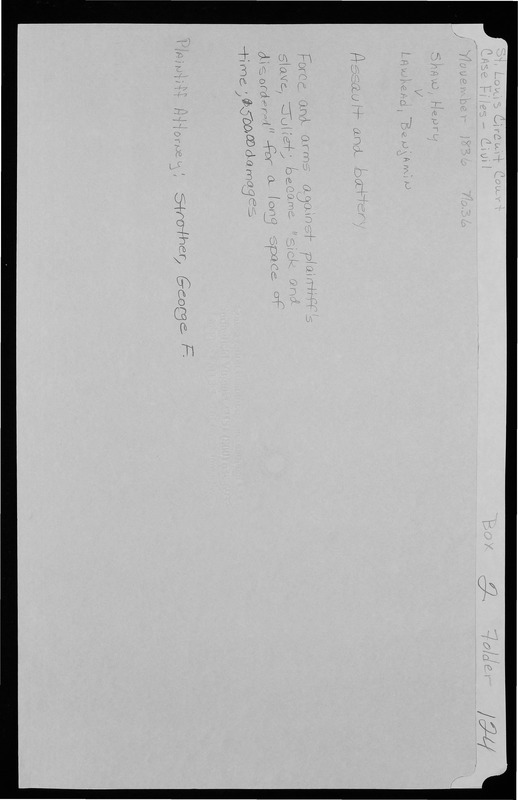
This is a declaration of bankruptcy by John Berry Meachum, dated 10 June 1842. The hearing date is dated 10 September 1842. James Hannon (?) is the clerk; Wm. Milburn (?) is the commissioner; N. M. Garseho (?) is the assignee.
Joel Bugg Hollman (1856-1926) was born, raised, and died in Iron County, Missouri. He shared land in what is now Tyson Research Center with Christian Morshall in 1909 and is later identified on a 1930 plat map as the sole owner of the land, likely part of his estate after his death.
Jesse C. Swanigan was among the first Black undergraduates admitted to Washington University after its 1952 desegregation. Initially a student in the College of Arts and Sciences, he later completed his degree in 1966 through the School of Continuing & Professional Studies. Reflecting on his early experiences, Swanigan described both the excitement of new opportunity and the pressure of representing the entire Black community on campus. His perseverance embodied the complex realities of integration at a university still grappling with its segregated past.
Jemmy was four months old when he and his mother, Sarah, were sold at a public auction the entrance of the St. Louis courthouse to settle the estate of their deceased enslaver, Eliza Brown. Henry Shaw purchased them at this auction for $600 on October 16, 1850.
James L. Sweatt III became the first Black graduate of Washington University’s School of Medicine in 1962. During his admissions process, he endured excessive scrutiny not faced by white applicants, yet he excelled academically and professionally. Sweat’s achievement represented a major breakthrough in the integration of the university’s professional schools. Sweatt later became a cardiothoracic surgeon, served on the board of Parkland Memorial Hospital, and in 1995 became the first Black president of the Dallas County Medical Society. His determination helped open doors for future generations of Black physicians.
James Compton Sutton, Jr. (1847 – 1914) owned property on what is present-day Tyson according to 1862, 1870, and 1878 plat maps. His father, James Sutton, Sr., moved to Missouri in 1819 to assist his uncle, John Sutton, with their blacksmith shop, located at Second and Spruce Street in St. Louis. In 1826, Sutton Sr. purchased land from the Gratiot family.
The Suttons were enslavers. In 1830, James Sutton, Sr., held a young man in slavery in St. Louis. In 1850, he enslaved four people in St. Louis County, and in 1860, he held five people in slavery in St. Louis Central Township.
Jim Kennerly was sold to Henry Shaw at an auction held at the St. Louis courthouse on January 1, 1852 when he was about 25-30 years old, as part of the estate of his deceased enslaver Lewellyn Brown. He was part of a group of enslaved people who attempted escape on May 21, 1855, at the site known today as the Mary Meachum Freedom Crossing. They crossed the Mississippi River to Illinois only to find bounty hunters lying in wait to capture them. Jim Kennerly was able to evade capture along with a few others, as there is no record of him being captured and resold. The 1852 bill of sale for Jim written in ink shows a later update written in pencil that states he “ran away May 1855.”
James (Jakob) Charles Taussig (1827-1916), was a landowner on what is the current-day Tyson Research Center area according to plat maps. He worked as a lawyer and was the defendants’ attorney in an 1860s suit disputing an inheritance which included enslaved people. His cousin and brother-in-law was Charles S. Taussig (married to Anna Abeles). Taussig’s nephew Frank William Taussig (the son of William Taussig) was an influential American economist and Harvard professor, and an open advocate for eugenics.
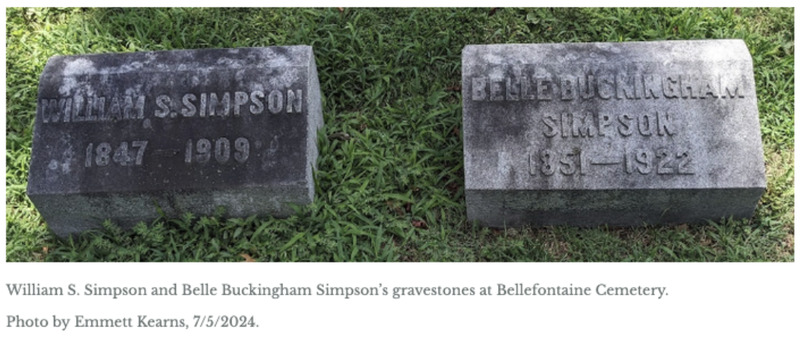
Isabel (Belle) Buckingham Simpson (1851 – 1922), daughter of Edward Buckingham, inherited land within what is now Tyson from her father, as shown on plat maps from 1873, 1893, 1909, and 1930. Plat maps show the emergence of a subdivision development on Buckingham’s property, called South Side in 1878 and 1893, Buckinghams Sub Div (South Side) in 1909, and Buckingham in 1930. On her mother’s side, Belle was the niece of another Tyson landholder, Horace Franklin Breed, Sr.
Isaac H. Fairham (1824 – 1899) owned property on land that is now part of Tyson Research Center according to plat maps from 1862 and 1870. Fairham enlisted as a private in the Union Army during the Civil War in May 1864.
Horatio B. Hawkins (1806 – 1886) purchased a tract of land within what is now Tyson Research Center in 1846 through the 1820 Land Grant Act that enabled the sale of public lands by the federal government. Not much is known about Hawkins’ life in St. Louis or his use of the land, which left his ownership at least by 1852, when his family appears to have moved to California. He appears in the 1845 St. Louis city census working in a coffee house with an adult man, an adult woman, and four boys in his household. In the 1847 city directory, he is listed as a pattern maker in business at 53 North Second Street and living at 168 Olive Street.
Horace Franklin Breed was born in Boston, Massachusetts and lived from 1824 to 1875. He owned land on what is now Tyson property according to plat maps from 1862 and 1870. He married Susanna P. Marlow. While evidence has not yet been identified that Breed was an enslaver, records indicate that members of the Marlow family were enslavers.
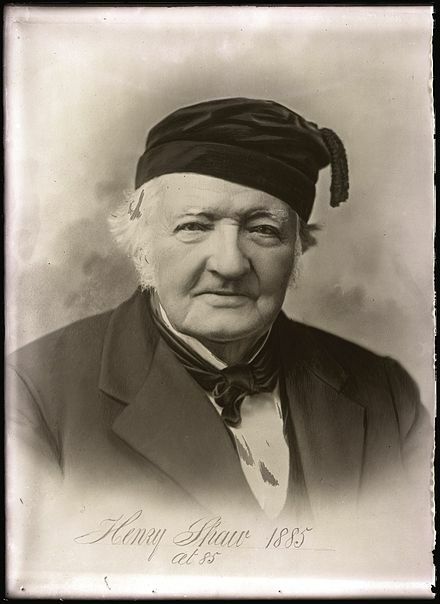
Early trustee and benefactor of WashU, founder of Botany Department; large landowner and slaveholder in 19th-century St. Louis; enslaved more than seventeen people; legacy includes Missouri Botanical Garden and Tower Grove Park.
Henry Clay Hart (1783-1867) appears as a landholder on maps of present-day Tyson land in 1857 and 1862. Hart was born in South Carolina, and in 1808 moved to Tennessee with his wife, Nancy Rainey. Hart received land grants in Arkansas, Illinois, and Missouri for his service in the War of 1812, which he gave to his children.
Henry C. Hart and his daughter Elizabeth L. Hart emancipated Susan, a 25-year-old woman described as married to George Kibby on December 4, 1855. It is possible, but not confirmed, that a Henry Hart in the 1840 St. Louis census who enslaved one young woman was the same Henry C. Hart. According to the 1860 Census, H. Clay Hart enslaved 14 people in Carondelet: three women ages 60, 30, and 22, four men ages 35, 32, 24, and 21, a 17-year-old youth, four boys ages 13, 10, 6, and 4, and two girls ages 3 and six months.
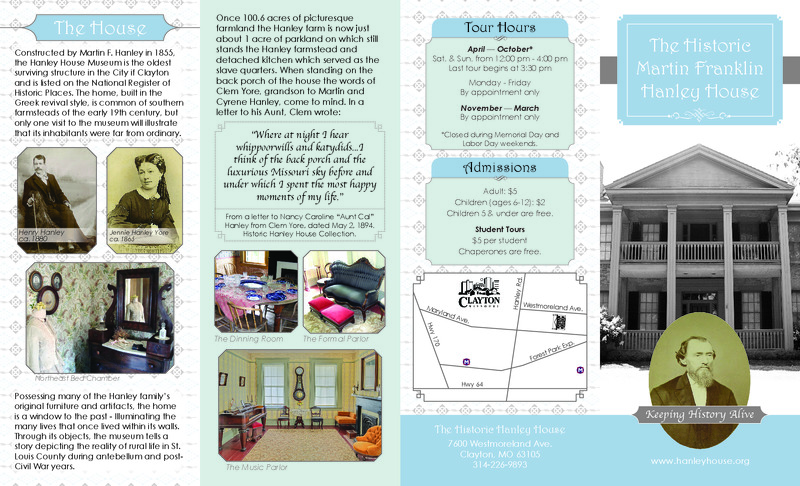
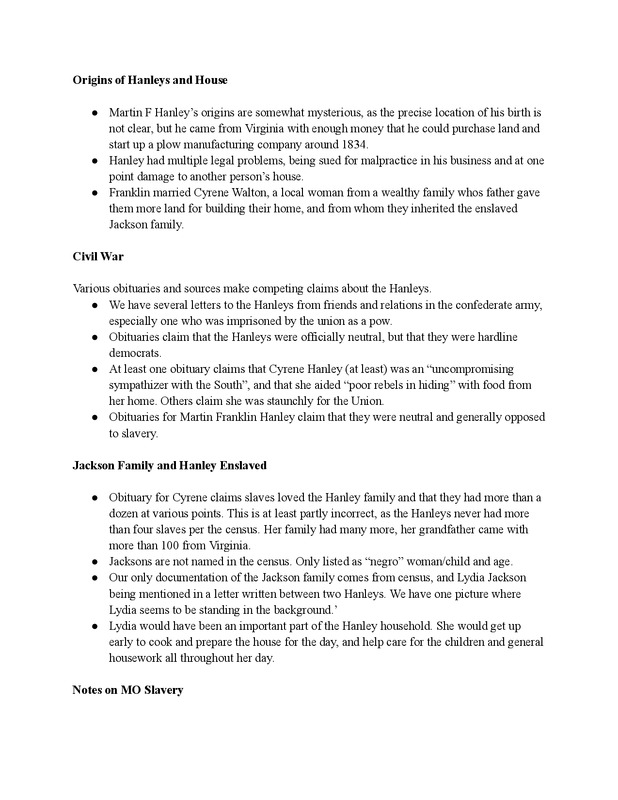
Martin F Hanley came from Virginia and inherited the enslaved Jackson family from his father-in-law. Cyrene, Hanley's wife, is cited as being an "uncompromising sympathizer with the South." Lydia Jackson was the only named enslaved person there and she was a vital part of the Hanley household specifically in regards to the domestic labor.
Hamilton C. Williams and his brother Larkin Wiliams both owned land on the southern side of what would become Tyson Research Center. They were both a part of the large Williams family that had a significant presence in Missouri during the early 1800s. This family was also known to have sympathy toward the Confederacy during the Civil War and were likely enslavers.
Hale Giddings Parker was among the first Black students to attend Washington University in St. Louis. An Ohio native and 1873 graduate of Oberlin College, Parker entered the university’s law school in the late 1870s. Although he completed his coursework, he was denied a law degree after reportedly scoring one point below the passing mark on his final exam. Despite this setback, Parker went on to a distinguished legal and civic career across the Midwest. He served as alternate commissioner-at-large for the 1893 World’s Columbian Exposition in Chicago, where he confronted organizers over the exclusion of African American exhibits. In 1916, Parker’s former classmate David Castleman Webb led an effort to secure him an honorary law degree, but Chancellor Frederick Hall refused, further erasing his legacy within the university’s history.
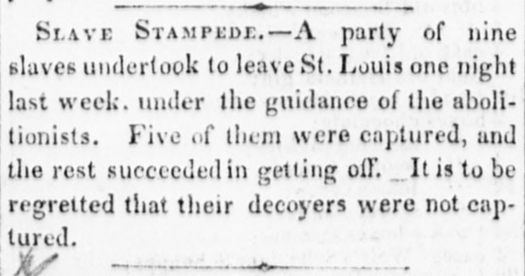
Glasgow Weekly Times describes that nine enslaved people attempted to escape "under the guide of the abolitionists," and that five were captured, but others "succeeded in getting off." The newspaper account also regrettably mentions that the "decoyers" were not captured.
George Washington Goode, a proslavery lawyer from Virginia, owned land on what is part of present-day Tyson in 1862. He served as the attorney for the Emerson-Sandford family in the infamous 1846 court case Dred Scott v. Sandford, through which Dred and Harriet Scott sued for their freedom, which decided in 1857 that not only were the Scotts not eligible for freedom, but that all Black people were not citizens of the United States.
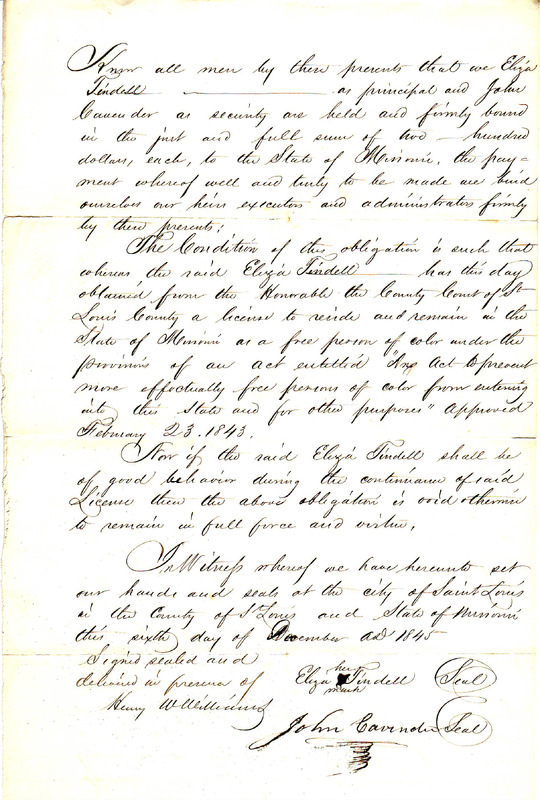
Goode enslaved several people. In March 1848, Goode purchased Benjamin for $605 from the estate of George H. Lanham. In 1850, he held seven people in slavery, and enslaved seventeen people in 1860. In 1846, Goode served as security for Ellen Butler’s freedom license, and for Edward Woodson in 1847.
In this StoryMap, student researcher Julia Feller explores the history of self-liberation and St. Louis' Underground Railroad through the heroic and tragic story of Esther. Born into slavery ca. 1811, Esther was one of several people enslaved by WashU benefactor Henry Shaw (founder of the Dept. of Botany), and who fled in search of freedom in 1855.