
Terra Incognita
Item set
- Title
- Terra Incognita
Items
-
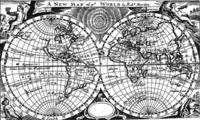 Robert Morden was a geographer and a prolific maker of maps and globes. Displayed here are maps from the first edition of his Geography Rectified. This geographical primer was reprinted in 1688, 1693, and 1700. In addition to containing a small world map depicting both hemispheres, the work contains 75 regional maps including one of America and Virginia and Maryland.
 -
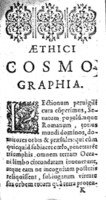 Shown here is the titlepage from a reprint of the Roman geographer Pomponius Mela's Description of the World. He described the world as it was perceived by the ancient Romans. His work is presented as a circumnavigation of the known world at that time, including the continents of Africa, Asia and Europe. The outer edges of all the continents remained unfamiliar to the Romans, and it was here that creatures of mythology were believed to exist. Mela included historical, cultural, mythological as well as geographical information in his work, and numerous copies and translations circulated throughout Europe during this age of exploration. Bound with this copy is Aethici Cosmographi by Henricus Glareanus. Gift of Philip M. Arnold.
 -
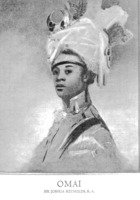 The true story of his voyage there in 1774 with Captain Cook, of how he was feted by Fanny Burney, approved by Samuel Johnson, entertained by Mrs. Thrale & Lord Sandwich, and painted by Sir Joshua Reynolds.
 -
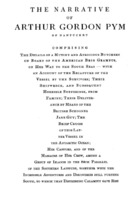 (with wood engravings by Rene Clarke) Poe's novel was written early in his career after being advised that his short stories would not make a profit in the publishing climate of that time. He took the suggestion and produced a narrative in a genre that was very popular, the discovery or travel narrative. Poe included many elements of the genre: the story is told in first person as though based on a journal, the plot takes a traveler into unknown territory, and troubles and sufferings encountered en route are related. Even with these stylistic similarities Poe made the story distinctly his own. The emptiness and isolation of the Arctic landscape fit well with his affinity for horror.
 -
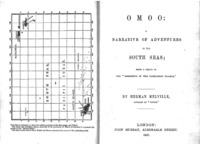 A sequel to the "Residence in the Marquesas Islands" This is the first English edition of the sequel to Melville's Typee.
 -
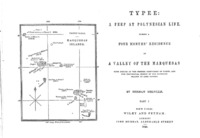 During a four months' residence in a valley of the Marquesas. This is the first American edition of Melville's novel set in the Marquesas Islands.
 -
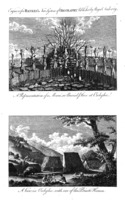 Including All the late important Discoveries made by the English, and other celebrated Navigators of the various Nations, in the different Hemispheres …
 -
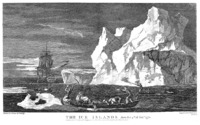 Performed in His Majesty's Ships the Resolution and Adventure; In the Years 1772, 1773, 1774, and 1775 … On Captain James Cook's final voyage to the South Seas on January 15, 1779 Cook's ships, the Resolution and the Discovery approached the west coast of the island of Hawaii. They were greeted by thousands of Hawaiians bearing food and gifts in their canoes. News of the strangers' ships and movements had been circulating among the inhabitants of the island for a few weeks. The bay Cook chose to dock in, Kealakekua Bay, then known as Karakakooa Bay, had a special significance to the Hawaiians. The name of the bay meant, 'pathway to the gods'. What happened next has been in debate ever since. One theory is that the Hawaiians thought Cook was a diety, Lono, who had left from that bay promising to return someday. Another complication was that Cook arrrived at the time of their annual festivities for Lono. Cook and his men were given a warm welcome and for two weeks enjoyed the Hawaiians' food and hospitality. Cook left the bay on Februay 4 but the weather deteriorated and one of the ships became damaged. Cook decided it would be safer to return to Kealakekua Bay to do the needed repairs. When he returned he got a decidedly less warm welcome than the first time. Part of this might have been he had already been there for two weeks. Tensions mounted as the men repaired their ship. Some things were stolen from the ship and there were scuffles in the effort to retrieve them. Cook eventually tried to get King Terreeoboo to come aboard the Resolution. Why he was trying to do this has also been the subject of much debate. Was it a harmless gesture, or was he trying to take him hostage in order to retrieve the stolen goods? The King went willingly but as they were about to leave, his mother and one of his wives asked him not to go on board. There was much confusion and at this time the King wouldn't come aboard voluntarily. The situation might have resolved itself peacefully but men aboard the Resolution fired a canon killing another chief. This reinforced the Hawaiians' suspicions about the now unwelcome visitors and Cook was killed in the resulting fight.
 -
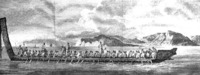 Voyages successively performed by Commodore Byron, Captain Wallis, Captain Carteret, And Captain Cook, In the Dolphin, the Swallow, and the Endeavour: Drawn up From the Journals which were kept by the several Commanders, And from the Papers of Joseph Banks, Esq.
 -
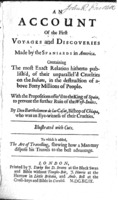 By Don Bartholomew de las Casas, bishop of Chiapa ... Illustrated with cuts. To which is added, The art of travelling Bartolomé de las Casas was a Spanish missionary and historian often referred to as "the defender of the Indians." He came to the Americas in 1502 and participated in several military campaigns to suppress the indigenous population. He was rewarded with large grants of land that included Native American slaves. At this point he considered the natives infidels and as a priest sought to convert them to Christianity. It was not until 1514 that Casas determined to devote his life to the defense of the Native Americans. In 1515 he returned to Spain to request Ferdinand's intercession in the legal and political corruption taking place in both the New and Old Worlds. He continued writing and speaking out on the conditions he witnessed for the rest of his life. In describing what he had witnessed in the West Indies Las Casas wrote, "… My eyes have seen these acts so foreign to human nature, and now I tremble as I write …"
 -
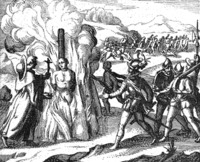 On a adjoinct la deuxiesme partie de les tyrannies commises aux Indes Occidentales par les Espagnols. Nouvellement exorne avec taille douce en cuyvre. Bound with Casas, Bartolome de las. Le Miroir de la Tyrannie.
 -
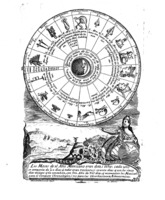 Aumentada con otros docvmentos, y notas, por el ilustrissimo Senor Don Francisco Antonio Lorenzana, arzobispo de Mexico. Con las licencias necesarias Herman Cortes arrived in the West Indies in 1504, traveled on to Cuba in 1511 and marched into the Aztec capital of Tenochtitlan (Mexico City) in 1519. There he encountered the highly developed society of the Aztecs. The Spanish were impressed with Tenochtitlan, which they called, "another Venice". The city had been constructed on two islands in the middle of a lake. The Aztecs had designed floating gardens that yielded crops, most of the streets were canals and the city was connected to the mainland with causeways. Cortes was accompanied with 600 Spaniards, 200 native Cubans, horses, and armed cannons, muskets, and crossbows. He allied himself with the people of Tlaxcala, adversaries of the Aztecs, and resentful of their militaristic domination over the surrounding areas. He was also accompanied by two interpreters, Geronimo de Aguilar, a priest who had been shipwrecked and captured by indigenous people of Yucatan and a woman called variously, Malintzin, Marina of La Malinche. Quetzalcoatl, the Feathered Serpent, was a deity in the Aztec mythology who had sailed away in ancient times promising to return in a certain year. Montezuma, the Aztec King, had heard reports of sightings and encounters with the Spaniards. He was a ruler who was plagued by nightmares and influenced by omens and began to wonder if the people moving inland were possibly this god or representatives of the god. When Cortes arrived at the capital he was welcomed by Montezuma who said in a speech that was translated by La Malinche, "You have come back to us; you have come down from the sky…Welcome to your land, my lords." Cortes soon took Montezuma captive and a struggle soon broke out over who would gain control of the city. The Spanish attacked the Aztecs during a religious holiday and killed Montezuma in 1520. After that the Aztec's retaliated by attacking Cortes and his men on a night that became known as "la noche triste". Cortes was forced to lead his troops and allies out of the city. Five hundred of the conquistadors perished and forty were taken prisoner for sacrificial purposes. He recaptured the city in 1521 after a campaign of isolating the city's food and water supply for four months. Cortes' reports of his exploits took the form of five letters addressed to Emperor Charles V.
 -
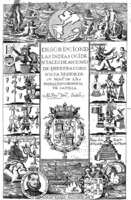 Escrita por Antonio de Herrera, coronista mayor de Su Md. d[e] las Indias y su coronista de Castilla ; en quatro decadas desde el año de 1442 hasta el de [1]531 .. (Bound with several works which have engraved title pages)
 -
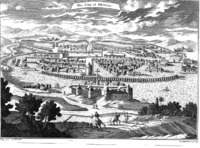 Done into English from the Original Spanish of Don Antonio, Secretary and Historiographer to His Catholick Majesty. By Thomas Townsend, Esq.
 -
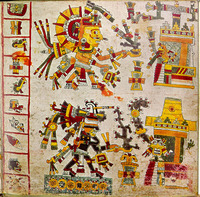 Colored facsimile of a manuscript with Mexican hieroglyphics; has an accordion binding.
 -
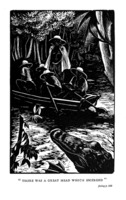 Being the narrative of the tramp steamer Capella from Swansea to Santa Maria de Belem do Grao Para in the Brazils, and thence 2,000 miles along the forests of the Amazon and Madeira rivers to the San Antonio falls … This is a reprint of Tomlinson's description of his trip in 1909 and 1910 up the Amazon and Madeira rivers with striking woodcut illustrations by Clare Leighton.
 -
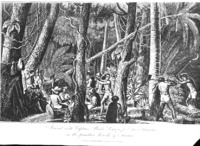 Translated from the German, and Illustrated with Engravings.
 -
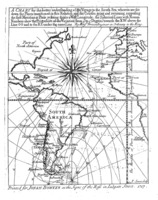 Particularly describing the genius and constitution of the inhabitants, as well Indians as Spaniards (by Monsieur Frezier ) Illustrated with 37 copper-cutts of the coasts ... printed from the author's original plates ... With a postscript by Dr. Edmund Halley ... And an account of the settlement, commerce, and riches of the Jesuites in Paraguay
 -
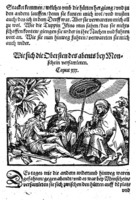 This is Hans Staden's account of his captivity among the Tupinamba from 1547 until 1555.
 -
 With an introd. by Dee Brown & wood-engravings by Gillian Tyler. Translated by A. Chapman from a speech delivered in Washington in 1879. First published in 1925 under title: Chief Joseph's own story. (wood engravings).