Teaching the Collection: A Curriculum for Grades 6-12
INTRODUCTION AND RATIONALE
Understanding the history of slavery, abolition, and emancipation in the United States is foundational to comprehending broader themes in American and world history. This curriculum is designed to introduce students to the complex narratives of enslaved people and their various paths to freedom, using primary source documents from the William K. Bixby Collection. The documents serve as a window into legal and personal struggles for freedom and provide an opportunity to engage critically with historical materials. This curriculum will help students build historical literacy by analyzing primary source documents, understanding the legal frameworks of the mid-19th century in Missouri and other parts of the United States, and reflecting on the human experiences behind the text, particularly the varied regional and temporal contexts of slavery, abolition, and emancipation. Students will explore the social, economic, and legal conditions that shaped the lives of the emancipated individuals, fostering a deeper understanding of the American abolition movement and the broader implications for civil rights and social justice.
Emancipatory Records in the Bixby Collection
The five emancipatory documents within the William K. Bixby Papers at Washington University in St. Louis illuminate the complexities of enslavement and the pursuit of freedom and offer profound insights into the lived experiences of those who obtained freedom. These documents are part of a larger historical narrative that details the journey toward freedom for enslaved people in the United States. By examining these documents closely, we can better understand not only the legal mechanisms of emancipation and self-liberation but also the social and moral contexts in which these acts were performed.
The emancipatory documents within the Bixby Collection offer a unique window into the personal and legal dynamics of slavery, manumission, and freedom in the mid-19th century. They are just a fraction of the broader historical records curated by William K. Bixby, a collector of rare books and manuscripts, who sought to document significant moments in American history. The Bixby Collection includes a variety of materials related to enslavement and interactions with notable historical figures. Although Bixby’s primary interest lay in collecting significant manuscripts and autographs of people of global and local fame, the inclusion of these documents allows us to explore the nuanced ways in which these records were created, preserved, and later reinterpreted.
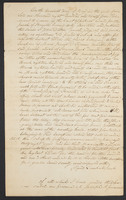
Deed of Manumission for Julienne and Marguerite by Lambert Jacob - July 14, 1836
The emancipation of Julienne and her daughter Marguerite by Lambert Jacob on June 17, 1836, is particularly significant due to the conditions attached to their freedom. While Jacob granted them freedom from slavery, he reserved their labor during his lifetime, reflecting the incomplete nature of many such emancipations. This conditional freedom underscores the persistent power dynamics even in acts that ostensibly freed enslaved people. The document also illustrates the geographical mobility of enslaved people and their enslavers, with references to locations in both Louisiana and Missouri, demonstrating the interconnected nature of slavery across state lines.
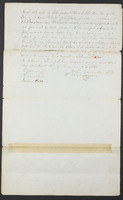
Deed of Emancipation for Eliza by John Cavender, November 17, 1845
The emancipation deed for Eliza, executed by John Cavender, presents another example of personal manumission. Eliza, described as a 29-year-old woman about five feet four inches tall, became free on November 17, 1845, in St. Louis, Missouri. The act is recorded formally in the St. Louis Circuit Court, emphasizing the legal recognition of such manumissions within the judicial system of the time. Eliza’s emancipation document, like Peter Ware’s, demonstrates the paternalistic attitudes of some enslavers who chose to manumit enslaved people. Although Cavender claims to have emancipated Eliza out of a personal sense of benevolence, it is important to note that Missouri law required enslavers to permit self-purchase by those seeking their freedom, which complicates the interpretation of these records as acts of benevolence. It also raises important historiographical questions about the motivations behind these acts of liberation and the subsequent lives of the emancipated people. We do not know to what degree enslaved people in any of these emancipation records negotiated, offered payments, or made other sacrifices for their freedom.

Deed of Emancipation for Samuel by Louis A. LaBeaume and Others - December 3, 1845
The collective emancipation of Samuel by four members of the LaBeaume family, Jonas Newman, and Peter E. Blow Jr. on December 3, 1845, illustrates a communal act of manumission. This document highlights the intricate familial and social networks that could influence decisions about emancipation. The document’s language, which emphasizes Samuel’s ability to “work and gain a livelihood,” suggests that his value was measured not just in terms of freedom but also in economic utility. This was in part due to Missouri laws that required free Black people in Missouri to have testament that they were of good character and could support themselves so they would not become a burden to the state. The presence of multiple signatures also suggests that manumission could be a socially mediated process involving multiple stakeholders. Peter E. Blow Sr.’s marriage into the LaBeaume family further exemplifies these interconnected relationships, as Blow Jr. was not only involved in Samuel’s emancipation but members of the Blow family also played a significant role in the life of Dred Scott, an enslaved man whose legal battle for freedom became a landmark case in American history. Peter E. Blow Sr. and members of his family had enslaved Scott, and Charles and attorney Edmund LaBeaume played an important role in Dred and Harriet Scott’s freedom suits. These ties between the Blow and LaBeaume families, including connections to business and law, underscore the complex social fabric of St. Louis during this period and how these affiliations could impact decisions regarding emancipation.
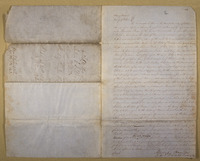
Record of escape - Bill, enslaved man - St. Louis, Missouri - October 21, 1850
This document provides a stark contrast to the legal deeds of manumission negotiated between enslaved people and enslavers represented in this collection. Bill, a man enslaved by Andrew G. Gist, sought to free himself by escaping from Missouri to Illinois in the spring of 1850. The detailed description of Bill in the affidavit filed by Gist with Alexander Hamilton, Judge of the 8th District Circuit Court in Missouri, serves both to dehumanize and criminalize his bid for freedom. It highlights the constant risk of re-enslavement under the Fugitive Slave Act of 1850 and underscores the severe legal repercussions and social attitudes towards enslaved people who sought to claim their freedom autonomously. This record also reflects the power dynamics and oppressive legal frameworks that supported the institution of slavery, even as antislavery sentiment grew.
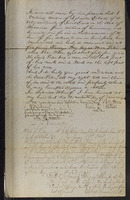
Deed of Emancipation for Peter Ware, enslaved man, January 19, 1853
The deed of emancipation for Peter Ware, a man enslaved by Victoire Labadie, illustrates a personal act of manumission driven by "motives of benevolence and humanity"—as described in the document—and nominally valued at five dollars. This document, signed by Labadie in St. Louis, Missouri, on January 19, 1853, notably includes a detailed physical description of Peter Ware, including a mole and scar. This description, recorded through the gaze of white enslavers and legal authorities, was a method for surveillance, making distinguishable physical features so that emancipation records can be matched with the emancipated person to monitor free and enslaved people. This served to prevent free people from exchanging freedom papers, to curtail the migration of free Black people into the state, and to identify Black Missourians who were apprehended in alleged violation of laws governing their behavior. The language of the document, which refers to Peter's right to acquire property post-emancipation, reflects the shifting legal and social understandings of freedom in the mid-19th century. It also raises questions about the conditions under which Peter lived prior to his emancipation and what his life might have looked like afterward.
By examining the Bixby Collection through the lens of Robin D.G. Kelley’s Freedom Dreams, we gain a deeper understanding of how historical narratives can be reimagined to include the dreams, aspirations, and agency of those who have been marginalized. Kelley emphasizes the importance of radical imagination in creating a more inclusive historical record. This framework is particularly relevant when interpreting collections like Bixby’s, where the context of acquisition might have originally been focused on the fame or notoriety of their white signers rather than the diverse experiences of all individuals affected by the institution of slavery. Reinterpreting these documents within a reparative historiographical framework allows us to foreground the experiences of enslaved and emancipated people, recognizing their agency and resilience.
Washington University Libraries and Special Collections provide extensive resources that complement the emancipatory documents in the Bixby Collection, offering a deeper understanding of the socio-political environment of the 19th century. The Libraries' digital repositories contain significant materials such as the St. Louis Circuit Court Historical Records Project, which includes the legal records from Dred and Harriet Scott’s ten-year battle for freedom, and the suits of over 300 people enslaved in St. Louis who filed for their freedom before the Dred Scott decision. The repository also contains other court records related to slavery, including an entry for Peter Ware’s emancipation by Victoire Labadie. The digital project is instrumental in illustrating the legal struggles of enslaved people seeking freedom and the intricate dynamics of the courtroom as a space for resistance. The James E. and Joan Singer Schiele Print Collection further enriches this context by providing visual representations of slavery and abolition, such as prints depicting key moments like the Dred Scott case and other significant events and figures related to slavery and freedom.
By integrating these resources at Washington University with the emancipatory documents from the Bixby Collection, researchers can uncover new insights into the lives of enslaved and emancipated people, drawing connections between local and national histories. This comparative analysis aligns with Kelley’s call to use history as both a record of past struggles and a tool for inspiring future liberation efforts. Furthermore, a related collection of William K. Bixby’s papers at the Missouri Historical Society Library and Research Center, can provide a more regional perspective that can be used alongside Washington University’s collections to deepen understanding of the networks and relationships that shaped the experiences of enslaved and emancipated individuals in Missouri and beyond. By combining these local resources with Kelley’s exploration of global liberation movements and cultural nationalism, researchers can develop a comprehensive historiography that reflects the interconnectedness of struggles for freedom across different times and places.
Ultimately, the Bixby Collection and its related holdings at the Missouri Historical Society offer a rich foundation for a reparative public historiography that acknowledges the humanity and agency of enslaved and emancipated individuals. In this context, historiography refers to the way history is written and interpreted, emphasizing the need to reshape narratives that have traditionally marginalized or omitted the experiences of enslaved and emancipated people. By reexamining these documents through the lens of reparative history, we not only honor the memory of those who fought for their freedom but also contribute to ongoing efforts to create a more inclusive and equitable historical narrative. This work is essential for fostering a deeper understanding of the complexities of American history and for inspiring future generations to continue the struggle for justice and liberation.
FAMILY AUTOETHNOGRAPHY USING PRIMARY SOURCE DOCUMENTS
Duration: 5-10 days
Materials:
-
Primary source documents from the Bixby Collection
-
Scanners
-
Projectors
-
Access to computer labs or Chromebooks
-
Paper and writing materials
-
Circle Talking Piece
Day 1: Introduction to emancipation documents and discussion circle
Activity: Begin with a discussion circle to introduce the concept of emancipation and the historical context of the documents. Discuss the meanings of freedom and emancipation, and explore what these concepts might have meant to people who were enslaved.
Questions for Discussion:
-
What do we think freedom meant for enslaved people like Peter Ware, Eliza, or Samuel?
-
How might the experiences of Julienne and Marguerite differ from those of Eliza or Bill?
-
What can these documents tell us about the conditions and experiences of emancipated Black Americans?
Objective: Encourage students to think critically about the human stories behind the documents and consider the broader implications of emancipation in American history. Additionally, prompt students to examine the gaps and biases in the records, recognizing that these documents were often created by enslavers or legal authorities rather than the enslaved people themselves. Discuss the reliability of these records and explore what might be missing from these narratives, considering the perspectives and voices that are not represented.
Day 2: Understanding autoethnography and its relevance to Black history
Activity: Introduce the concept of autoethnography, an approach to research that involves describing and systematically analyzing personal experience to understand broader cultural experiences. Provide examples of how students might connect their family histories to the themes of freedom and emancipation.
Questions for Discussion:
-
How does autoethnography help us connect personal narratives to broader historical events, and why is this important in the study of Black history?
-
In what ways can the process of exploring one’s own family history illuminate larger themes of freedom and resistance within the African American experience?
-
What are some challenges and benefits of using autoethnography as a research method when studying the histories of marginalized groups?
Objective: Help students understand the importance of personal narrative and its role in historical research, particularly in the context of African American history and the legacy of slavery.
Days 3-5: Creating personal family history projects
Activity: Invite students to use the primary source documents as inspiration to create a family history project that connects their own family stories to the themes of emancipation and freedom. Encourage them to find family photos or create new ones that represent concepts such as freedom, family, community, and daily life.
Questions for Discussion:
-
How might the experiences of your ancestors influence your understanding of freedom and justice today?
-
What parallels can you draw between the stories of emancipation in the Bixby Collection and your own family’s history or experiences?
-
How can personal stories and family histories contribute to a more nuanced understanding of historical events like emancipation?
Objective: Invite students to develop a deeper understanding of their personal histories and how these intersect with larger historical narratives.
Days 6-10: Reflecting on historical and personal connections
Activity: Have students write write reflective essays that connect their family projects to the primary source documents from the Bixby Collection. Ask them to consider what they have learned about their family history, the history of emancipation, and the broader implications for understanding American history.
Questions for Discussion:
-
What did you learn about your own family history that you didn’t know before? How does this new knowledge affect your understanding of American history?
-
How can personal narratives and family histories be used to challenge or complement traditional historical accounts?
-
In what ways do you think the documents in the Bixby Collection can help us understand the diverse experiences of enslaved and emancipated people in the United States?
Objective: Reinforce critical thinking and historical analysis skills, encouraging students to draw connections between their own lives and the historical narratives they study.