
Founding Fathers
The engrossed—or “official”—copy of the Declaration of Independence bears the signatures of 56 delegates, while our printed copy of the Declaration shows only one. Because the delegates to the Continental Congress were not originally listed, the average person did not know who signed the Declaration until January 1777, when the Goddard Broadside was printed and sent to the 13 states. Named for its printer, Mary Katherine Goddard, the Goddard Broadside was more decorative and included the names of the delegates who signed the Declaration.
Autographs of the signers of the Declaration and other Founding Fathers became collectible in the nineteenth century and many have found their way into the collections at Washington University Libraries through generous donations.
Please click each item for additional images.

John Adams, July 1818
Some collectors cared only for the autograph and not the letter or receipt on which it appeared. The ending to a letter from John Adams was cut off and attached to a piece of paper on which someone wrote a biographical note.
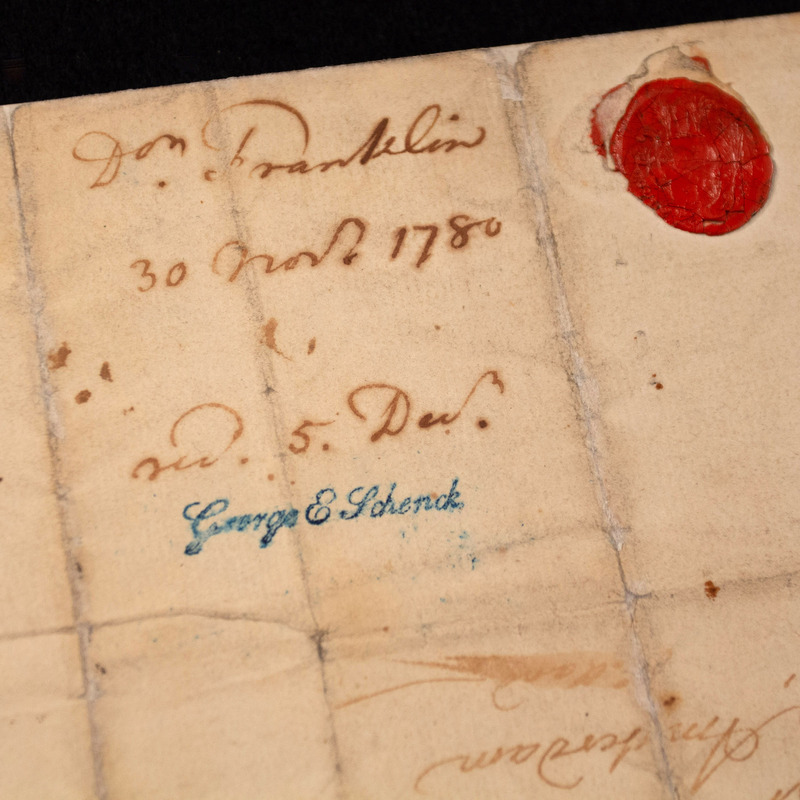
Benjamin Franklin, November 1780
At the age of 70, Benjamin Franklin was the oldest signer of the Declaration of Independence. Here, Franklin responds to James Searle’s letter about the infamous traitor of the Revolutionary War, Benedict Arnold.

Alexander Hamilton, March 17, 1791
Though Alexander Hamilton did not sign the Declaration of Independence, he is considered to be a Founding Father due to his role in founding the nation’s financial system. This letter to the Treasury Department details instructions for ensuring authenticity of loan certificates.

John Hancock
As the President of the Continental Congress, John Hancock’s name appears on printed copies of the Declaration and his autograph is large and centered on the engrossed copy. The name “John Hancock” is now an informal synonym for the word signature.