
Jefferson's Library
Thomas Jefferson, author of the Declaration, famously said, “I cannot live without books.” Over his life, he built three libraries: the first was lost in a fire, the second became the Library of Congress, and the third was sold after his death. Jefferson’s granddaughter and her husband Joseph Coolidge bought books from this sale, which eventually came to Washington University in 1880.
Jefferson’s books give insight into his intellectual life. Many of the ideas found in the Declaration of Independence can be traced back to books in his library. Jefferson was the architect of the Louisiana Purchase and the expedition to explore this new land, so it is particularly appropriate that part of his library resides in St. Louis.
Please click each item for more images.
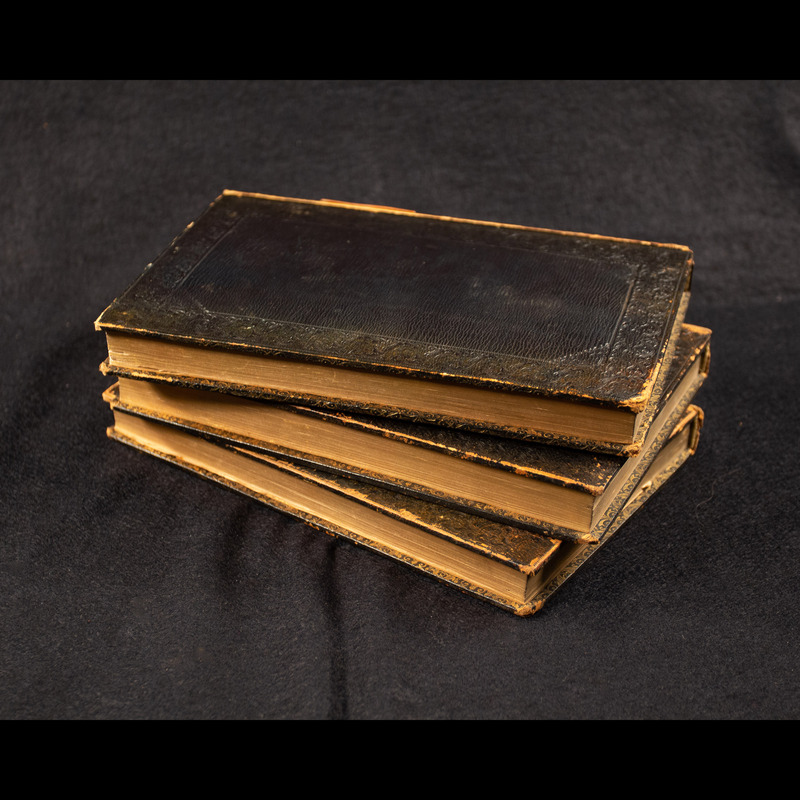
Milizia,Principj di architettura civile
On his visit to Monticello, Joseph Coolidge brought this set of books as a present to the man who would later become his grandfather-in-law. It was through the donation of Joseph Coolidge’s library that these books came to Washington University.
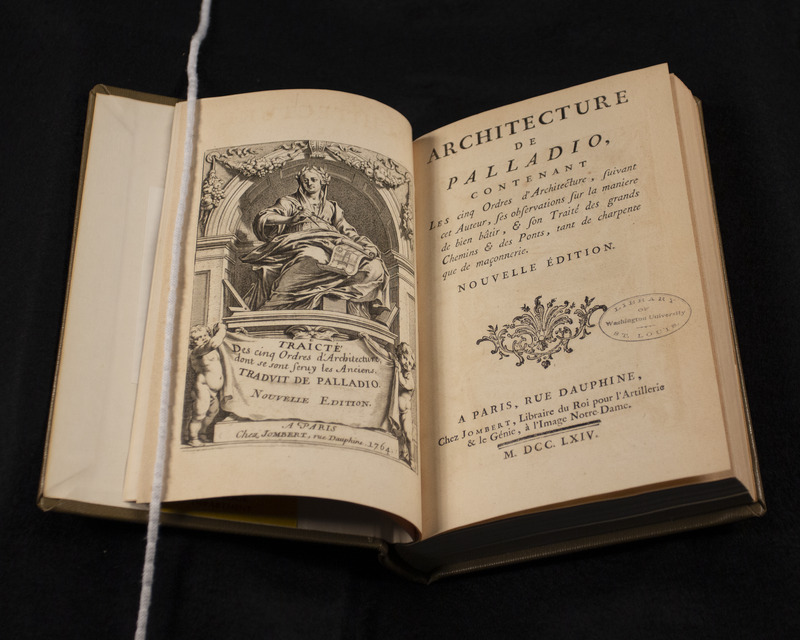
Palladio, Architecture de Palladio
Instead of signing his books, Jefferson would write a “T” next to the “I” signature. These signatures—a key to help the binder put the pages in order—used the Latin alphabet, in which there is no J.
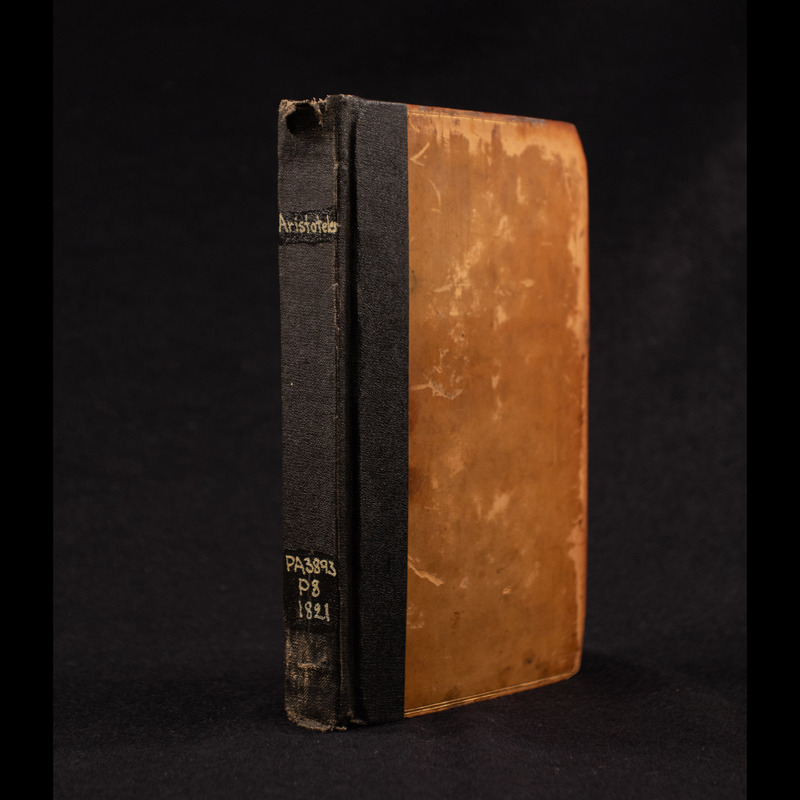
Aristotle, Politikōn ta sōzomena
Jefferson’s books were in the circulating collection until a researcher rediscovered them in 2010. They were used by students and some were rebound. This book by Aristotle is thought be one of the last books Jefferson read before his death.