Beyond the Horizon: Broadway and Fame
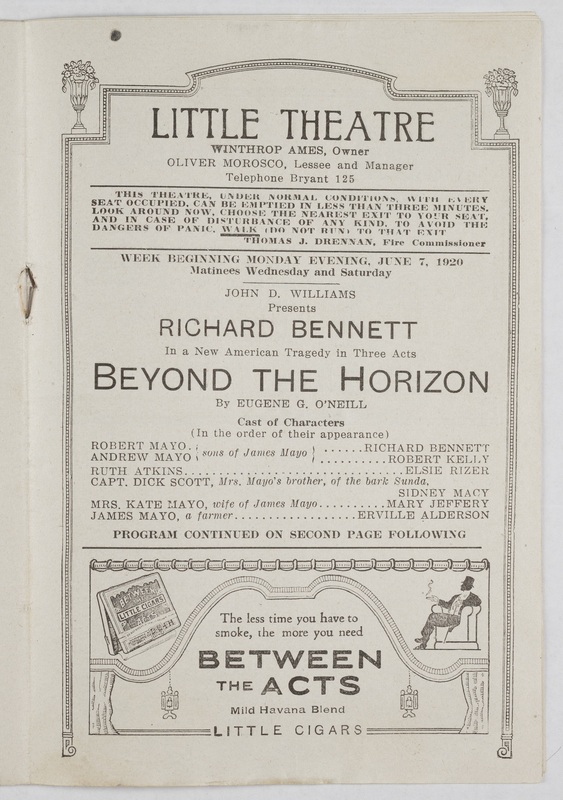
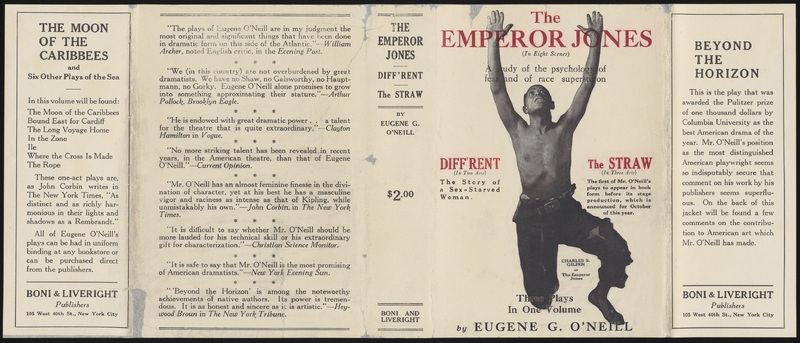
O'Neill's Beyond the Horizon opened on Broadway in 1920 to great acclaim and was awarded the Pulitzer Prize for Drama. His first major breakthrough however was The Emperor Jones, first staged by the Provincetown Players and making a national star of African-American actor
Charles Gilpin at a time when such roles were performed by white actors in blackface. The play also ran on Broadway in 1920, and obliquely commented on the U.S. occupation of Haiti that was a topic of debate in that year's presidential election.
Even more controversy followed in 1924 with the premiere of All God’ Chillun Got Wings, a story of the tumultuous marriage between an African American man and an Irish woman. Despite death threats to O’Neill, his family and the actors, the play went forward and launched
the artistic career of Paul Robeson, one of the most highly esteemed actors and singers of his time, a major figure in the Harlem Renaissance and a lifelong social activist.
This period was very prolific for O’Neill. Between 1916 and 1928 he completed thirty-one plays, which were gradually getting longer and more serious in subject matter. Between 1920 and 1934, twenty-three of his plays premiered, three of which were awarded Pulitzer Prizes. A
common theme throughout was the search for God in a godless world. With the new production company Triumvirate he could depict such pursuits with technical experiments not seen in American theater before.
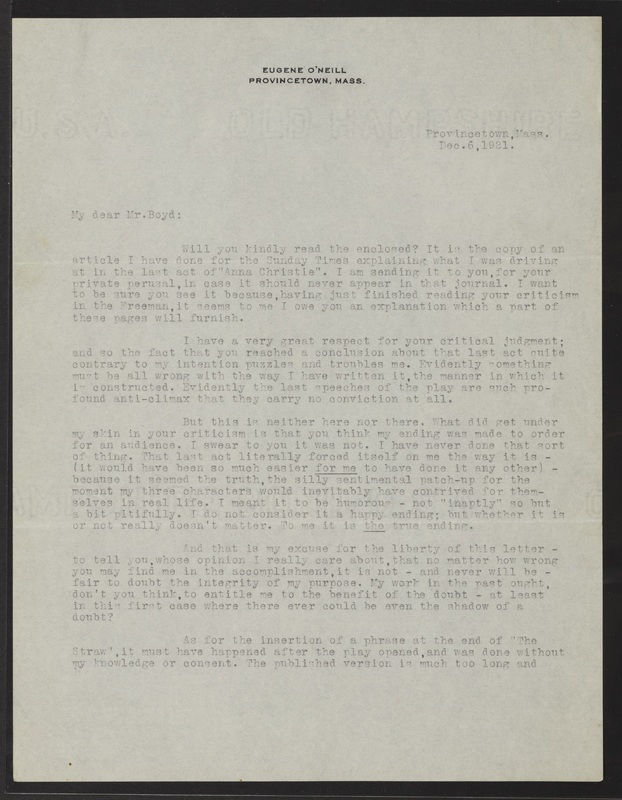
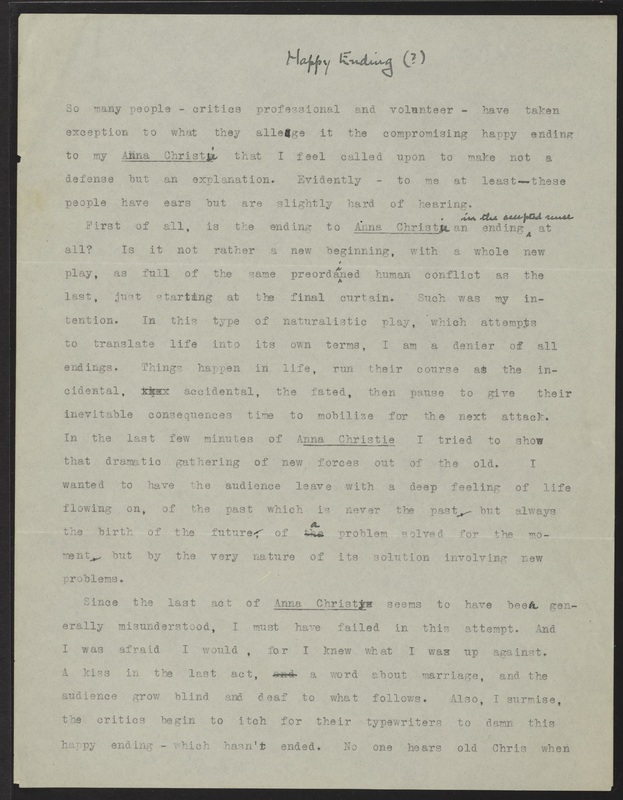
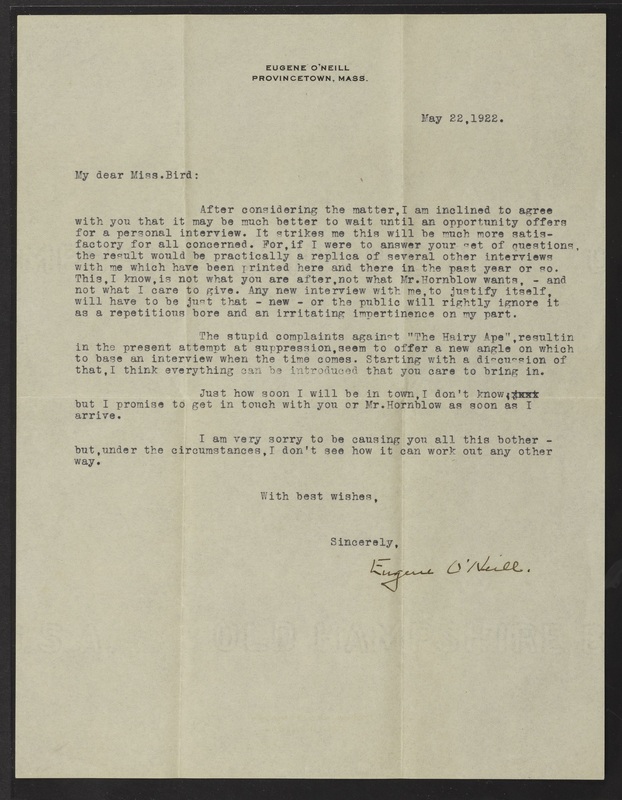
Other highly-regarded plays included Anna Christie (Pulitzer Prize 1922) about a former prostitute seeking out her estranged father; The Hairy Ape (1922) about a laborer struggling with his identity; Strange Interlude (Pulitzer Prize 1928) which dealt openly with adultery and
abortion; Mourning Becomes Electra (1931) a Greek-inspired play cycle later adapted into an opera; and his only outright comedy, Ah, Wilderness! (1933), a wistful re-imagining of his youth.