Long Day's Journey: Renaissance and Legacy
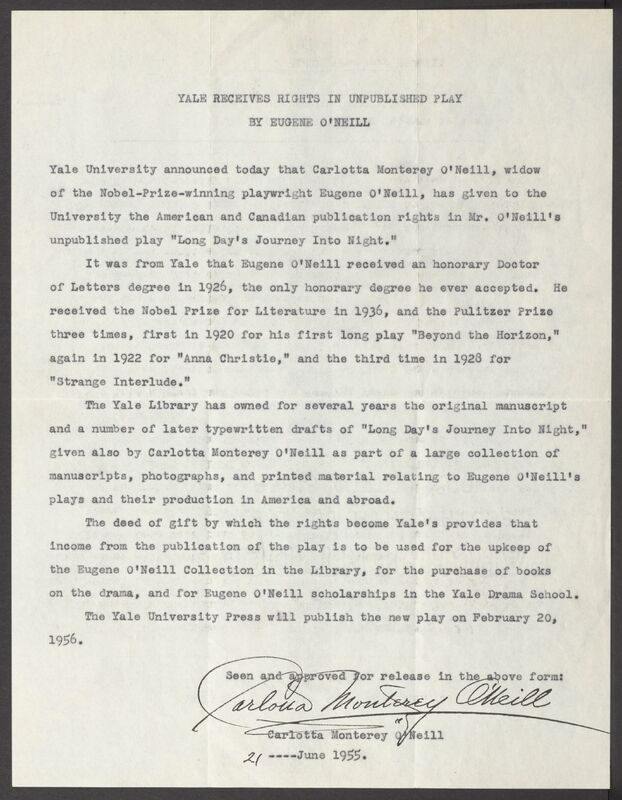
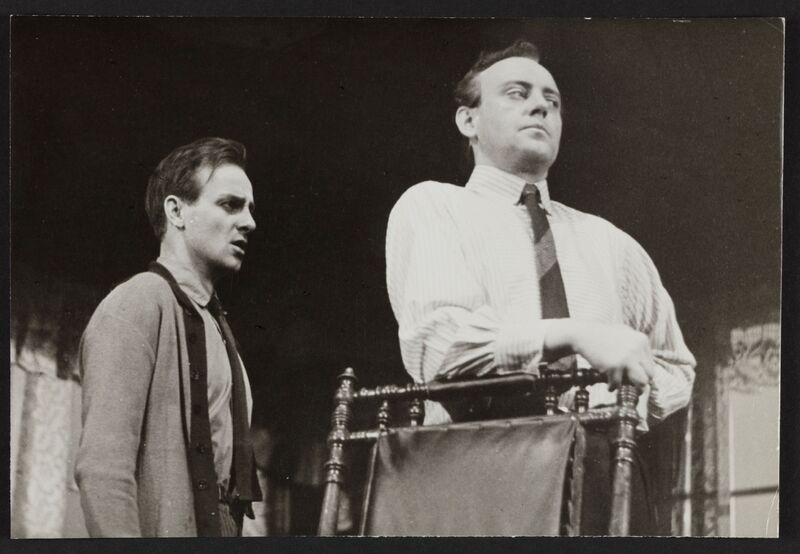
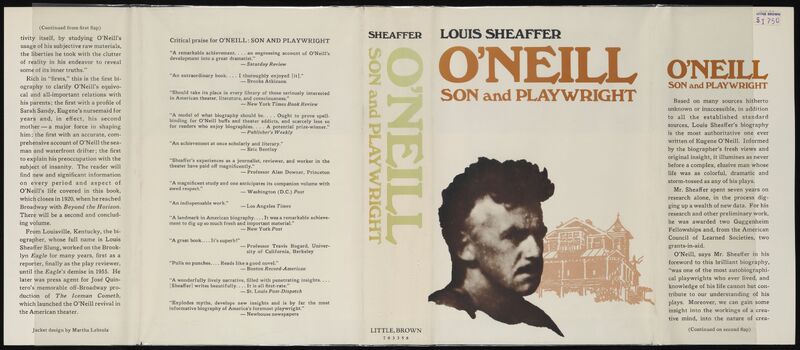
At his death O’Neill’s literary reputation was at a low ebb, but three years later an O’Neill renaissance began with the revival of The Iceman Cometh and the premiere of Long Day's Journey Into Night, both met with tremendous critical acclaim. The latter won O’Neill his fourth
Pulitzer Prize, in 1957. Other posthumously-published works included the Cycle plays A Touch of the Poet (1958) and More Stately Mansions (1967). With countless revivals his reputation has steadily grown, and he is widely regarded as one of our most important and transformative
American playwrights.
O'Neill's home in New London, Monte Cristo Cottage, was made a National Historic Landmark in 1971. His Tao House home in Danville, California, near San Francisco, was preserved as the Eugene O'Neill National Historic Site in 1976. The Eugene O’Neill Foundation maintains the Tao House, houses an archive of O’Neill-related materials and sponsors productions of O’Neill’s plays onsite.
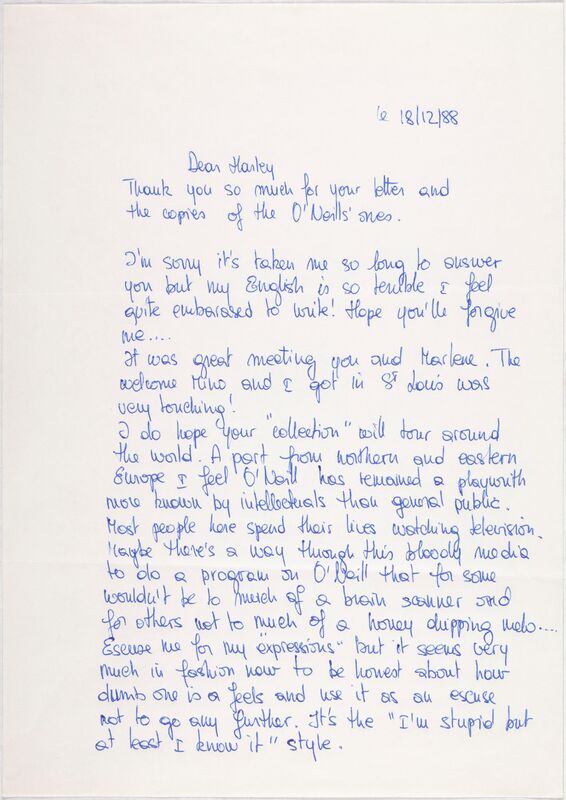
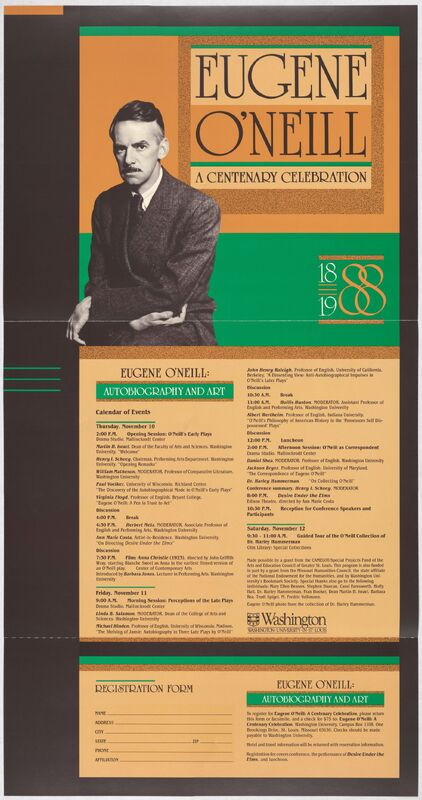
The Eugene O'Neill Theater Center in Waterford, Connecticut fosters the development of new plays under his name, and there is a theatre in midtown-Manhattan named after him which stages major plays and musicals. Major archival collections are held at universities such as Connecticut College, University of Texas, Washington University and Yale University.
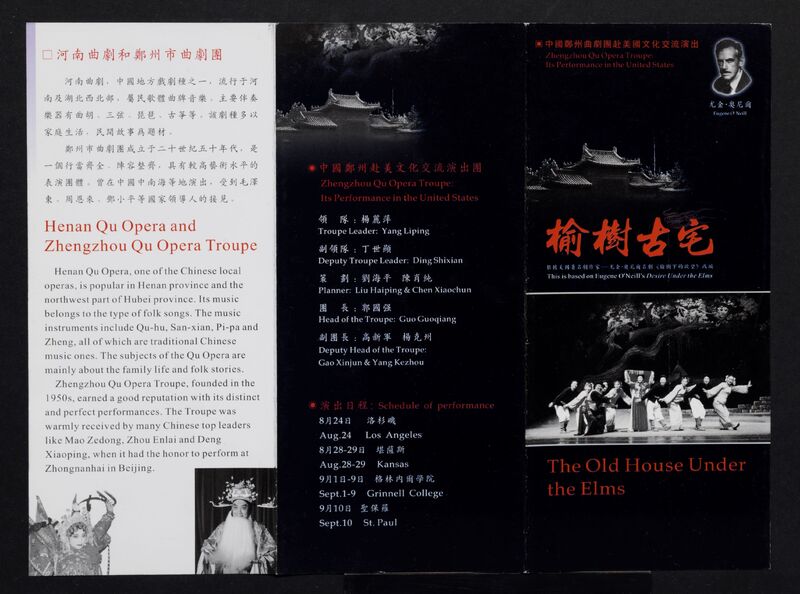
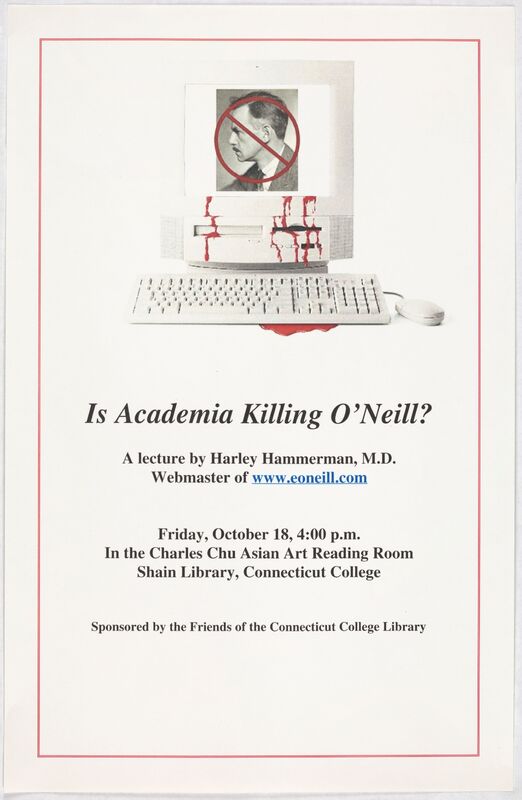
The international Eugene O’Neill Society was formed in 1978 to promote study of the playwright’s life and work. The society hosts conferences, publishes a newsletter and a scholarly journal, The Eugene O’Neill Review, and awards the Eugene O’Neill Medallion to actors, directors, writers scholars and others who have made significant contributions to understanding and appreciating O’Neill.