
Love in a Fallen City
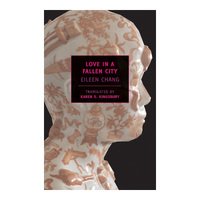
倾城之恋
“到处都是传奇,可不见得有这么圆满的收场。胡琴咿咿呀呀的拉着,在万盏灯火的夜晚,拉过来又拉过去,说不尽的苍凉的故事-----不问也罢!”
Set in 1940s Shanghai and Hong Kong, Love in a Fallen City is a love story that triumphed during wartime Hong Kong. Eileen Chang wrote it in 1943 and adapted it into a script barely a year later. The story is rare among Eileen’s fiction as a romance with a happy ending that appeals to readers. It has been considered as a parody of Chuanqi 传奇 (a traditional Chinese romances).
The story is one of the trivial things that happened between a Chinese woman and a “westernized” Chinese man at a time of great social upheaval. Nicole Huang (2005) commented that the novella is the most important literacy legacy from 1940s because of “the construction of an alternative narrative of war, one that contradicted the grand narratives of national salvation and revolution that dominated the wartime literary scene” (p. xii).
The protagonist, Bai Liusu, a beautiful divorcee, moves back to her mother’s house and lives with a declining aristocratic family in Shanghai. Her large and extended family cannot tolerate her divorce, feeling that it brought shame to the family and one more “useless” person reliant upon the family wealth. Liusu insists on a decent and legitimate second marriage for some economic stability.
She meets Fan Liuyuan, a bachelor born and raised in Britain and just returned to Shanghai to inherit his father’s fortune, when he was introduced to her single sister. Liyuan is rich, but a known womanizer who is in search of a real Chinese woman. Liusu seems to be the right one, with the femininity, sophistication, and mannerisms of a traditional Chinese family. Liusu follows him to Hong Kong to win his love in a hope of a legitimate marriage.
Just when Liusu is ready to give up all of her intentions and decides to be his “kept woman” living in a big empty house, the Japanese bomb and invade Hong Kong. The bombing blocks Liuyuan from leaving for Britain. He returns and is reunited with Liusu, the least likely bridal candidate. The fall of Hong Kong holds their hands together and bonds a couple who believe their love for each other to be far more enduring and valuable than anything else. The novella has been constantly adapted into stages and films. The Hong Kong director, Xu Anhua 许鞍华, adapting it into a film in 1984.
Reference:
Huang, N. (2005). Introduction. In Chang, E.; Jones, A.F. (Trans.) Written on water (pp. xii). New York: Columbia University Press.