
Lust, Caution
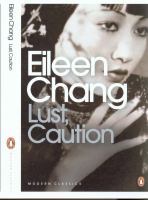
色戒
“到女人心里的路通过阴道”。
“这女人的心身的温暖覆在他上面像一床软缎面子的鸭绒被,他悠然地出了汗,觉得一种情感上的奢侈”。
“我这辈子最遗憾的事,就是推我入地狱的人,也曾带我上天堂”。
Lust, Caution (1950) is known to many Western audiences through its film adaptation by Ang Lee 李安 in 2007. Based on the true story of the wartime spy Zheng Pingru, Lust, Caution depicts a love affair in the political climate of doubt and betrayal in Hong Kong and Shanghai during the Japanese Occupation of WWII. This political setting echoes the tense atmosphere of the Cold War era when Lust, Caution was composed and published in 1978. Centering around a woman’s desires in a man-dominated society, Lust, Caution has been considered a bold novella—mainly over how sex and politics are integrated and portrayed in the story.
During the Japanese occupation of Shanghai and Hong Kong in WWII, sexpionage between Wang Jiazhi and Mr. Yi begins. Wang Jiazhi is a college student in a patriotic actors' troupe and is convinced to seduce and assassinate Mr. Yi by the Nationalist government (officially the National Government of the Republic of China). Mr. Yi is a leader of the secret agency under the Japanese puppet government in Shanghai and “accidentally falls in love” with Wang. After Wang’s first meeting with Mr. Yi in Hong Kong, she encounters Mr. Yi in Shanghai again and begins a love affair with him. However, Wang eventually becomes involved in the complicated politics of wartime as well as trapped in an illusory desire for love, sex, and power that is more than what she expects at first. She warned her “lover” to escape just before the assassination attempt when he gave her an expensive diamond ring; and she was executed with all her conspirators. With the tension of a political thriller and the depictions of love and the erotic, Lust, Caution revives wartime Shanghai, vividly illustrating a passionate yet doomed love affair in WWII.