
Red Rose and White Rose
红玫瑰与白玫瑰
“也许每一个男子全都有过这样的两个女人,至少两个。娶了红玫瑰,久而久之,红的变了墙上的一抹蚊子血,白的还是『床前明月光』;娶了白玫瑰,白的便是衣服上沾的一粒饭黏子,红的却是心口上一颗硃砂痣”。
Set in Shanghai during the 1940s, when China and its people were undergoing a dramatic social transformation and Westernization, Red Rose and White Rose (1944), portrays how the indecisive male protagonist, Zhenbao, a modern “westernized” Chinese man, struggles with two women in his life—White Rose who follows Chinese tradition and Red Rose who behaves in a modern manner. Red Rose, Jiaorui, is the wife of Zhenbao’s acquaintance/landlord, who appears passionate and independent, behaving in a modern manner; White Rose, Yanli, however, looks innocent and subservient and is the woman Zhenbao eventually marries.
Zhenbao represents the educated man of that time who attempts to behave modernly, yet still treasures traditional Chinese values and behaves strictly patriarchally. After studying abroad in England, Zhenbao serves as a director in a foreign textile factory, successfully becoming a member of the upper-middle class. Although Zhenbao enjoys his love affair with Red Rose (Jiaorui), considering his reputation, he decides to abandon her and date a decent girl. Zhenbao believes Yanli, White Rose, is the right girl and will perfectly serve as his “ideal wife” because she is spotless and compliant, even though Zhenbao is never in love with his “White Rose.”
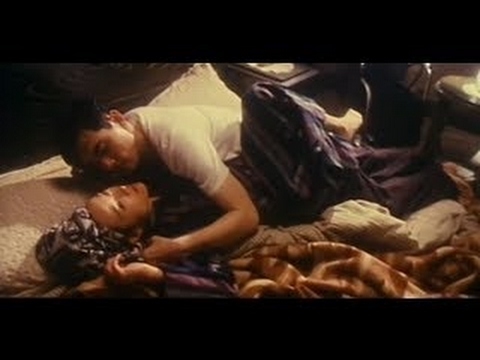
The two female characters who appear to be binary oppositions to each other, however, reinforce women’s experiences in the seemingly modern yet patriarchal Chinese society in the Republican period. Eileen Chang depicts how these two female characters appear to be controlled by men on the surface, yet in fact eventually grow and survive in a male-dominated society. As in her other novellas, in Red Rose and White Rose, Chang reflects on love and gender roles across cultures, paying particular attention to human nature in a relationship. Fifty years following the publication of Red Rose and White Rose in 1944, the Hong Kong director Stanley Kwan adapted the novella into a film in 1994; the film was entered into the 45th Berlin International Film Festival.
References:
Deppman, H. (2010). Eileen Chang and Stanley Kwan: Politics and love in Red Rose (and) White Rose. In Adapted for the Screen: The cultural politics of modern Chinese fiction and film (pp. 61-97). University of Hawai'i Press. Retrieved January 4, 2021, from http://www.jstor.org/stable/j.ctt6wqzpr.7