
Items
In item set
William H. Gass: The Soul Inside the Sentence
1–20 of 393
Advanced search
-
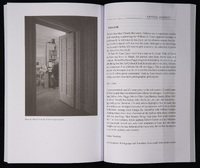 North Dakota Quarterly, Vol. 86 Nos. 1/2 - "Festschrift" This Spring/Summer 2019 issue contains “Special Section: A Tribute to William H. Gass” including tributes by Crystal Alberts, Robert Coover, Kathryn Davis, Michale Eastman, Matthias Goeritz, Garth Risk Hallberg and Joy Williams, among other Gass content.
 -
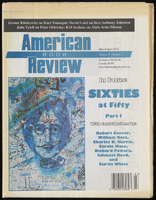 “Birthday Boys” in American Book Review To provide context on the 1960s fifty years later, American Book Review asked a number of writers to reflect on the decade, including Robert Coover, Ishmael Reed, and Gass, who wrote about his usual cohort of “metafiction” writers but also about the magical realism of Latin American writers.
 -
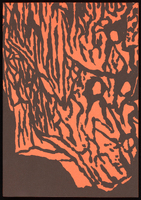 J & L Illustrated #3 - "From Middle C" This excerpt from Middle C, which did not make it into the book, focuses on Joseph’s father—his abandonment of his family, his broken relationship with his son, the nature of loss and the hardships on Joseph from having an absent father.
 -
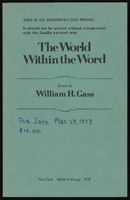 The World Within the Word - Uncorrected Proof The World Within the Word, published in 1978, was Gass’s second book of collected essays. He continued to skillfully examine literature, culture, the lives and works of writers, and the nature and use of language, among other topics.
 -
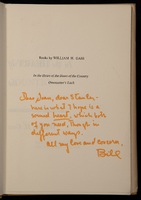 In the Heart of the Heart of the Country – Inscribed First Edition This book is one of six Gass first editions lovingly and cleverly inscribed to Joan and Stanley Elkin, and one of the hundreds of books we acquired from Stanley’s personal library. In this example, Gass refers to the heart attack that Stanley had recently suffered, showing his concern along with his usual humor.
 -
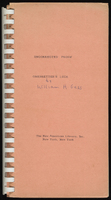 Omensetter’s Luck - Uncorrected Proof Omensetter’s Luck, published in 1966, was Gass’s first novel and first published book, putting him on the literary map immediately. The book presents an allegorical portrait of a simple visitor to a small Ohio town in the 1890s, derived from the point of view of three residents with very different perceptions of him.
 -
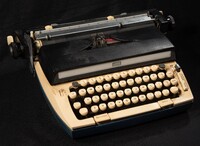 Sears Typewriter Gass used this typewriter from about 1968 to 1973 when he was working on Willie Master’s Lonesome Wife, The Tunnel, Cartesian Sonata, and essays that would appear in Fiction and the Figures of Life. He took it with him to Europe in 1970 for a year-long fellowship.
 -
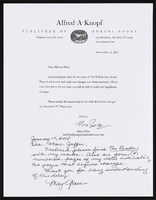 The William H. Gass Reader – Correspondence File Mary and Bill Gass selected the content and made other editorial decisions toward the organization of The William H. Gass Reader, an anthology published in 2018. Mary had to write and send back the final edits after Bill’s health declined and then his death on December 6, 2017.
 -
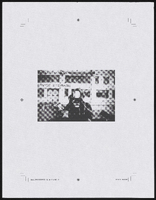 Eyes Proof - In Camera In the 1980s and ‘90s, Gass was an amateur photographer, and he incorporated his photos into lectures and readings during that time. For Eyes, a 2015 fiction collection, he included his self-portrait taken in a shop window before the opening novella, “In Camera.”
 -
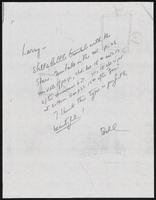 Willie Master's Lonesome Wife - Typescript Photocopy with Notes In 2022, the designer of one of Gass’s most infamous books sold us correspondence, drafts and clippings regarding the conception, design and publication of the 1968 novella, as well as the first numbered copy of 100 signed by Gass, which Levy kept in a safe for over 50 years.
 -
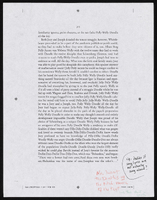 Middle C – Editor’s Inquiries These selected pages from a proof with editor’s inquiries shows how closely one must read Middle C (and many other works of Gass's fiction) to figure out a linear timeline when events are told in a convoluted order by perhaps an unreliable narrator.
 -
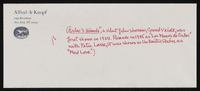 A Temple of Texts – Proof In 2006, Gass published his sixth collection of essays, A Temple of Texts--originally the title of the exhibition and catalog created by the Special Collections of Washington University to inaugurate the International Writers Center in 1991. Gass's essay from that catalog, with the subtitle, Fifty Literary Pillars, was included in the book.
 -
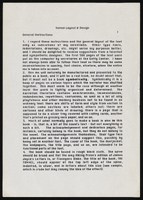 The Tunnel - Layout & Design Instructions This 22-page document, “Tunnel Layout and Design," accompanied a photocopied typescript of The Tunnel that Gass, according to Grogan, sent to Penguin, hoping they would publish it. The draft credits "The Nothing Ventured Press" on the title page and is dated 1993.
 -
 Culp - Typescript Photocopy with Printer's Notes and Word Art This excerpt from The Tunnel, published in 1985 by Grenfell Press, incorporated many of Gass’s typographical variations and other visual effects, resulting in a beautiful, limited-edition fine-press book. This typescript with word clippings and printer’s notes show some of the work that went into its production.
 -
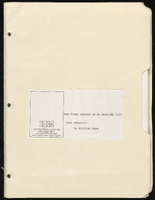 The First Winter of My Married Life – Typescript Lord John Press published this excerpt of The Tunnel and when the archive of press founder Herb Yellin became available on the marketplace, we purchased the files of numerous authors. Gass’s file includes correspondence and photographs showing that he and Yellin struck up a friendship in the process.
 -
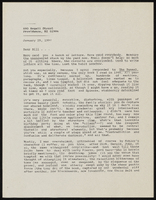 Robert Coover to William H. Gass In this letter, good friend and fellow novelist Robert Coover sends Gass his compliments and critiques after reading The Tunnel over the course of the previous year, and sends news from his academic life at Brown University.
 -
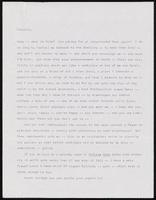 Harold Brodkey to William H. Gass The tone of this intriguing letter from Brodkey—a St. Louis-native known for his autobiographical stories and also, like Gass, for a long-forthcoming novel—is hard to pin down, but likely it was sent in the early nineties when Brodkey's The Runaway Soul was finally published, four years before The Tunnel.
 -
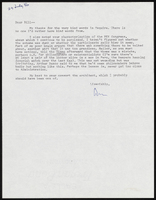 Don Barthelme to William H. Gass Barthelme is writing to Gass about the controversial International PEN Congress that had just concluded, which both writers attended, and which Barthelme co-chaired with poet Richard Howard.
 -
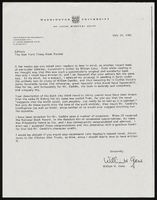 William H. Gass to The New York Times Book Review After The New York Times Book Review erroneously referred to William Gaddis’s Carpenter’s Gothic as being written by Gass, he wrote the publication this humorous letter in response. As he mentions, it wasn’t the first time the two were confused…and certainly wouldn’t be the last.
 -
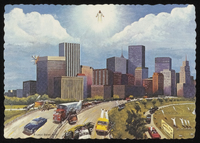 William Gaddis to William H. Gass The book jacket Gaddis refers to on this postcard is for his recently published novel, Carpenter’s Gothic, which cynically takes on the subject of evangelism in America. The letter Gaddis refers to is the one Gass wrote to the New York Times, also included in this exhibit.
1–20 of 393