Artisans and Workers
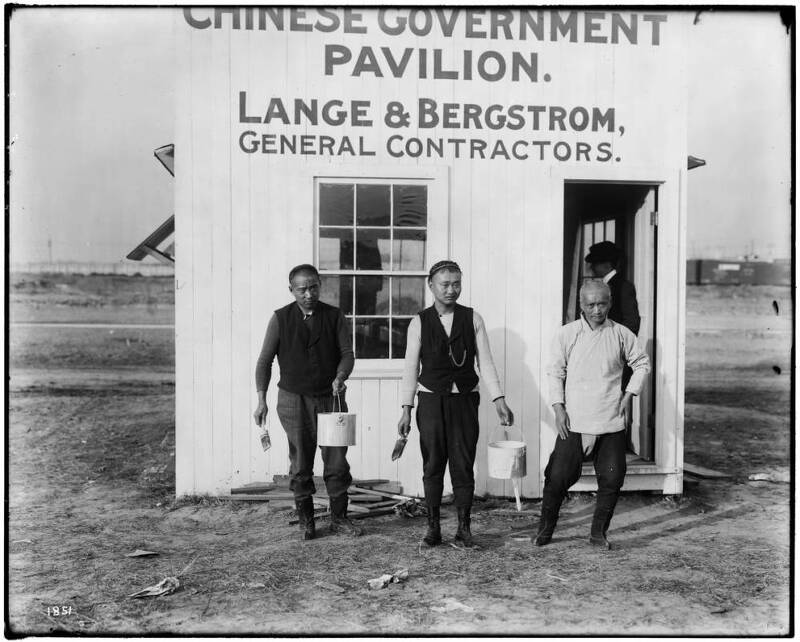
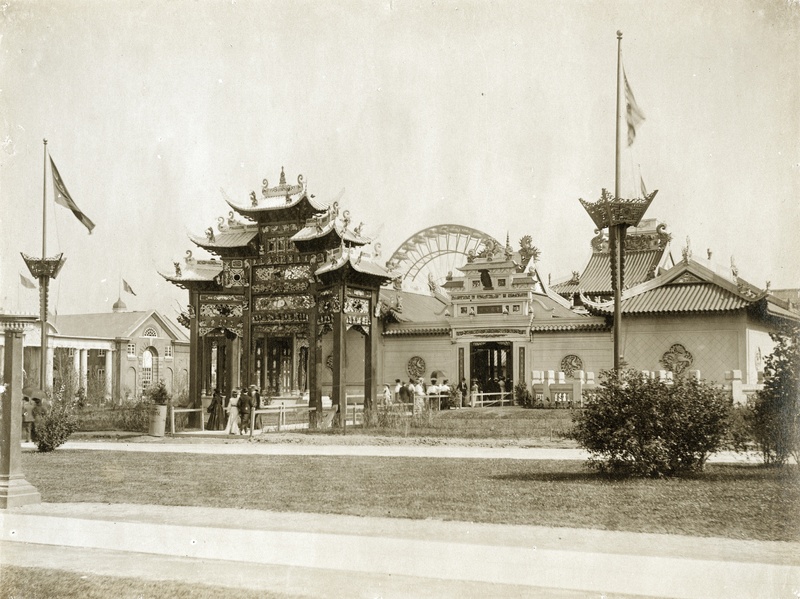
Over 200 skilled woodworkers, painters, and artisans traveled from China to St. Louis to construct the elaborate Chinese Pavilion at the World’s Fair.
The first group of 23 artisans, accompanying Vice Commissioner Wong Kai Kah, were assigned the task of building the Chinese Pavilion and Village. The carpenters, sculptors, and woodworkers lived with the Wong family at their home, and used the cellar as a workroom. An additional 194 artisans arrived in the next months to continue the work.
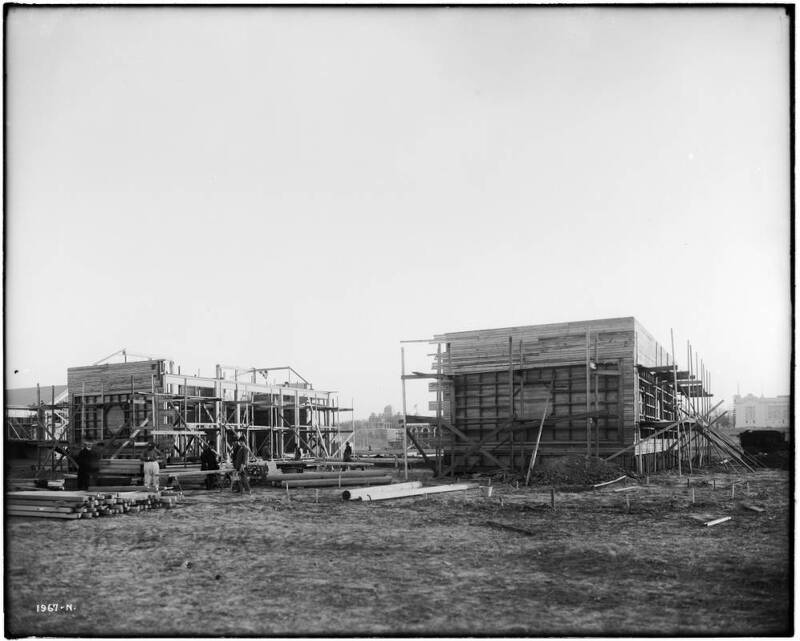
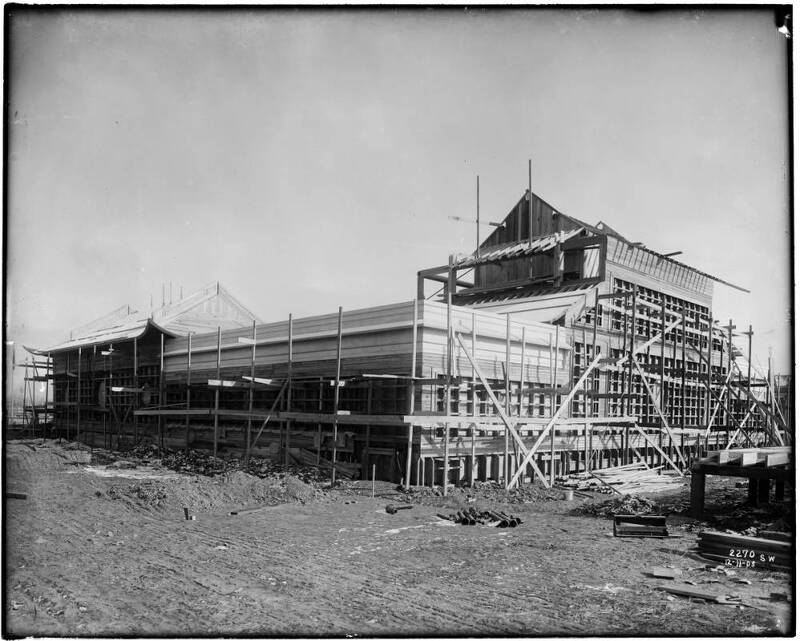
Thousands of laborers transformed the land of Forest Park into the complex grounds of the World’s Fair.
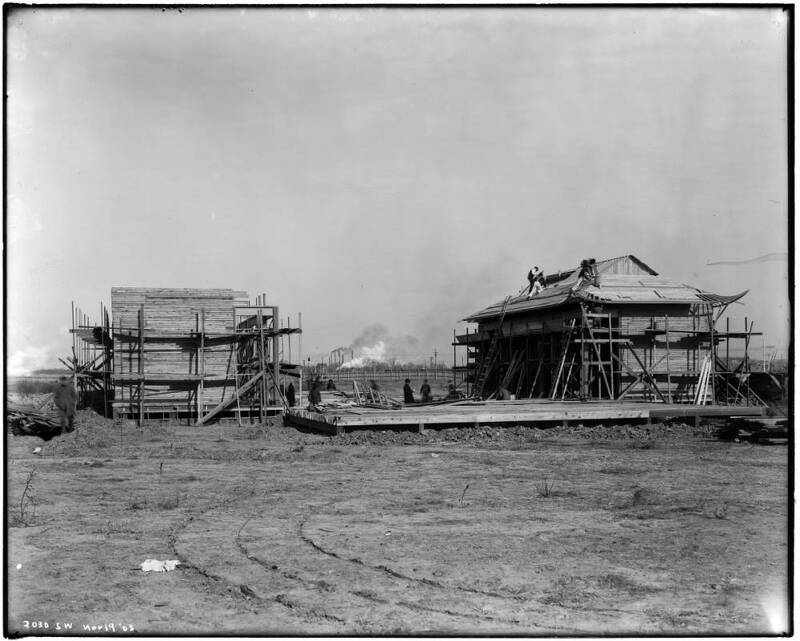
American workmen started the framing for the Chinese Pavilion, but artisans from China constructed most of the building, adding details to the elaborate structure using traditional methods.
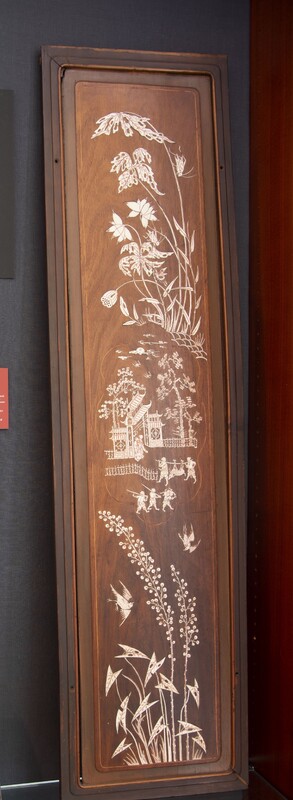
Panels from Chinese Pavilion
Detailed panels made by artisans from China adorned the interior of the Pavilion.
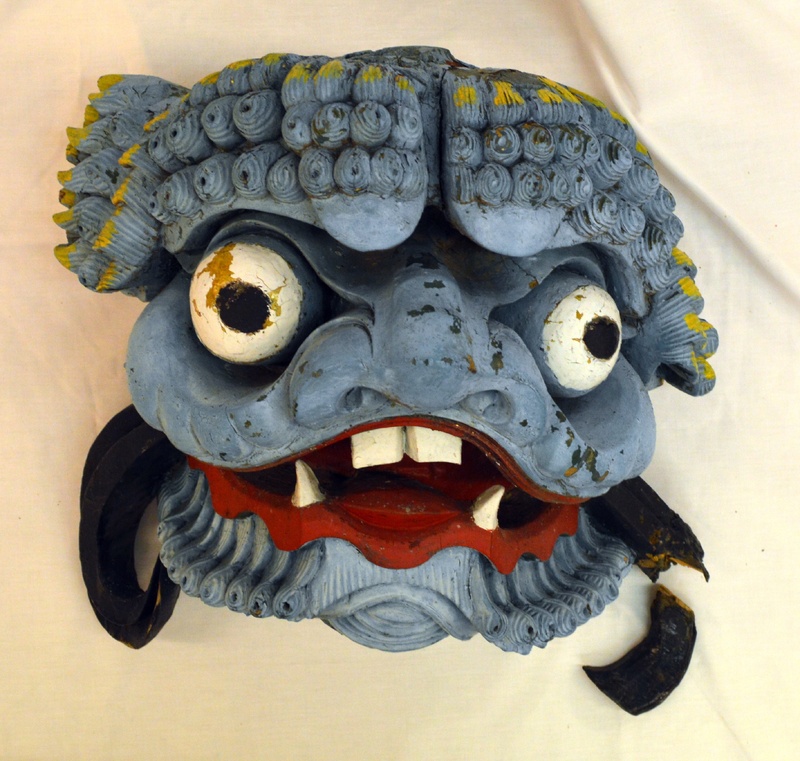
Carved Wooden Shi Statue from the Chinese Pavilion at the 1904 World's Fair
Carved wooden shi statues were a colorful part of the exterior.
When the Fair ended the Chinese government gifted the structure and all attached decorations to David R. Francis. However, as with most buildings at the Fair, it was built as a temporary structure and was soon disassembled.
Local St. Louis newspaper’s reported that some decorations on the Chinese Pavilion began disappearing as soon as the Fair ended. The official salvage company auctioned off all disassembled structures, including the Pavilion. Many of these delicate inlay panels found their way to local families and antique shops.
Constructing the Chinese Pavilion
Harsh Controls
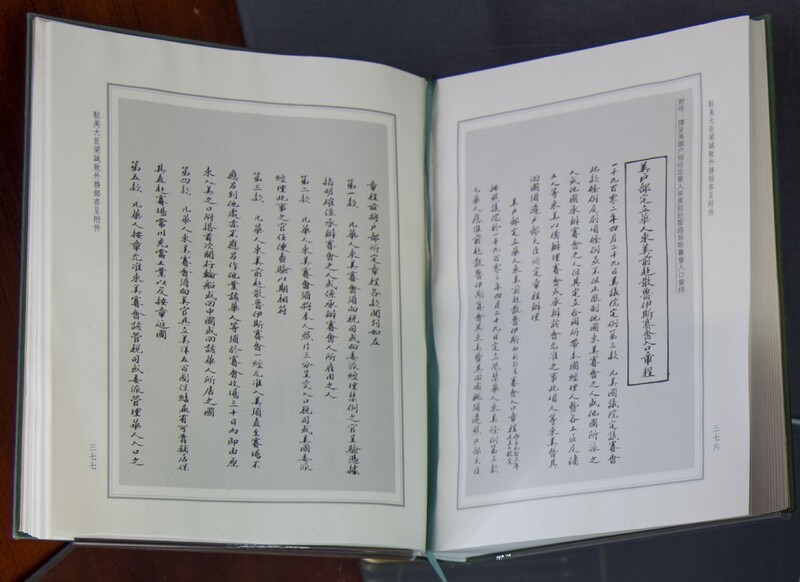
When workers arrived from China, they faced harsh controls by the U.S. Immigration office: each was photographed and registered, and ordered to stay close to their housing. Once in St. Louis they were required to report to the police office daily. Failing to show up within 48 hours meant that the worker would be considered a fugitive, facing arrest and deportation.
The draconian measures faced by workers arriving from China are documented in detail by the Chinese archives. They are a sad chapter of American history known as the era of Chinese exclusion.
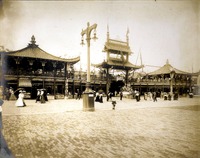
Shanghai Restaurant in the Chinese Village on the Pike
Additional men, women, and children from China were employed to staff both the Chinese Pavilion and the separate entertainment-focused Chinese Village on the Pike.
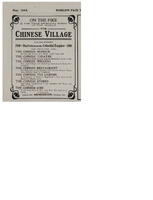
"On the Pike" Performance schedule for Chinese Village
Parades were a daily occurrence at the Pike, the entertainment district of the Fair. Whether it was a march of the Jefferson Guards (the main police at the fair) a procession featuring indigenous peoples, or a scheduled dragon dance -- all became entertainment for fair attendees.
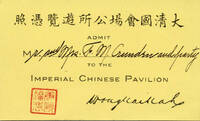
Admission to the Chinese Pavilion, 1904, for Mr. and Mrs. Frederick M. Crunden and guests
Entering the Chinese Pavilion required a ticket. Vice Commissioner Wong established this to limit crowding and possible damage to the detailed furniture and elaborate art inside,
Life in St. Louis
The Fair aimed to be a showcase of modern society and innovation, and at the same time, perpetuated racial exclusion in its parades and displays.
Artisans and workers from China had little-to-no opportunity to interact with Chinese immigrants who lived just six miles away in St. Louis’ Chinatown – Hop Alley.
Starting with the 1857 arrival of Alla Lee, a tea shop merchant and Ningbo native, the neighborhood nicknamed “Hop Alley” began to grow. By 1900, there were about 300 Chinese calling St. Louis home near Market and 7th Street.
Although no laws prevented people of color from purchasing a ticket, the long-standing de facto segregation of St. Louis makes it unlikely that Chinese residents attended the Fair.