David R. Francis
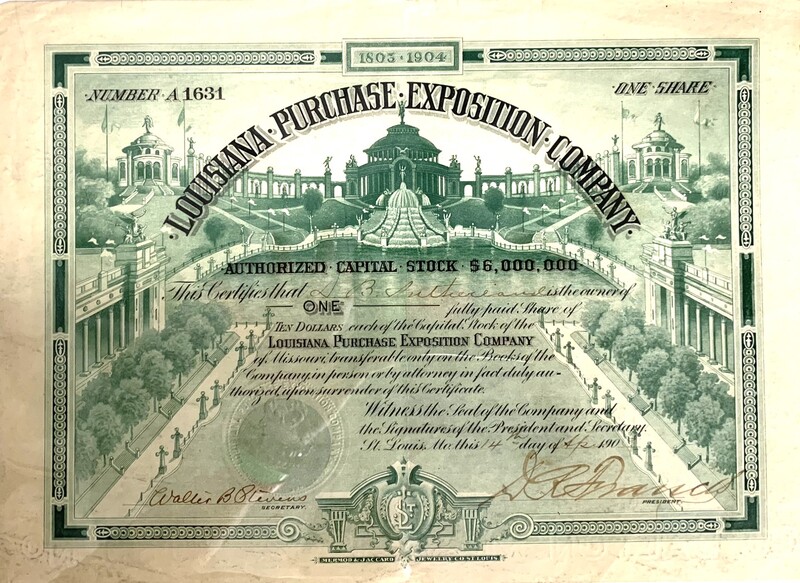
As President of the 1904 St. Louis World’'s Fair, David Francis played a crucial role in securing China's participation in the St. Louis Fair.
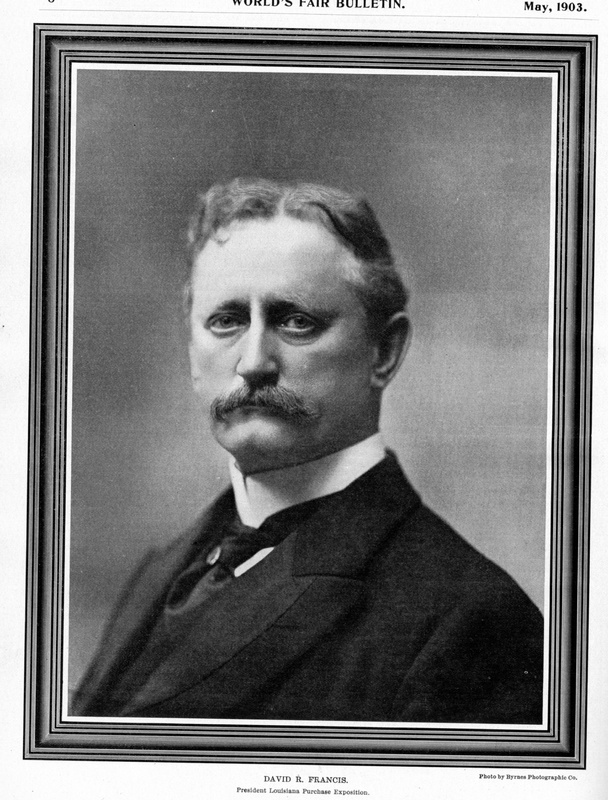
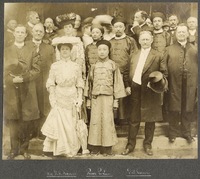
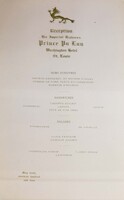
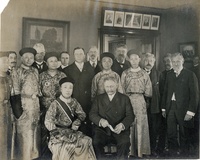
Planning for the Fair started in 1899. Although the Chinese government initially agreed to take part in the Fair, it nearly revoked its participation when the Chinese Exclusion Act was renewed by the U.S. Congress and strengthened in 1902. It was Francis, along with Commissioner-General to Asia John Barrett, who persuaded China to remain by pitching the exposition’s business opportunities. Francis also met with the Chinese commission multiple times, hosting events for key people such as Prince Pu Lun and Vice Commissioner Wong Kai Kah.
Writing in The Universal Exposition of 1904, Francis framed the participation of China mainly through business connections. The Fair, which aimed to showcase industrial development, presented China as technologically underdeveloped. Although Francis praised the traditional characteristics of the products in the Chinese exposition, he saw such a feature as merely adding monetary value to goods, rather than something to be celebrated for the sake of diverse culture, art, or history.
Biography
Born: 1850, Richmond, Kentucky
Died: 1927, St. Louis, Missouri
Education: Washington University in St. Louis, graduated 1870
Founding member of St. Louis Mining and Stock Exchange, 1880
Elected Mayor of St. Louis, 1885
Elected Governor of Missouri, 1888
U.S. Secretary of Interior, 1896
U.S. Ambassador to the Russian Empire, 1916-1917
Press and Publicity
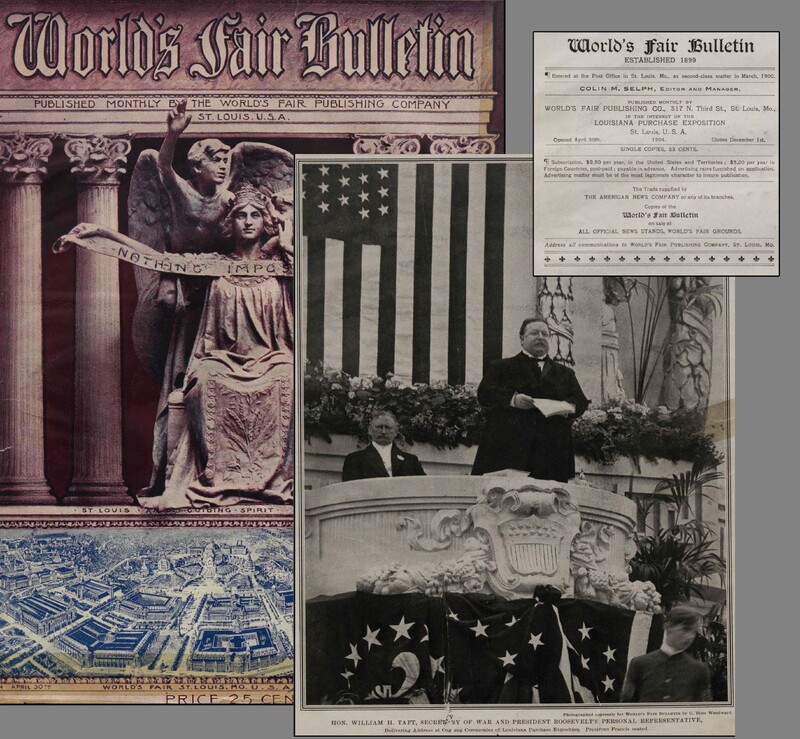
Francis understood the importance of influencing the public’s perception of the Fair. Early on he created the Division of Press and Publicity and tasked it with overseeing publications such as the Bulletin. Monthly coverage starting in 1901 chronicled all aspects of the fair, from construction to noted guests.
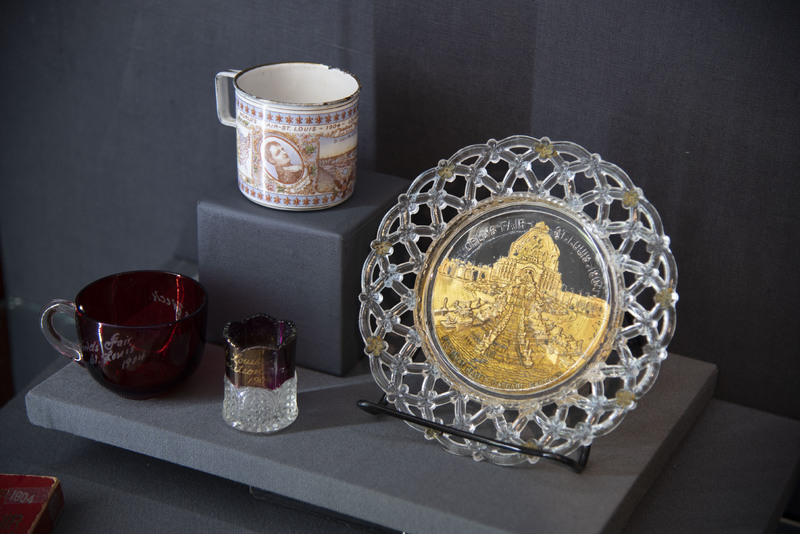
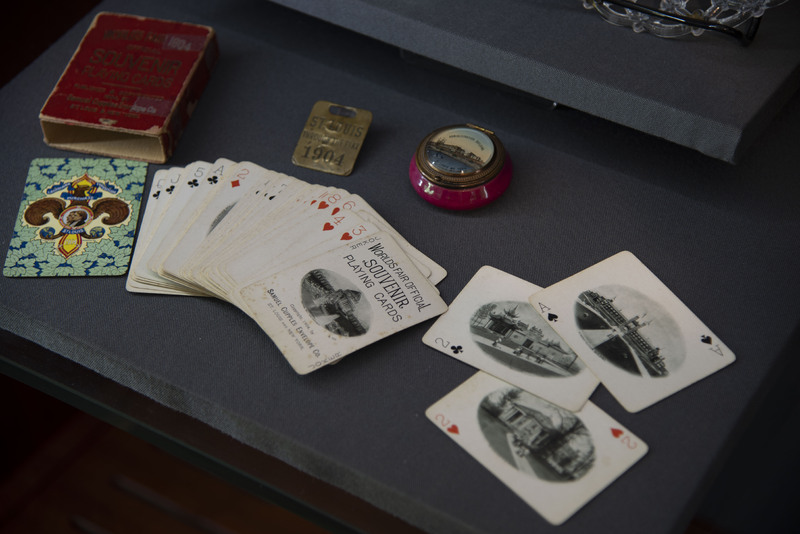
Purchasing souvenirs was a key activity for most who attended the fair. Although souvenirs had been around for centuries, growing industrialization plus an exploding American consumer market for souvenirs such as these, were a powerful incentive for businesses to support U.S.-China relations.
Mementoes decorated with various Fair buildings were especially popular. The Festival Hall and Cascade Gardens are featured on a glass dish. The Chinese Pavilion and Fair Administration building (now Brookings Hall) were two of many buildings printed on the playing cards.