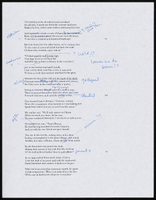
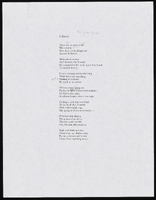
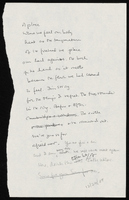
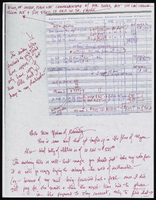
These annotations show Bang’s precision in tone, diction, and rhythm—and her overall translation style, which also surfaces in her own poetic practice.
This collection of postcards offers a glimpse into the friendship between Rankine and Bang during their time as neighbors in the same apartment building in New York City. They include personal reflection, literary references, and visual imagery—ranging from Rembrandt paintings to photographs of Rankine herself, whether sent from Paris or just a floor away.
Recorded musical track from the The Funny Little Mouse/The Tall Giraffe 1948 Golden Records by Ireene Wicker - The Singing Lady, Mitch Miller and Orchestra. This track only includes the Funny Little Mouse.
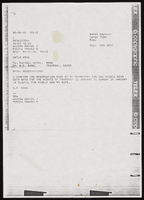
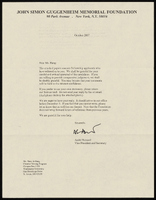
Correspondence from André Bernard on behalf of the John Simon Guggenheim Memorial Foundation requesting Mary Jo Bang's appraisal of candidates and an acknowledgment of her response.
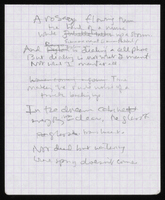
This poem features Louise and Ham—recurring characters in Bang’s collection Louise in Love (Grove Press, 2001). Their dialogue stages interiority as a kind of performance where Louise reflects on will through the image of the “mill moth” and the “lavish wick.” Bang uses persona to externalize the inner life, allowing her characters to reveal their interiority.
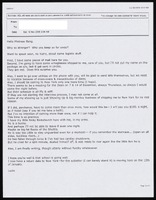
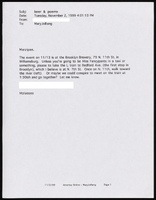
These printed emails from poet Mark Bibbins to Mary Jo Bang reveal a long-standing friendship. Bibbins, known for his work exploring identity, queerness, and politics, addresses Bang with affectionate nicknames—“Marzipan,” “Lolly”—and signs off as “Mollasses” and “Bumble.” Their witty exchanges include shared reflections on difficult days as well as plans to see a film or visit a museum.