A Gander at Mother Goose
curated by Maddie Baker
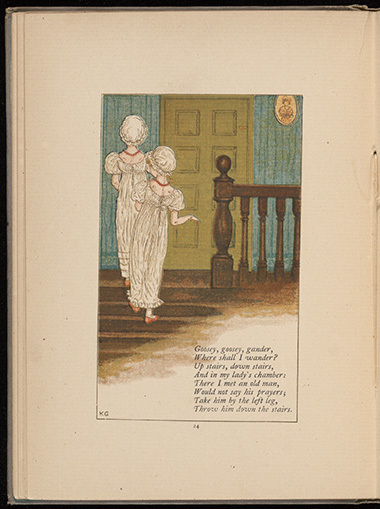
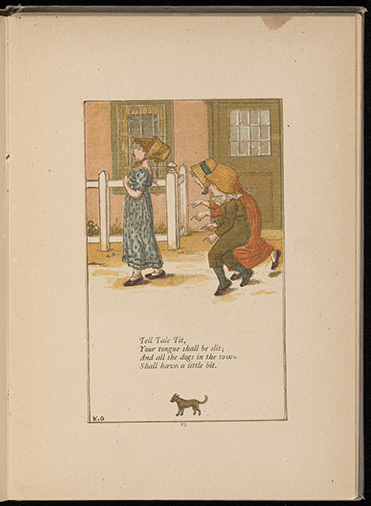
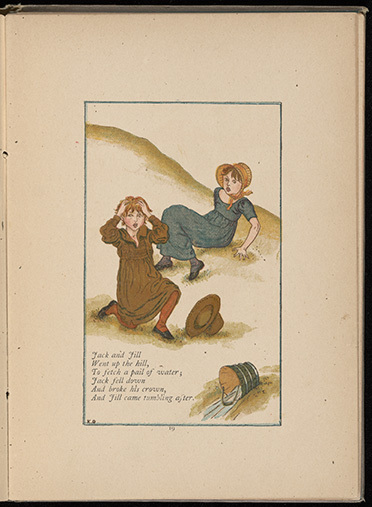
Millions of children grow up hearing Mother Goose Nursery rhymes, but few ever think about where they came from, what they mean, or how they’ve changed. Some rhymes were originally intended for adult audiences, while many have lost their original meanings. Yet, they remain popular. Both the text and their illustrations have changed dramatically over the last two centuries of publication. This exhibit showcases examples from the Henrietta Hochschild Collection of Children’s Books, to demonstrate how a few classic rhymes have changed over time.
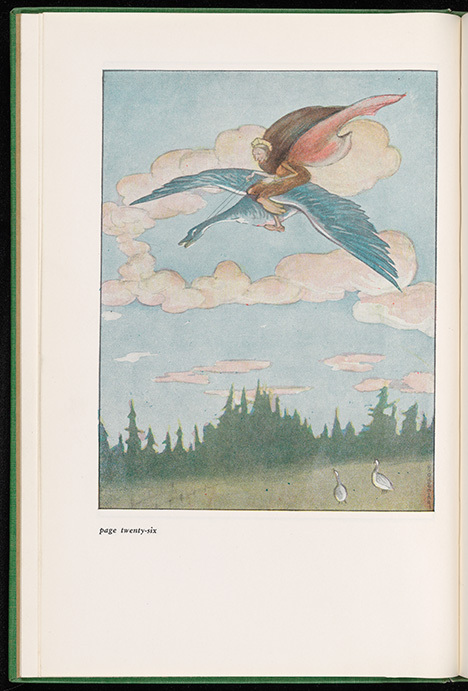
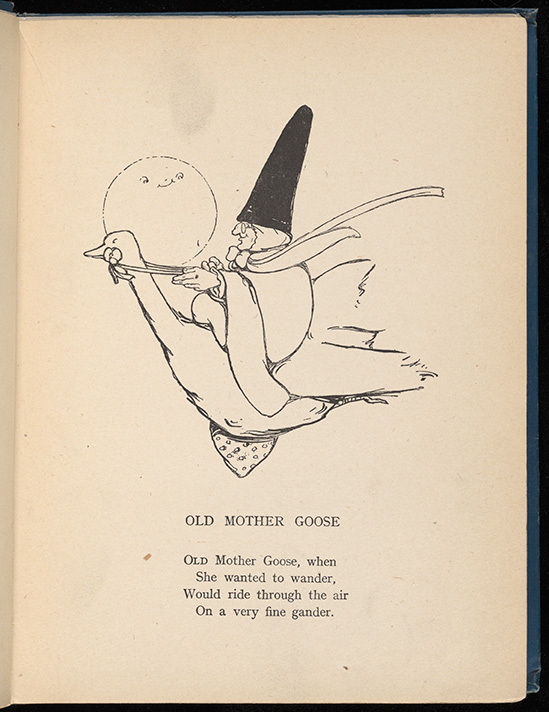
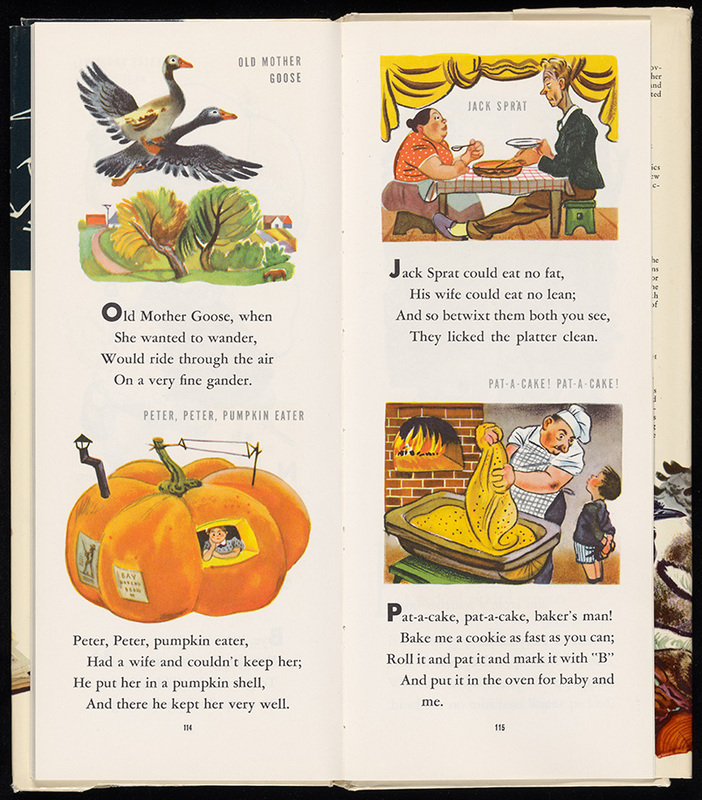
Old Mother Goose
Old Mother Goose, when
she wanted to wander,
Would ride through the air
On a very fine gander.
Mother Goose is one of the longest standing names in children’s literature history, but who really is she? Was she a real person or is she simply a folk tale?
The name was first published in 1629 in France with Tales of My Mother Goose by Charles Perrault. This collection of oral nursery rhymes and songs later became popular in England and the United States. While the book introductions often claim to know who Mother Goose is—the truth is no one really knows.
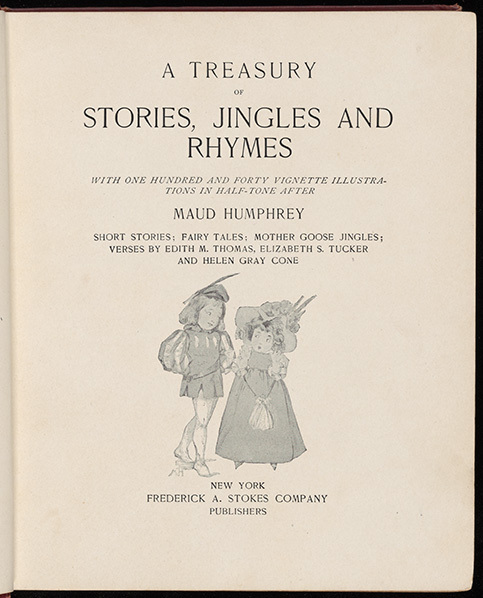
Though the stories come from multiple countries and the term was coined in France, “Mother Goose” is mostly used in the United States. In the UK, they are simply referred to as nursery rhymes. There is no set cannon for Mother Goose stories, but there are hundreds of them.
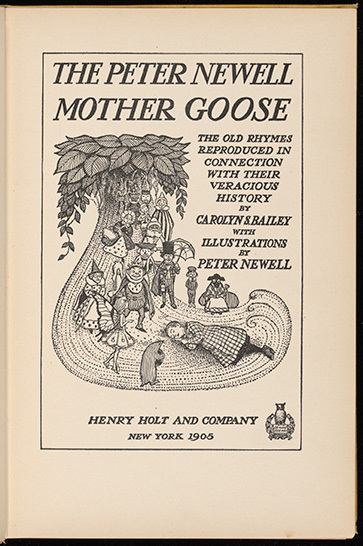
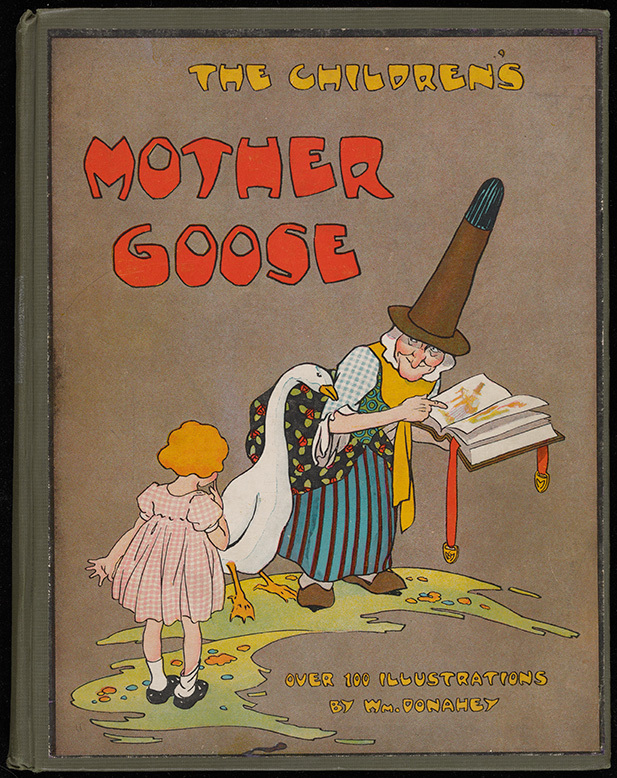
Illustrators clearly don’t know what to make of Mother Goose herself. She has a poem to herself, but she’s also the imaginary collector of all the old rhymes. She has been depicted as a mother, a witch, a gooseherd, and a goose, sometimes in combination.
Some scholars claim that Mother Goose’s identity is connected to real historical figures, from the Queen of Sheba to King Charlemagne’s mother Bertha. Some of the legends allude that these women have specific goose related ties, but there is no evidence to suggest that she was a fictional bird character. That doesn’t stop artists from giving it a go anyway.
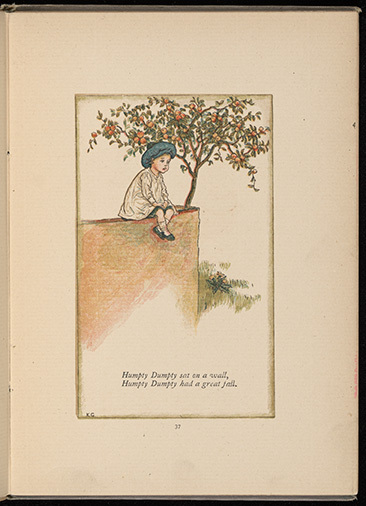
Humpty Dumpty
Humpty Dumpty sat on a wall,
Humpty Dumpty had a great fall;
All the king's horses and all the king's men
Couldn't put Humpty together again.
Why is Humpty Dumpty an egg? Nursery rhymes come in many forms including lullabies, ditties, working songs, and riddles. Humpty Dumpty was originally a riddle, and the answer to that riddle? An egg. The proliferation of egg-themed imagery effectively made the answer so obvious people forgot it was a riddle altogether.
This is the oldest edition of Mother Goose in Special Collections, and a rare instance without an egg. More so than any of the others, this version presents nostalgic visuals of European wealth and pastoral peace. Though published in the 1880’s, the fashions in its illustrations hearken back to 1810 and earlier.
To Market to Market
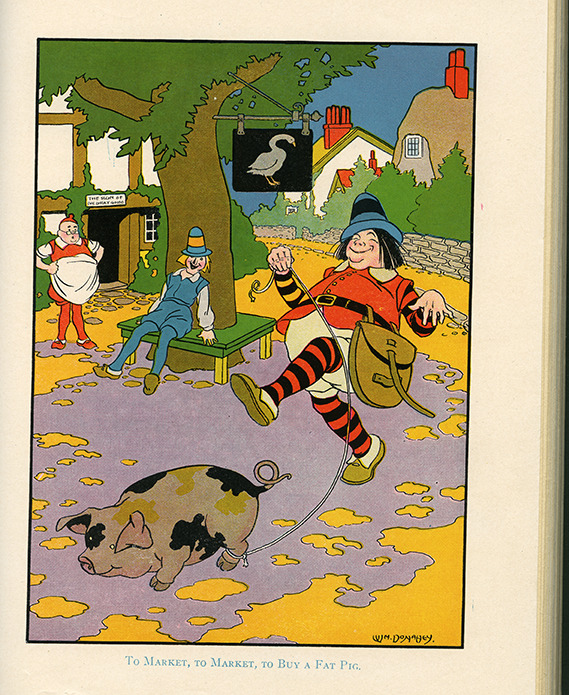
To market, to market,
To buy a fat pig;
Home again, home again,
Jiggety jig.
To market, to market,
To buy a fat hog;
Home again, home again,
Jiggety jog.
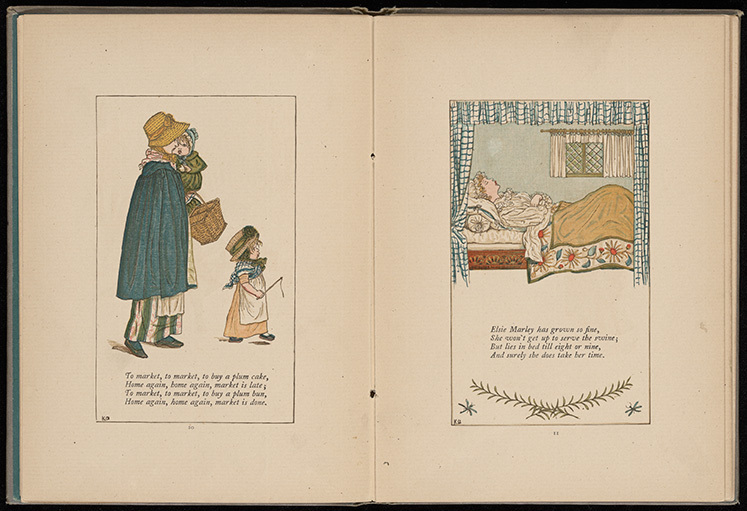
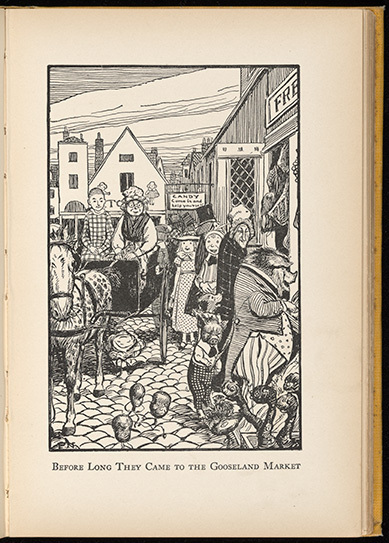
This type of rhyme was meant for chanting to young children while bouncing them on your knee. “To Market” has many variations across time, starting as early as 1611. The changes in wording along with changes in style are a good example how some motifs alter over the years.
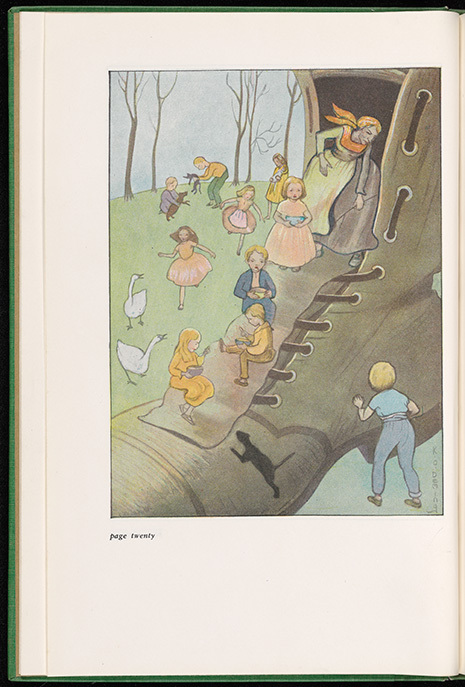
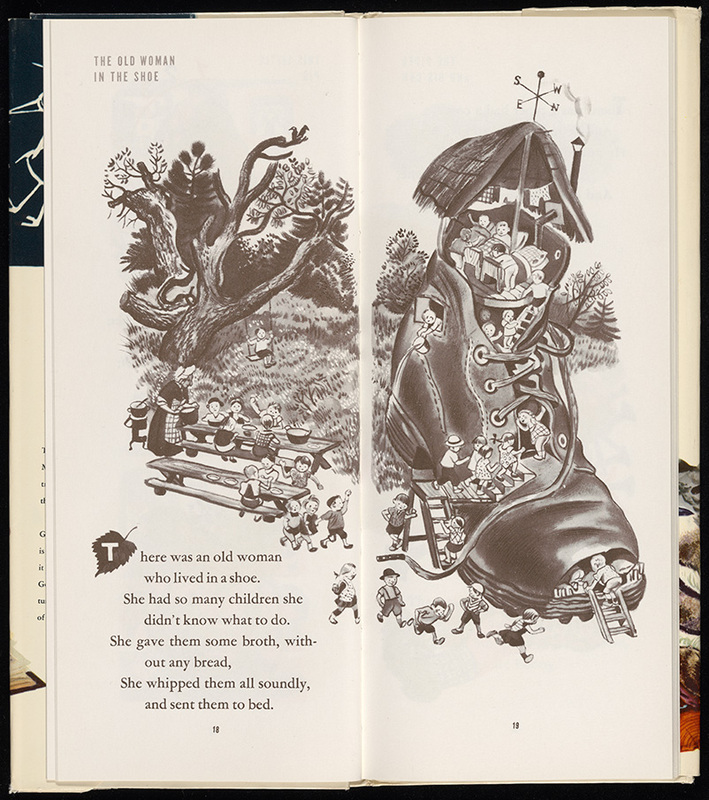
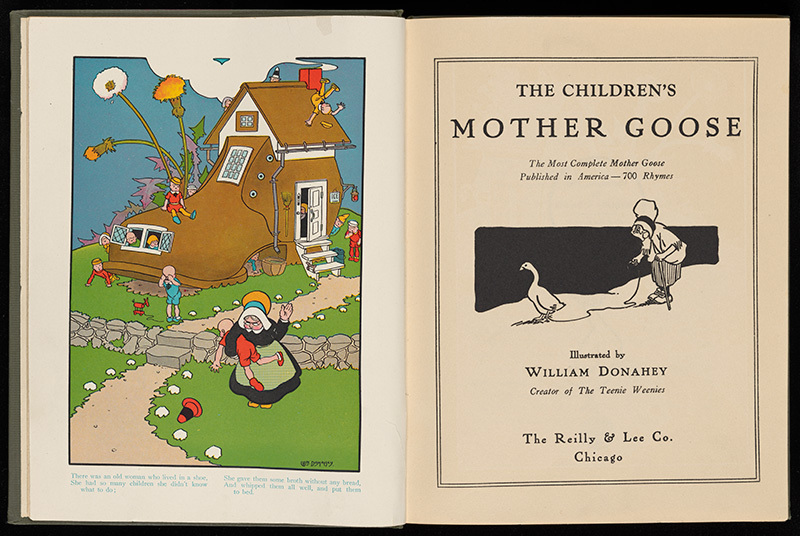
The Old Lady Who Lived in a Shoe
There was an old woman who lived in a shoe.
She had so many children, she didn't know what to do.
She gave them some broth without any bread;
And whipped them all soundly and put them to bed.
In this poem, it is particularly east to see how much illustration for children can change over time. Some still include depictions of corporal punishment, while others gloss over that part of the text and make the old woman seem sweet. The styles change dramatically over time as well. Notice the shift from the 1900 edition to 1921, from cherubic woodland washes to poster-like graphic shapes.
Simple Simon
Simple Simon met a pieman,
Going to the fair;
Says Simple Simon to the pieman,
"Let me taste your ware."
Says the pieman to Simple Simon,
"Show me first your penny."
Says Simple Simon to the pieman,
"Indeed I have not any."
Simple Simon went a-fishing
For to catch a whale:
All the water he had got
Was in his mother's pail.
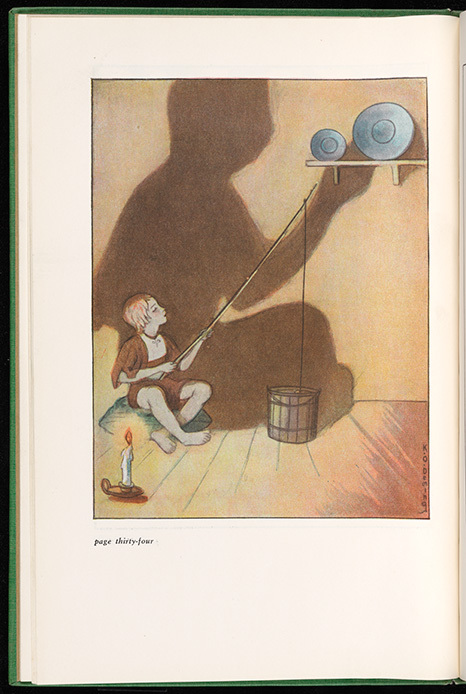
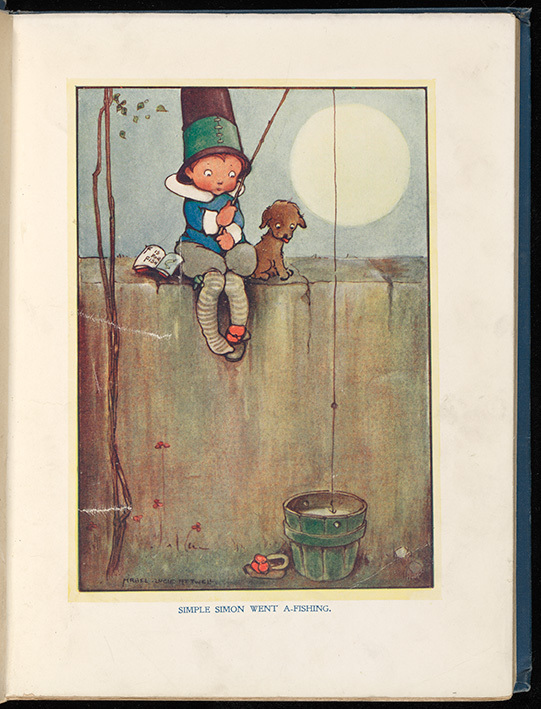
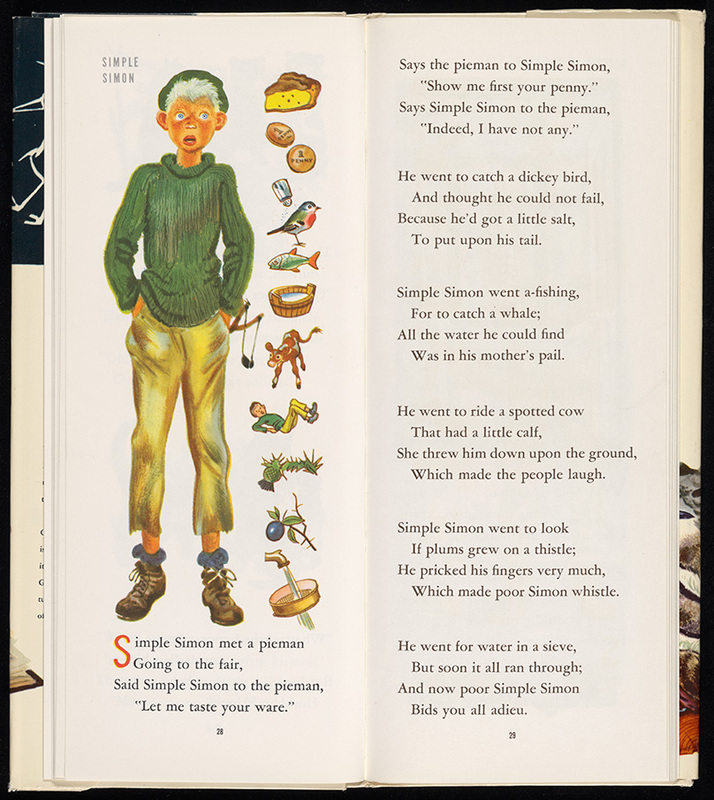
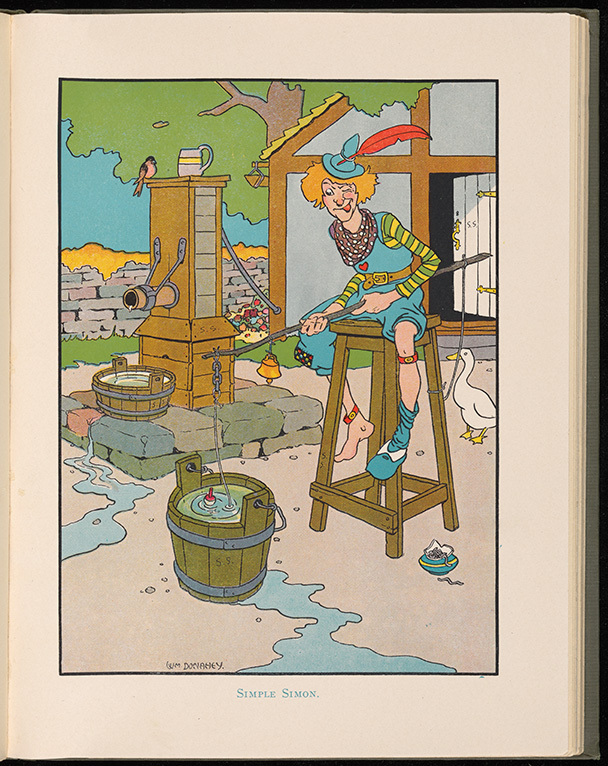
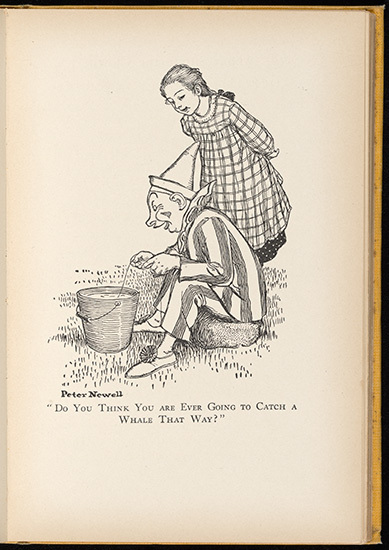
Simple Simon is less familiar to many people today than rhymes like Humpty Dumpty. This may be because the depictions of Simon can be offensive to people with intellectual or developmental disabilities. Despite that, it seems to have been very popular in the past. Across the set of Mother Goose books in Special Collections, it was one of the most consistently illustrated. This is particularly notable because most Mother Goose books have just a handful of illustrations compared to the number of poems. Additionally, many of the books include black and white illustrations or line art to supplement full color illustrations, but nearly all of these examples of Simple Simon are in full color.
Selected Images