The Raven Still Beguiling: The Visual Evolution of Poe’s Most (In)famous Work
curated by Charlie Hoppe
Published neither on a midnight dreary nor in bleak December, The Raven is one of the most widely known and beloved works of Edgar Allan Poe, if not one of the most widely known poems in the English language. Since its publication only four years before his death, the poem secured Poe’s position in the history of gothic horror as one of the great masters of the genre—and ravens are today nearly synonymous with Poe’s name and gothic horror itself.
As perhaps the most consistently illustrated work of Poe’s, The Raven has seen countless visual interpretations since it was first published—without accompanying imagery—in 1845. The items below explore a number of illustrated editions of The Raven and how each alters the reading experience of the poem.
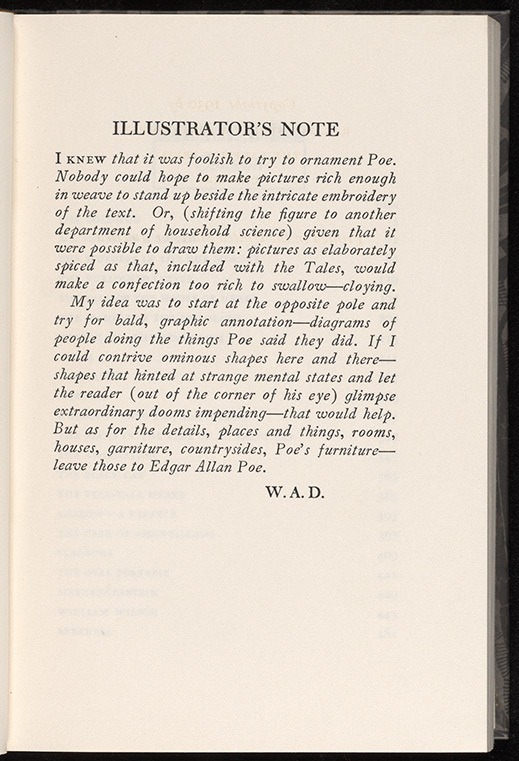
"I knew that it was foolish to try to Ornament Poe."
To many, Poe's work needs no further introduction—and, some may argue, needs no further ornamentation beyond the text. W.A. Dwiggins, when tasked with illustrating a version of Poe's Tales, was daunted. While Dwiggins’ work in this volume does not include an illustration for The Raven, his note addresses the intimidating task of conjuring visual imagery alongside Poe’s masterful prose.
Upper Shelf
- The Raven: Manuscript
- Illustrations by Edmund Dulac
- Watercolor by Louis Titz
The Raven: Manuscript
Most likely commissioned by a wealthy collector with a distinct fondness for the poem, this lovingly crafted volume is done in a style of illumination, binding, and calligraphy made to emulate medieval manuscripts and holy texts. The illustration on the first spread of the poem, though the sole image of the bird in this volume, nests among intricate and extravagant ornamentation meant to elevate the reading experience and treatment of the hand calligraphed text.

The Raven: Manuscript by Edgar Allan Poe, illuminated and bound by Sangorski & Sutcliffe
Illustrations by Edmund Dulac - The Poetical Works of Edgar Allan Poe, 1921
This edition includes a large collection of Poe’s poems with select works illustrated by Edmund Dulac. Dulac’s illustrations include a small decorative spot illustration of the infamous bird and a full page, full color illustration depicting the moments before our narrator notices the unwelcome guest in his study, of which only the tail feathers are visible in the upper right hand corner of the image.
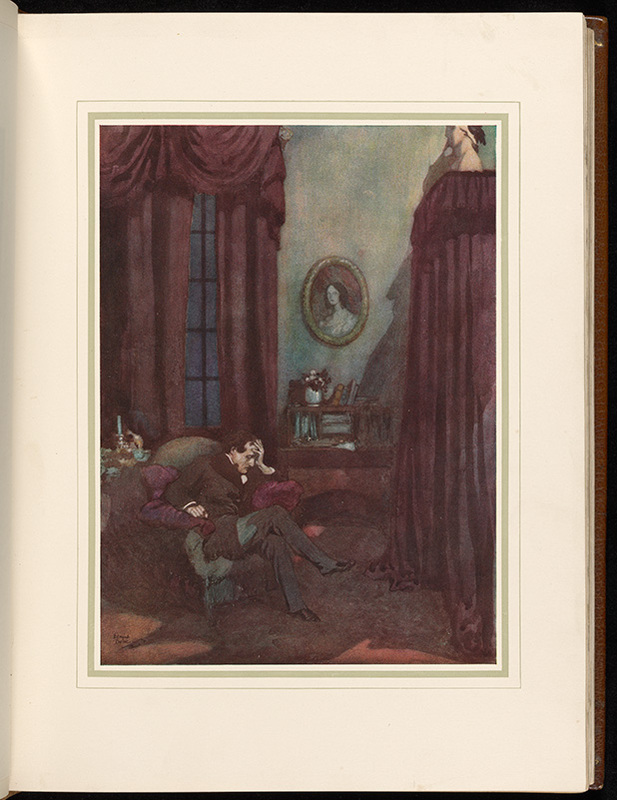
The Poetical Works of Edgar Allan Poe. New York: Hodder and Stoughton, 1921. Illustrations by Edmund Dulac.
Watercolor by Louis Titz - re-bound edition of The Raven and Other Poems, 1845
This volume includes the original textblock from a first edition published in 1845 in a contemporary binding with interior leather mosaics and an original watercolor frontispiece. The added embellishments surrounding the original pages—published the same year as the now-famous poem—exhibit how beloved The Raven became over time, though the illustrated frontispiece is far from the foreboding imagery most often associated with Poe’s work.
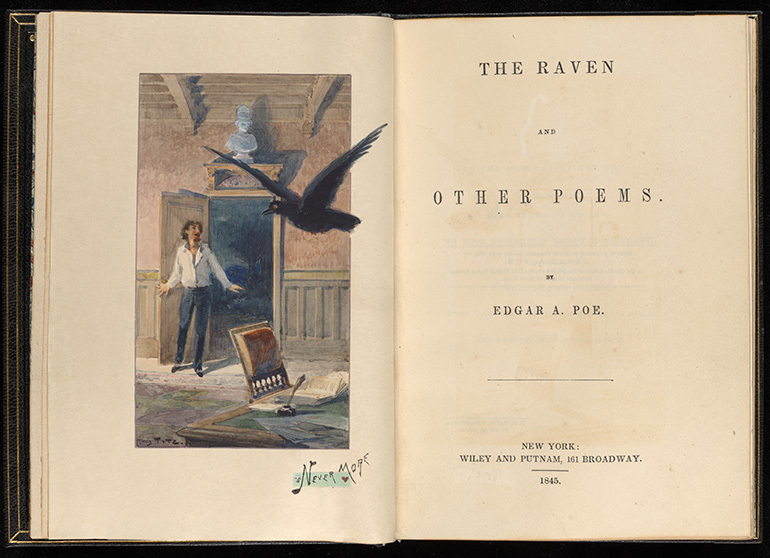
The Raven and Other Poems by Edgar A. Poe. New York: Wiley and Putnam, 1845. Original watercolor by Titz, signed.
Middle Shelf
- Illustrations by Dirk Rudolph
- Raven Frontispiece, 1880s
- Illustrations by John Rae Neill
- Illustrations by Robert H. Purdue
Illustrations by Dirk Rudolph - Poe: Illustrated Tales of Mystery and Imagination, 2006
In this modern edition of Tales of Mystery and Imagination, each work of Poe’s is illustrated by a different illustrator. This version of The Raven is illustrated by Dirk Rudolph, using surreal and abstracted, inky images that warble in and out of reality. Implications of feathers and birds appear throughout, reflecting the narrator’s fixation on the bird as he spirals into insanity.
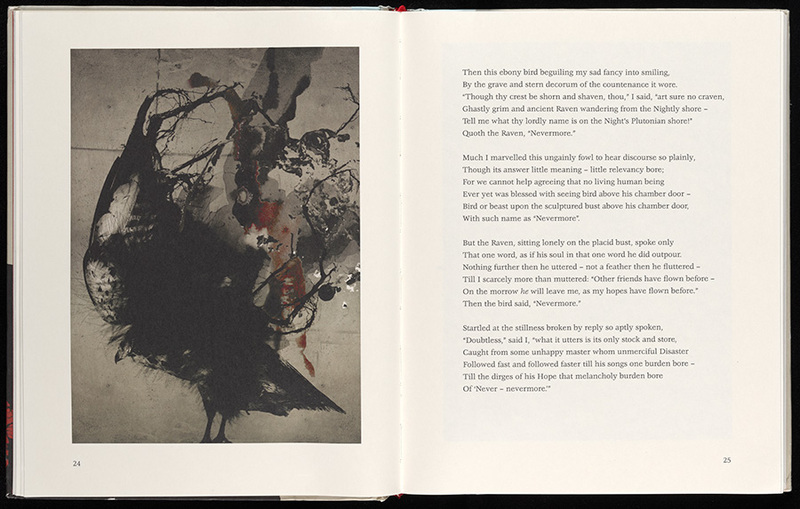
Poe: Illustrated Tales of Mystery and Imagination edited by Robert Klanten and Hendrik Hellige. Berlin: Die Gestalten Verlag, 2006. The Raven illustrated by Dirk Rudolph.
Raven Frontispiece - The Poems of Edgar Allan Poe, 1880s
The Raven, included in this 1880s anthology of Poe’s poetry, was awarded the entire real estate of imagery within the volume: the illustrated frontispiece. While the illustrator is unknown, this particular illustration exemplifies how quickly the raven—both the bird and the poem—became symbolic of Poe’s work.
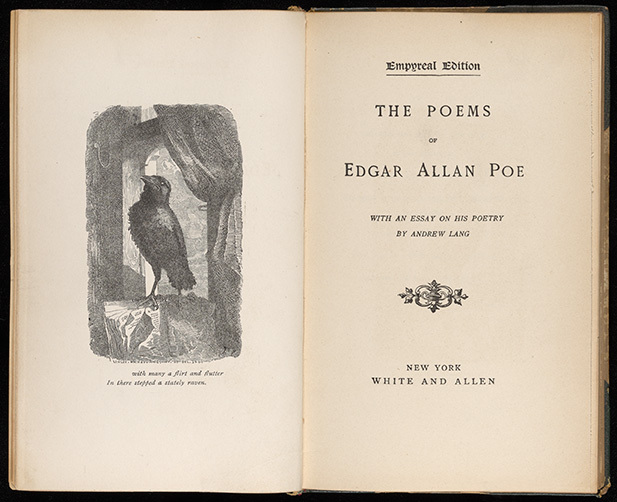
The Poems of Edgar Allan Poe, with an essay on his poetry by Andrew Lang. New York: White & Allen, 1880-1889. Frontispiece illustrator unknown.
Illustrations by John Rea Neill - The Raven, Annabel Lee, & The Bells, 1910
Known best for his illustrations of The Wizard of Oz, John Rea Neill’s two-color illustrations of The Raven include spot illustrations, full page illustrations, decorative borders, and striking endpapers. No two illustrations within feel exactly alike, as Neill varied his images to fit the specific mood of each passage, making this a refreshing read with haunting and beautiful—if sometimes quiet and simplistic—teal and black visuals.
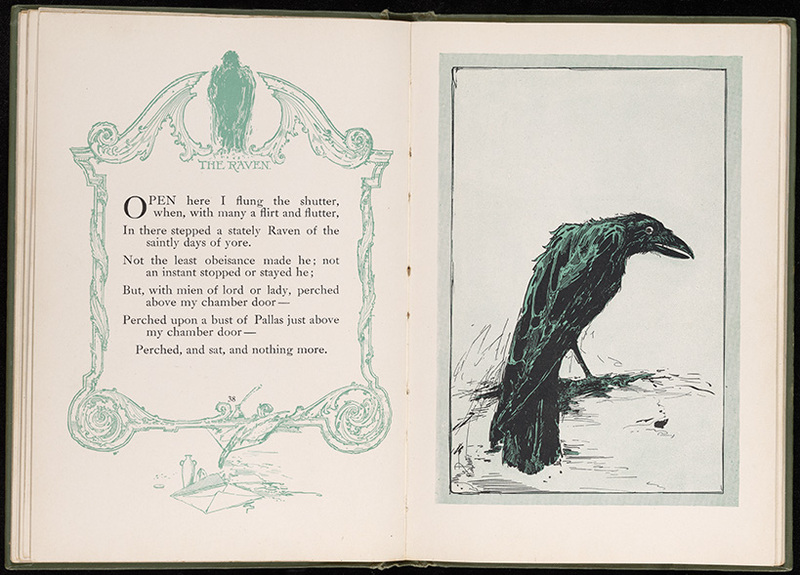
The Raven, Annabel Lee, & The Bells by Edgar Allan Poe. Chicago: The Reilly and Britton Co. publishers, 1910. Drawings by John Rea Neill.
Illustrations by Robert H. Purdue - The Raven by Quarles, 1902
One of 90 editions printed by Robert H. Perdue, this version (citing the author as one of Poe's early pseudonyms, Quarles,) includes border illustrations and duplications in reddish brown ink on the guard papers between pages. The introduction of this edition not-so-honorably mentions other editions:
“Mr. Perdue drew his borders as Fancy and Imagination dictated, and incidentally answered some questions which were not truly met by Doré, or any other of our poet’s distinguished illustrators.”
Perdue does, in his rendition, include an often-depicted shadow of the raven thrown across the floor of the narrator’s study, but incorporates—according to Gobielle—more realistic lighting in order to feasibly cast said ominous shadow.
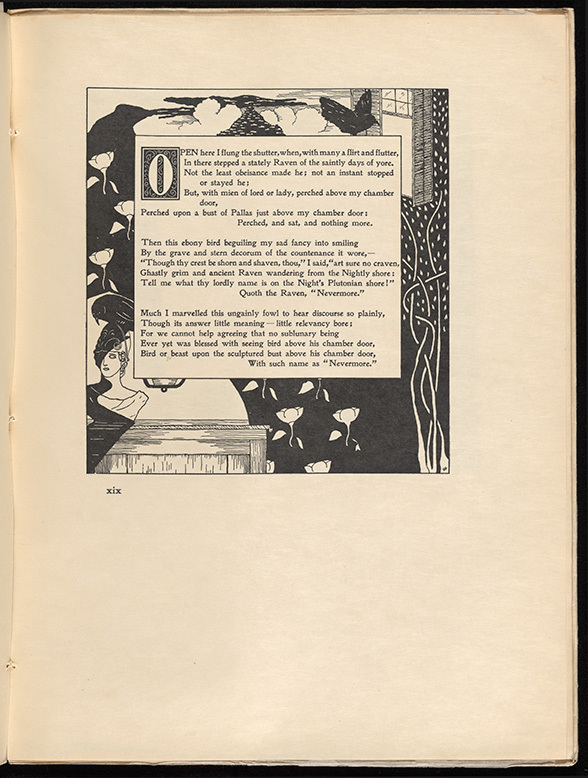
The Raven by Quarles [psued. Edgar A. Poe]. Cleveland: R. H. Perdue, 1902. Done into print & decorated by Robert H. Perdue. Introduction by Joseph Leon Gobielle.
Lower Shelf
Illustrations by Gustave Doré - The Raven by Edgar Allan Poe, 1884
Best known for his intricate etching illustrations of classics such Dante’s The Divine Comedy, Gustave Doré became known as one of the favorite illustrators of Poe’s work with this rendition of The Raven. This massive volume includes the text of the poem on the first few pages, followed by over 20 illustrations depicting selected passages. Doré’s depictions capture both the explicit narrative of the poem and captivatingly illustrate the narrator’s descent into madness at the loss of his beloved Lenore under the taunting of the unrelenting raven.
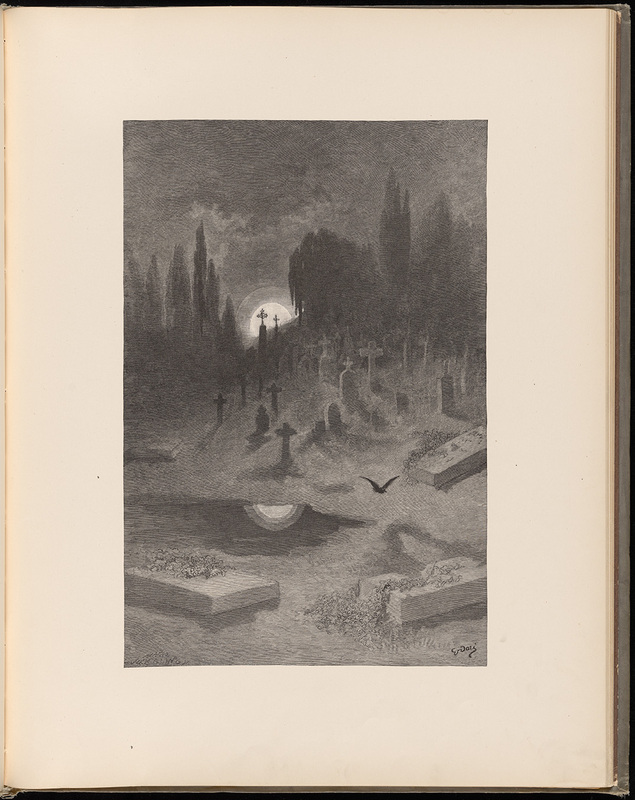
The Raven by Edgar Allan Poe. New York: Harper, 1884. Illustrated by Gustave Doré with comment by Edmund C. Stedman.
Supplemental Items
Illustrations by Alan James Robinson - two versions of The Raven by Edgar Allan Poe, 1986
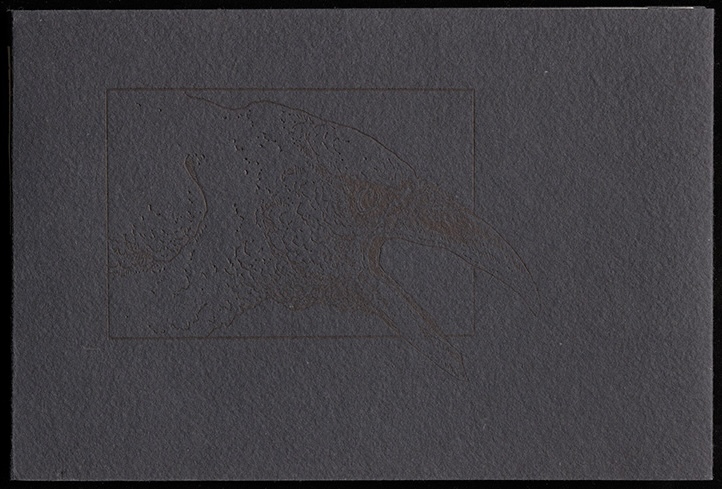
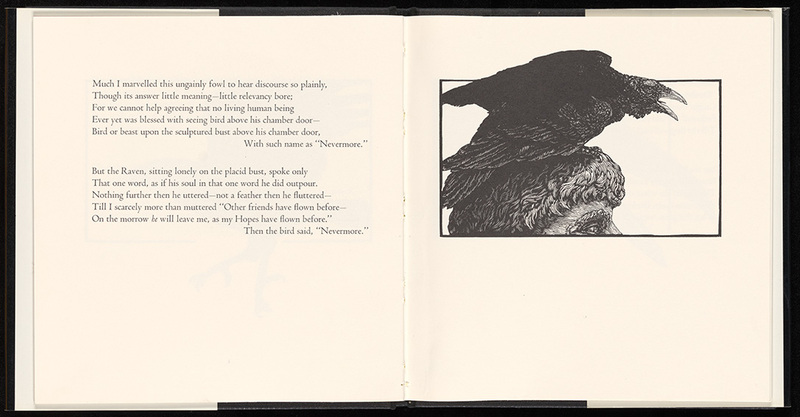
These contemporary editions of The Raven include woodcut illustrations by Alan James Robinson. The illustrations prominently feature up-close imagery of the face of the daunting raven, shifting the visual focus onto the bird itself.