
Arthur Lidov Journey of Scientific Illustration
Curated by Muyang Li
Arthur Lidov (1917- 1990) was a self-trained artist; he has work featuring genres from editorial non-fiction and fictional illustration, advertising and fine art painting, and murals. He has accomplished many medically themed conceptual paintings and commissions for popular magazines such as Life, Time, Fortune, and The Saturday Evening Post in the 1950s-60s.
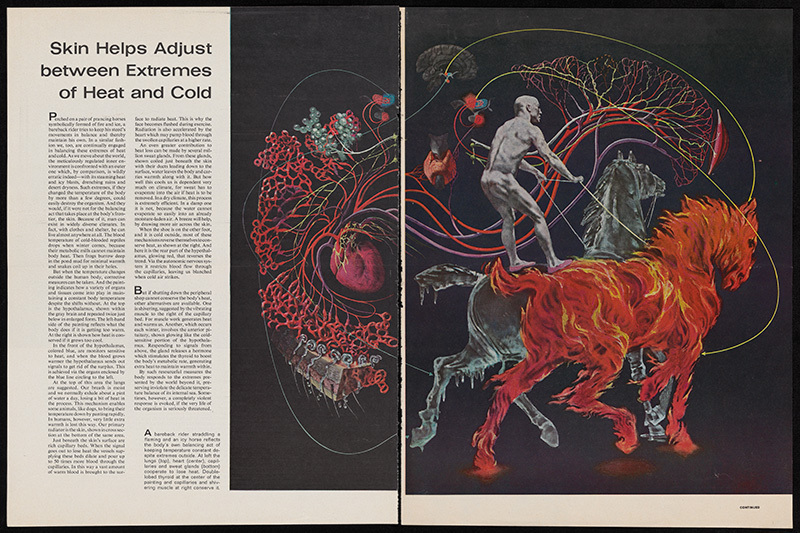
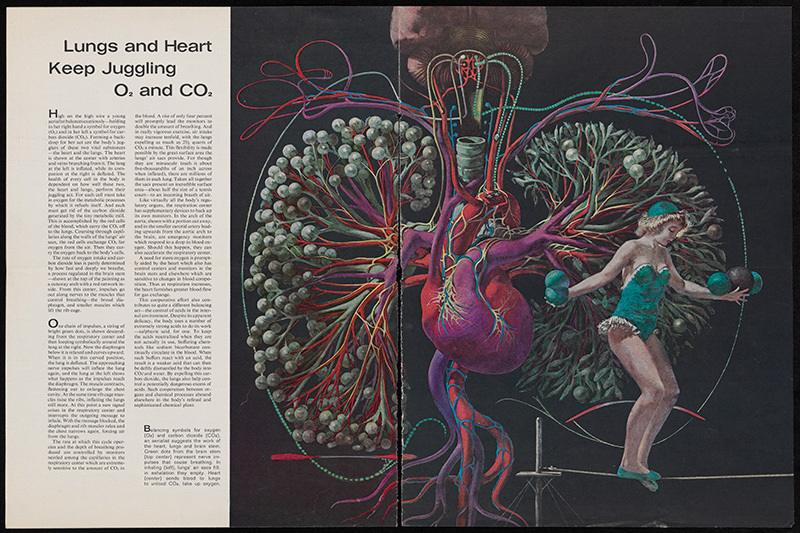
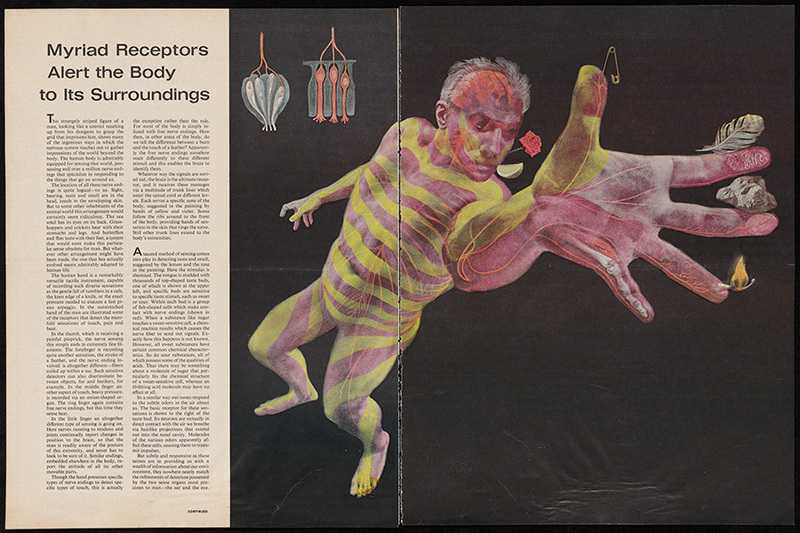
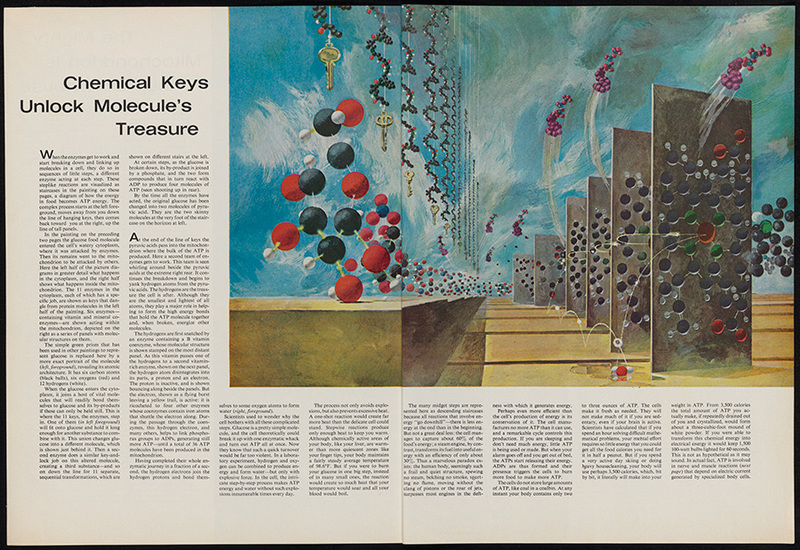
In most of his work, he paints figures interacting in a surreal space that merges with depictions of medical elements. In medical illustration, he illustrates human organs as the landscape and main focus, placing figures to interact with these organs figuratively. This unique approach was influenced by scientific illustration in the 1960s. Abstract shape indicates outer space environment. The objects are composed in a dramatic way to present their futuristic features. Unlike pop art in the 1950s, Arthur Lidov's paintings were highly rendered and realistic, making them stand out on their own. Arthur Lidov also commissioned illustrations with science fiction authors such as Ray Bradbury and William Sambrot during that time. Overall, he bridged commercial art with fine art and became influential in history, science fiction, and medical illustration.
Editorial Scientific Illustration
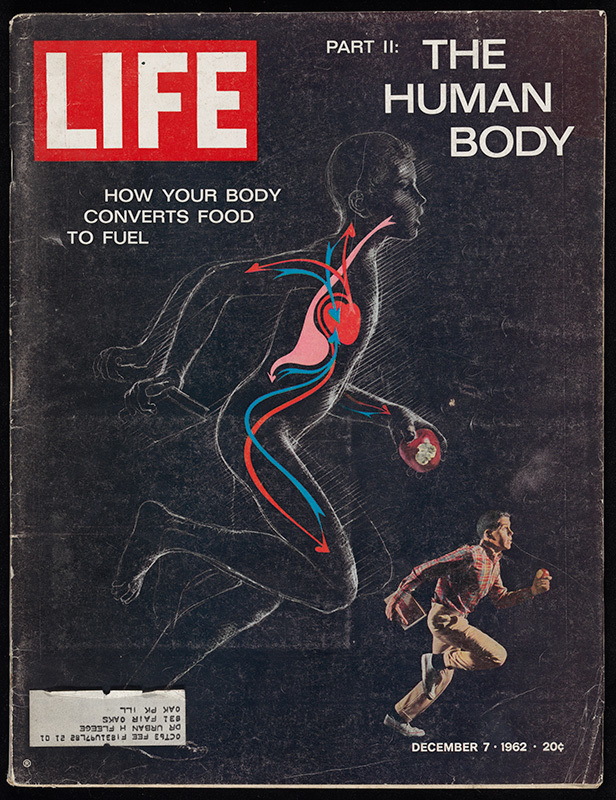
This magazine featured his interior illustrations for an article about the digestive journey in the human body, titled: "The Human Body: Part II - How Food Becomes Fuel: The Phenomenal Digestive Journey of a Sandwich." The illustration series was created to explain the process within the human body visually. It also included a double-spread illustration that depicts the whole-body blood system and places them in a surrealist undersea environment.
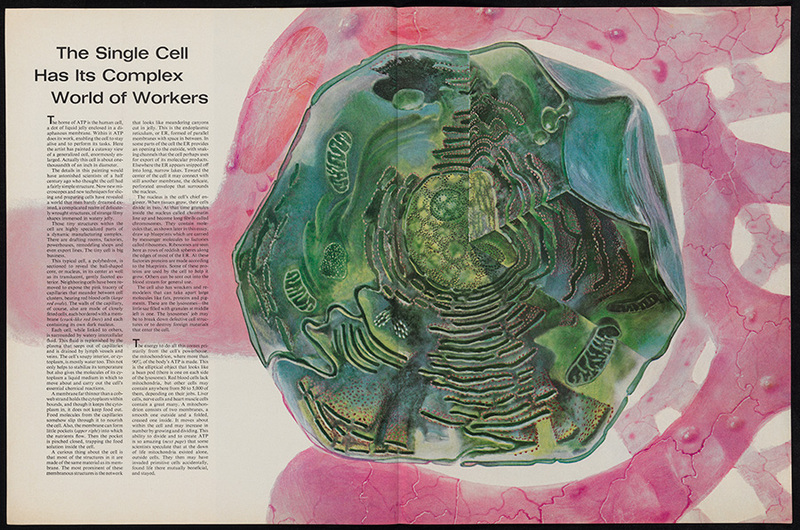
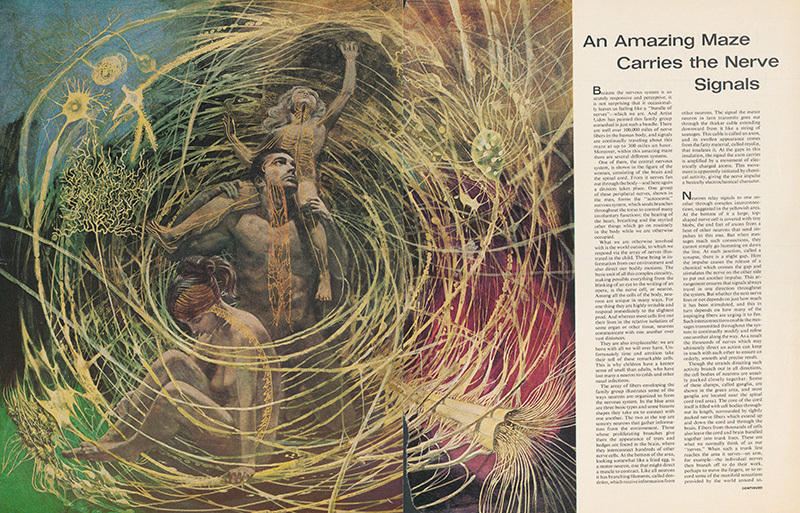
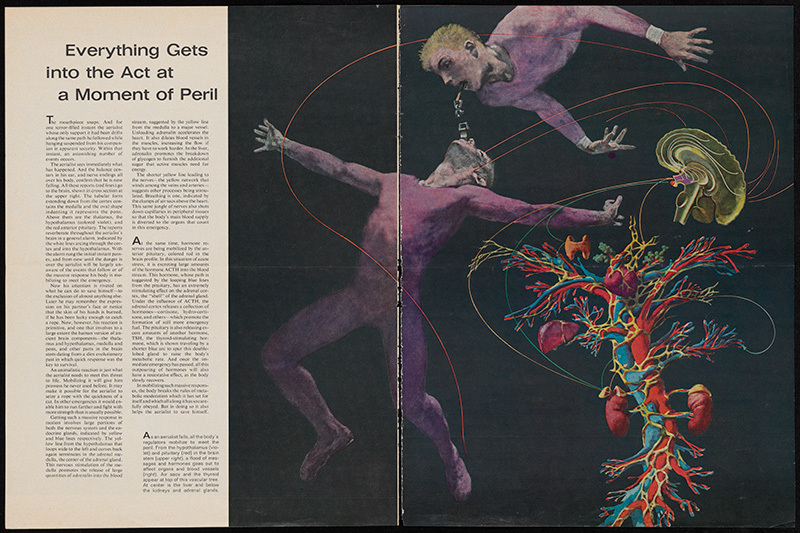
Science Fiction Illustration
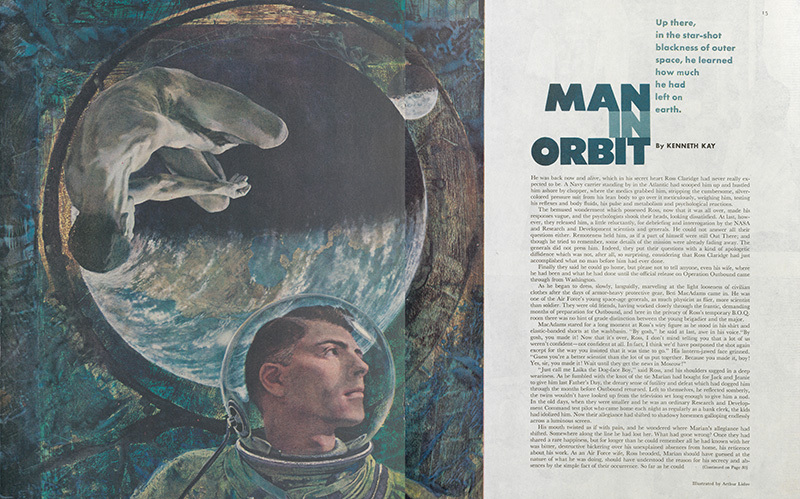
Man in Orbit, was written by Kenneth Kay and illustrated by Arthur Lidov. This story is about an astronaut coming from space to earth. The painting depicts a nude figure in the background, seemingly flowing in a circular motion, which suggests the Earth. The paint has a stone-like texture which adds depth to the illustration.
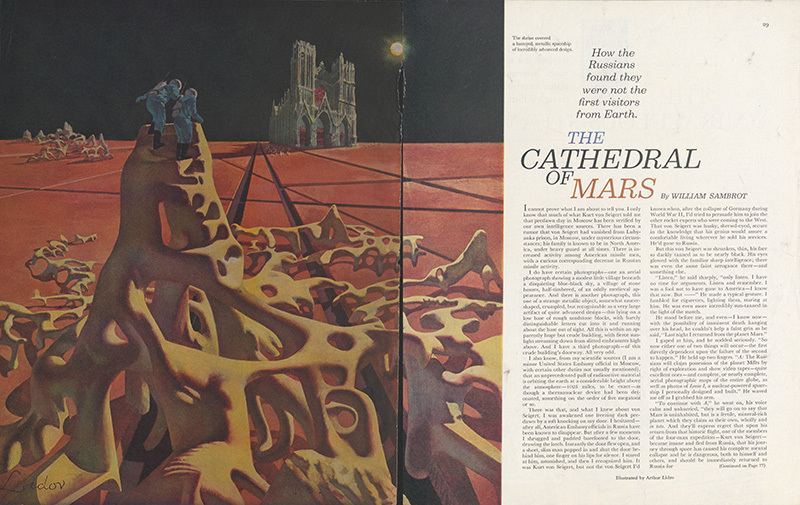
The Cathedral of Mars is a science fiction story written by William Sambrot and illustrated by Arthur Lidov. Sambrot has written 200 short stories, fifty of which are science fiction. This story is about discovering that the descendants of the children who were lured away by the Pied Piper now inhabit Mars. The abstract shape depicts a surreal outer space environment.
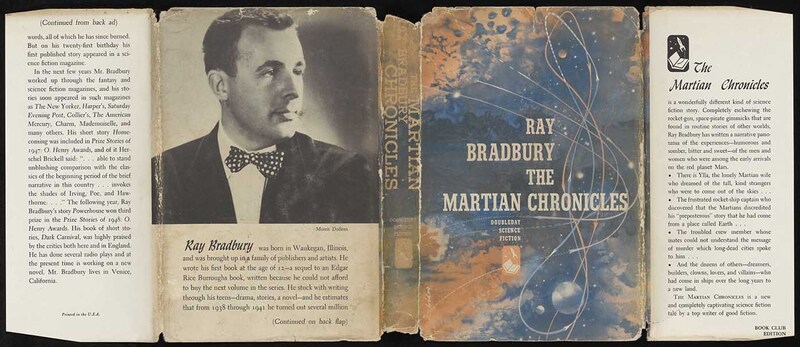
The Martian Chronicles is a science fiction depiction of American society after World War II. It suggests that the acceleration of technology development will progress the destruction of humanity. Arthur Lidov was commissioned as artist for the cover illustration for the first published edition.
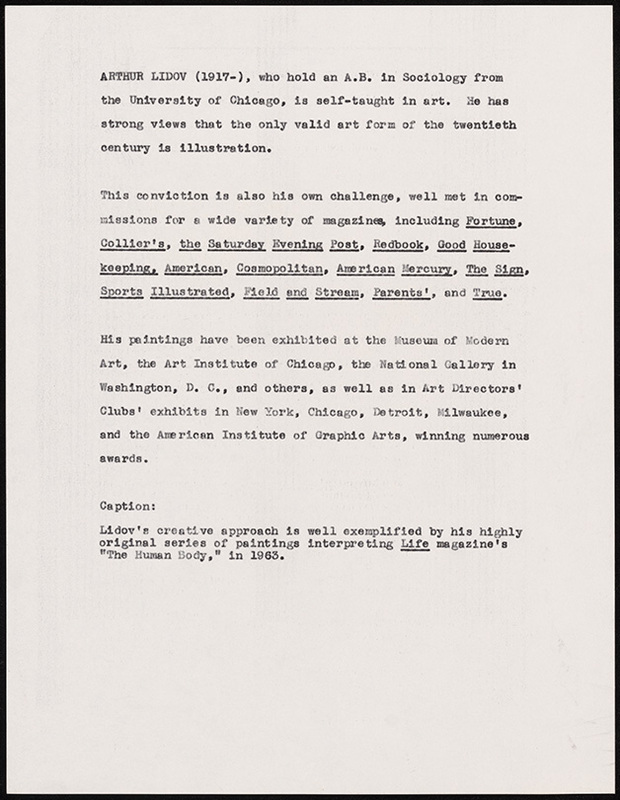
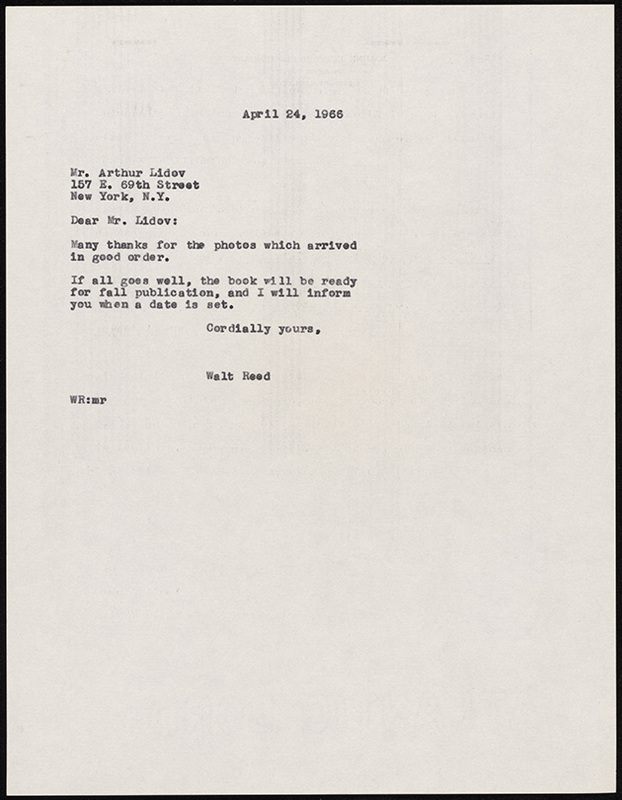
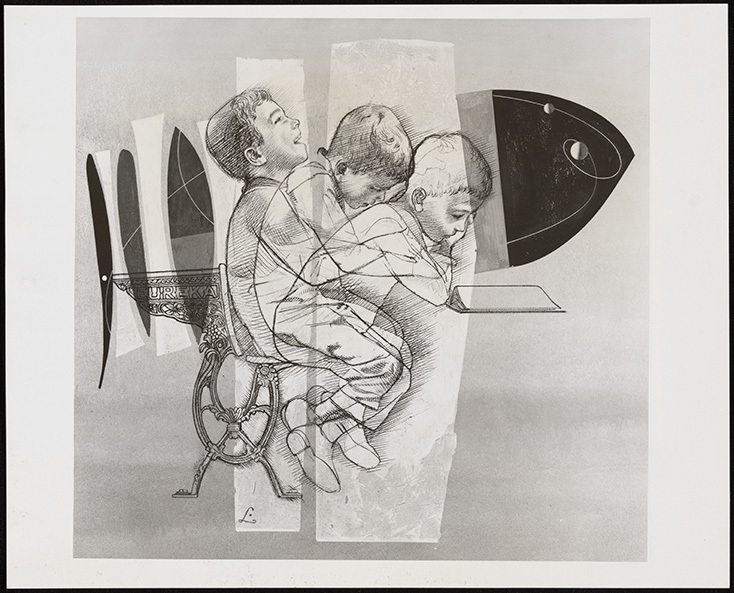
These documents contain detailed biographical information about him and show how editors commissioned illustrators in the 1960s.