
Dean Cornwell: A Curated American War
curated by Dave Maupin
For over 40 years, illustrations by Dean Cornwell (1892-1960) graced magazines, books, and posters. Known as an artist of multiple styles, he was in high demand and financially rewarded. His work captured culture, history, and narratives in single images engaging readers of periodicals. As a celebrity, American families would come to collect his printed reproductions.
In the 1940s during World War II, Cornwell would be commissioned to complete a series of War Bond advertisements from companies who pivoted their businesses to support the war effort. These ads were designed by Cornwell to capture a war not seen from the American Homefront. Using similar narrative techniques employed in his other work, he would rouse the American zeitgeist in support of those abroad.
All in this exhibition are sourced from the Walt Reed Illustration Archive in the Dowd Illustration Research Archive.
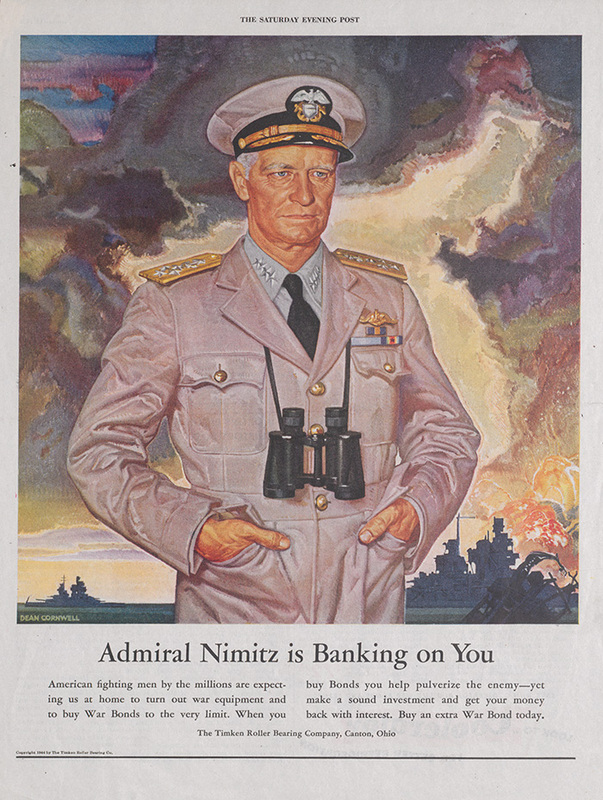
Admiral Nimitz is Banking on You, 1944
Cornwell was hired to illustrate this advertisement for The Timken Roller Bearing Company. Using Admiral Chester Nimitz, the Commander in Chief of the U.S. Navy’s Pacific fleet, the illustration commanded Americans to invest into bonds.
War Bonds
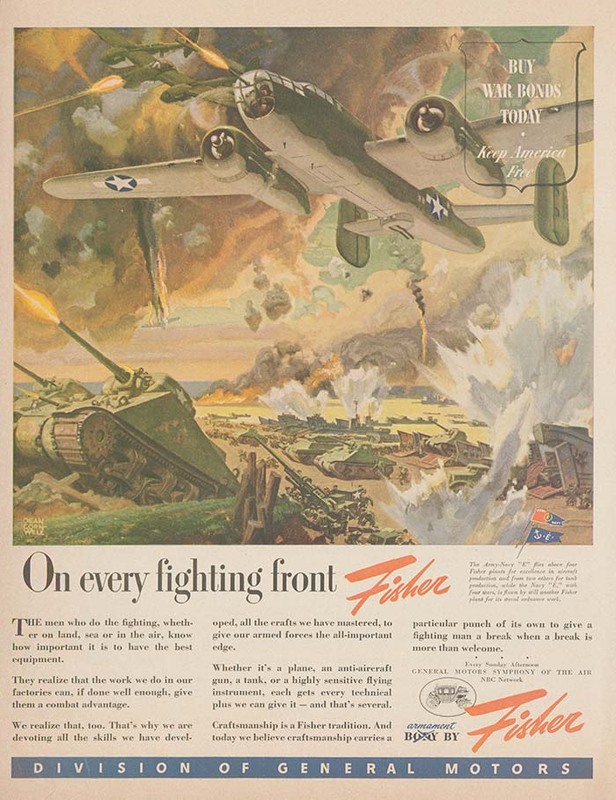
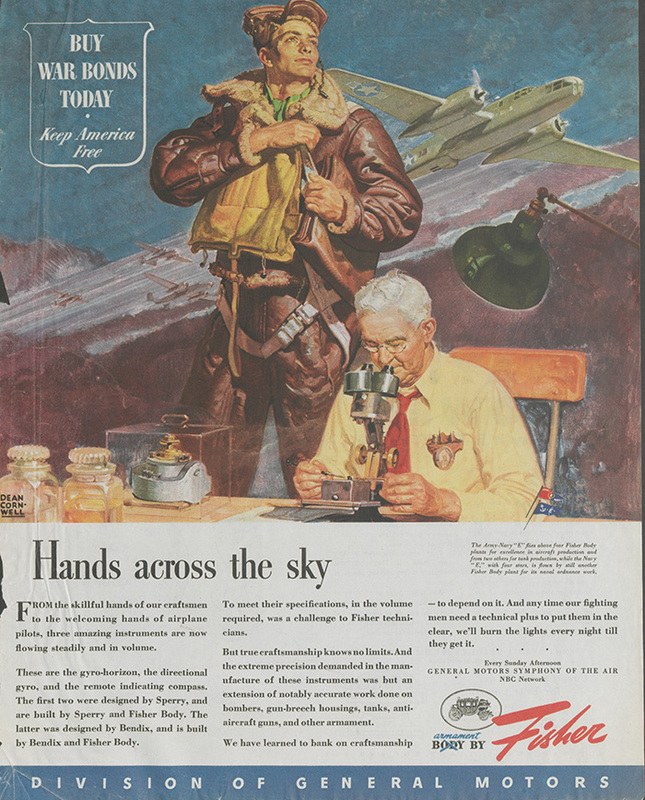
War Bonds were a popular way for nations to finance a war effort. This method would reduce the extreme taxation needed to support a massive conflict and would curb excess inflation due to shortages of goods. These bonds would serve as an investment and return consistent yield for the beneficiary. In the present, these types of bonds have mostly been replaced by a consumer product for investing while military spending has been increased using tax dollars.
Precision Bombing
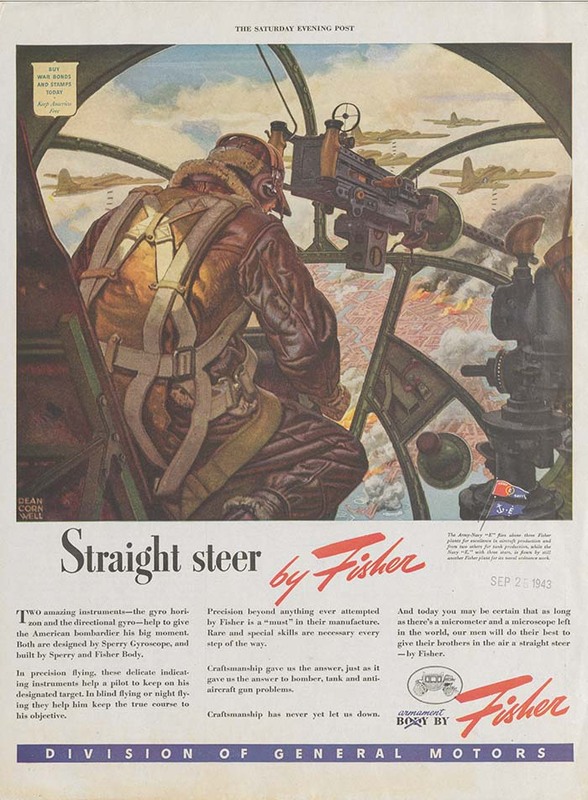
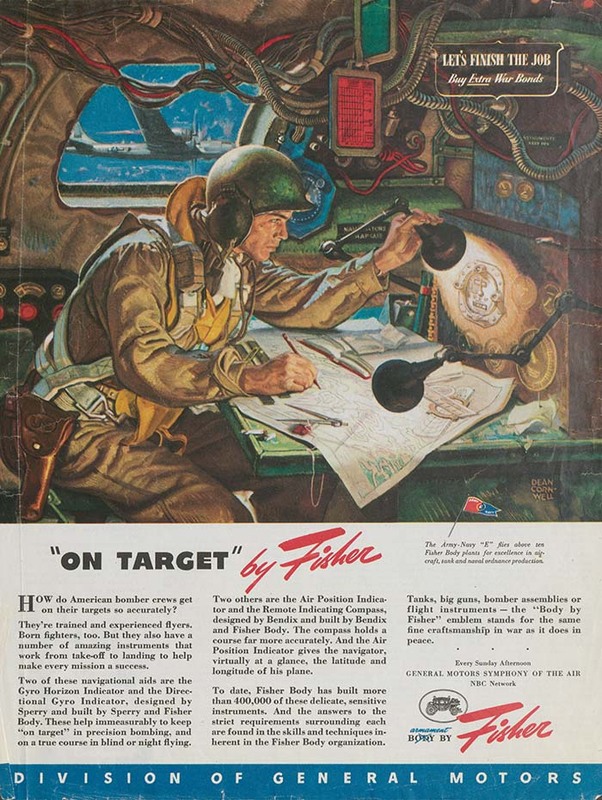
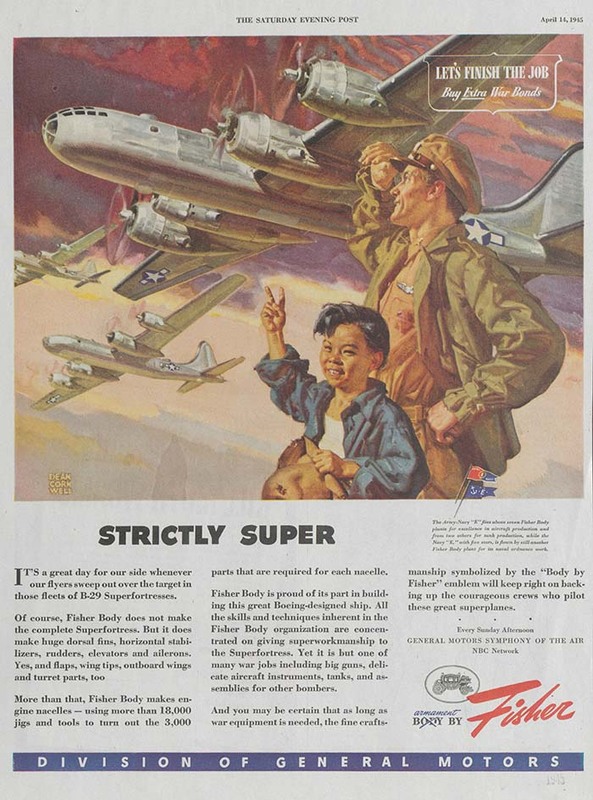
Precision Bombing was a tactic used during World War II over Europe. These daytime bombing runs were designed for maximum accuracy and minimal civilian casualties opposed to the night-time operations. Training made these bomber crews effective in non-combat situations. Unfortunately, the daytime visibility coupled with German anti-air artillery and Luftwaffe fighters made their mission extremely dangerous and less effective than intended.
Fisher Body By General Motors
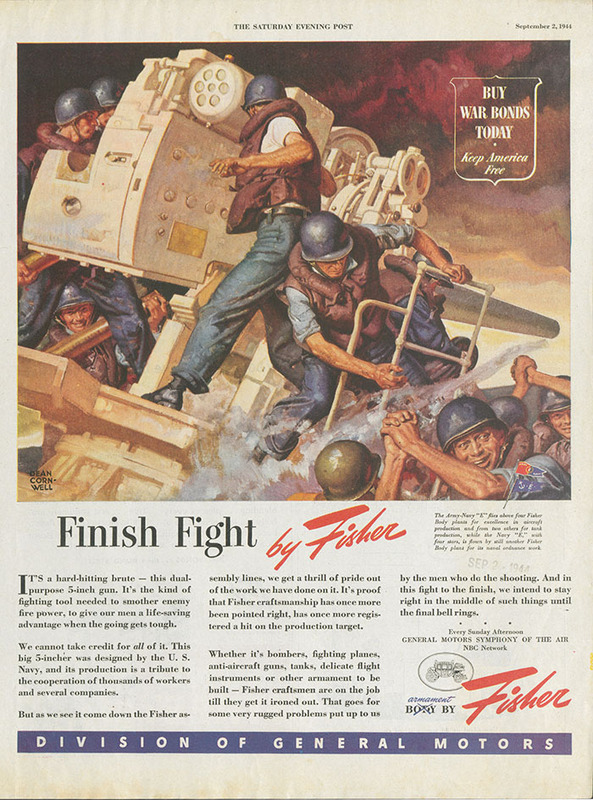
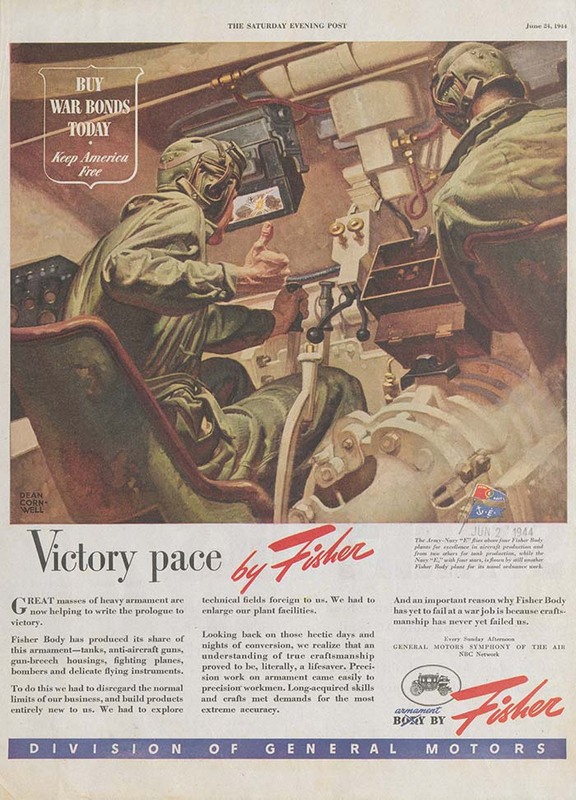
During World War II General Motors took an active role in the industrial manufacturing’s support for the war effort. Fisher Body was a division of General Motors that worked on tanks, tank destroyers, and parts for bombers. Bond ads like these were used to generate more capital for continued manufacturing.
Much of Fisher’s manufacturing was heavy armed vehicles. Cornwell recreated the tight confines of one of these vehicles. Tanks like the M4 Sherman would carry 5 soldiers, a commander, driver, co-driver, gunner, and loader. These vehicles were against a tough German Panzer Divisions with superior forward armor.
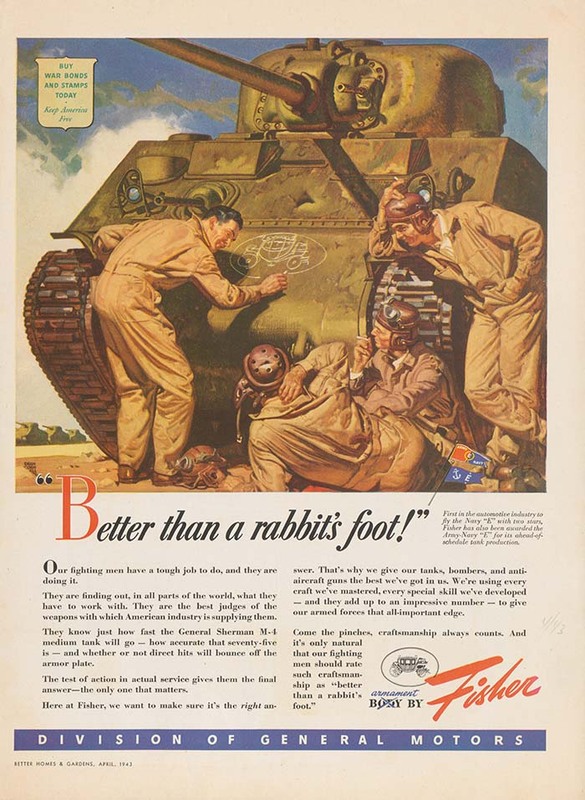
Fisher Body’s manufacturing history started with motorized coaches in the 1910s eventually selling to General Motors. The Fisher Body logo drawn on the M4 Sherman Tank is shown as a homage. Thousands of Sherman tanks rolled off GM’s production lines.